

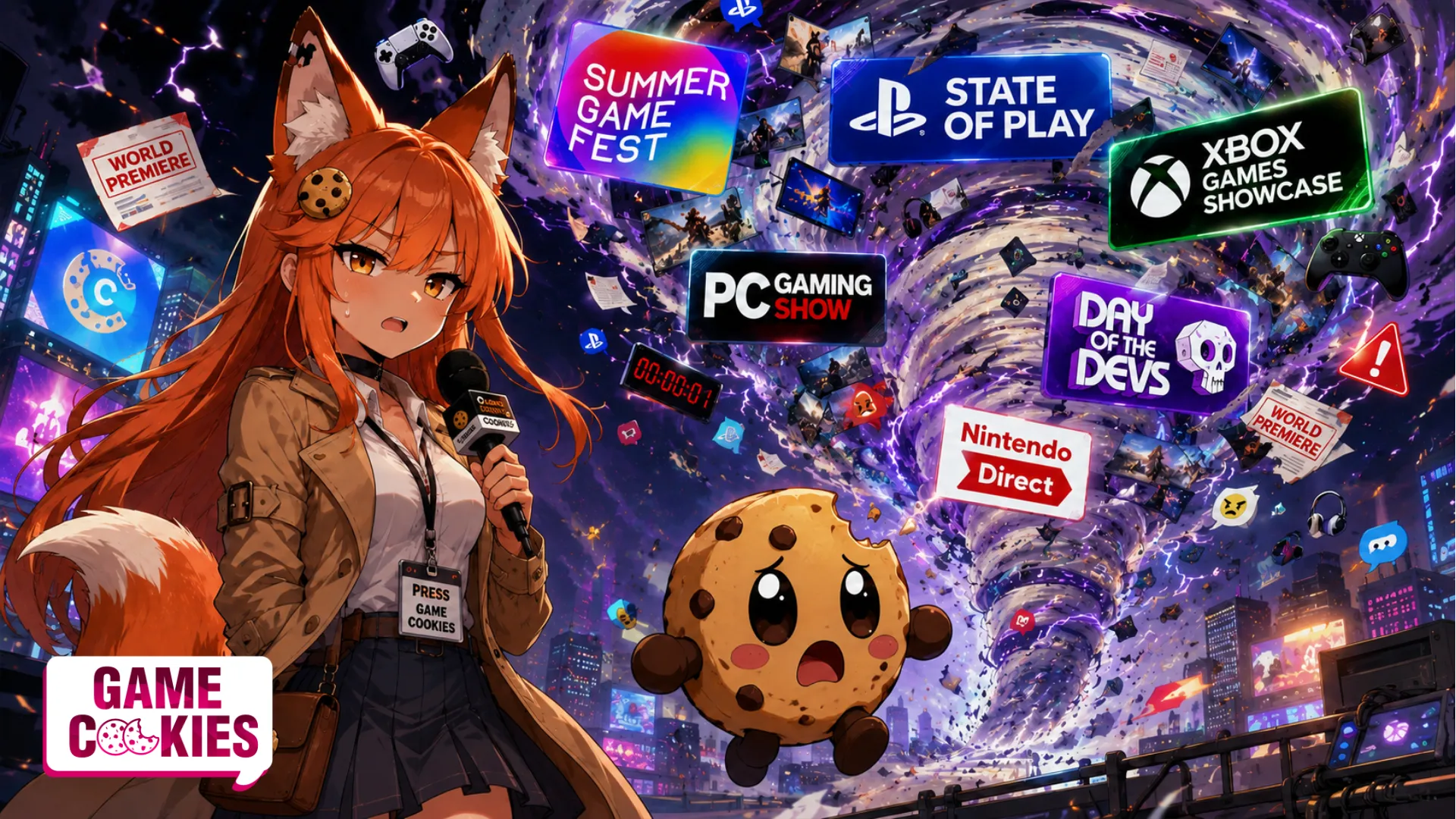
Hello there… showcase survivors and timeline detectives. Today we’re going through the whole Summer Game Fest orbit, because pretending this week was only one Geoff Keighley stream is how you end up with the same empty recap everyone else already published.
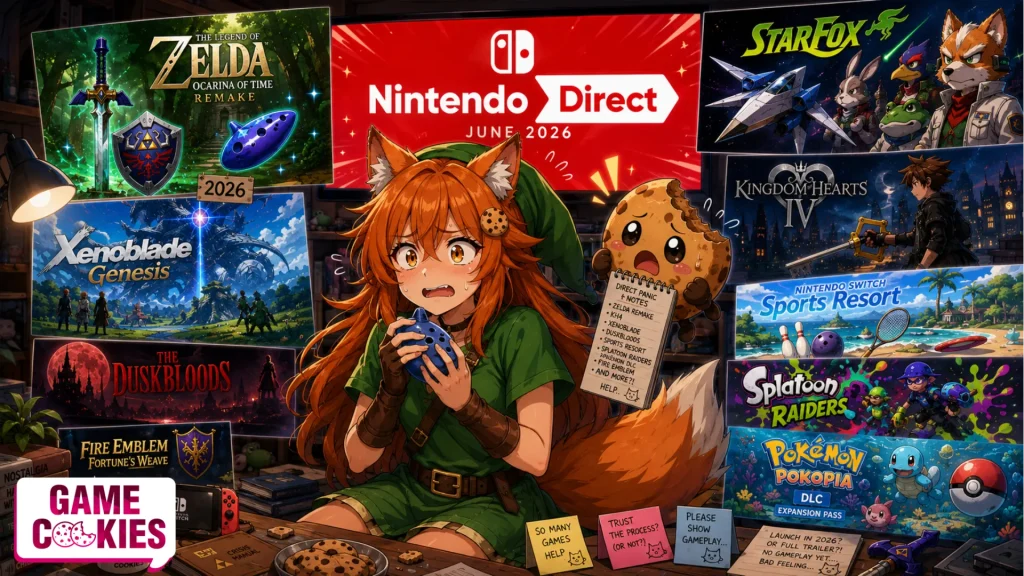
State of Play started the week with Sony trying to look like Sony again. Summer Game Fest brought the big trailers, the celebrity fever dream, the franchise revival parade, and the usual amount of “wait, did that really happen?” discourse. Xbox followed with a stronger lineup than the doom crowd wanted to admit, while still somehow sounding confused about what Xbox is supposed to be. PC Gaming Show and Day of the Devs gave the week smaller games with actual personality. Nintendo, because Nintendo enjoys making everyone stare at a closed door until they hallucinate a Zelda remake, has a Direct coming next.
So this is the no-BS version.
No pretending every trailer was a cultural event. No acting like social media is always correct either, because half the timeline reacts like a studio personally broke into their house whenever a character’s face, name, hairline, outfit, or pronoun-adjacent rumor doesn’t match the fantasy version in their head.
But the noise tells us something. It tells us what players noticed, what they cared about, what they rejected, and where publishers are still trying to sell confidence without fully earning it.
State of Play looked good, then immediately became a discourse machine
Sony’s State of Play landed before the rest of the week and, on paper, it was exactly the kind of show PlayStation needed. Wolverine finally showed real gameplay. God of War: Laufey closed the presentation with a major single-player reveal. Until Dawn 2, Control Resonant, Silent Hill: Townfall, Onimusha: Way of the Sword, The Lost Wild, Rayman Legends Retold, Phantom Blade Zero, and a pile of other releases made the showcase feel unusually dense.
The broad reaction was positive. People liked that Sony leaned back into premium single-player games, horror, action, recognizable franchises, and actual gameplay. After years of live-service stumbles, cancelled projects, and “what are the studios doing?” fog, State of Play felt like Sony walking back into its own house and remembering where it left the good furniture.
Then, because this is gaming in 2026, the conversation immediately split into several smaller fires.
Some viewers were excited about Laufey as the playable focus of the next God of War. Others got pulled into the design debate around Faye/Laufey, where social media started doing the usual comparison ritual between actress, model, character, and whatever beauty standard the algorithm was mad about that hour. The Wolverine side had its own mess too, especially around the “Team X” naming conversation and the broader worry that major entertainment companies keep changing familiar names while telling fans the change is too small to care about.
And that is the part we already had to talk about with State of Play: the weird hypocrisy of saying a change does not matter while still making the change. If it truly does not matter, players ask why it was touched. If it does matter, then people are allowed to ask what the intention was.
🦊 Kiki: State of Play was good. I’m not going to pretend it wasn’t just because the timeline found three different things to scream at. Wolverine looked violent, Laufey looked expensive, and Sony remembered that single-player games still make people pay attention. But the side discourse was also predictable as hell. You show a female lead, people inspect her face like they’re doing forensic science. You show mutants and start dancing around familiar naming, people go “wait, why?” Then the other side goes “why do you care?” Bro, because someone cared enough to change it first. That’s the loop. That’s always the loop.
🍪 Chip opens a tiny folder labeled “Discourse Receipts” and immediately regrets it.
The stronger point is that Sony’s showcase worked because the games looked concrete. Wolverine had gameplay. Laufey had a full reveal. Several games had dates. The audience may argue about character design and naming choices, but they also react better when publishers show enough actual game to judge.
The weaker point is that Sony still cannot fully escape leak culture and expectation inflation. God of War: Laufey would have landed harder if the internet had not already chewed through the rumor ahead of time. State of Play was strong, but the old E3 shockwave is harder to create now because half the surprise gets murdered before the stream begins.
Summer Game Fest had real highlights, but the format still eats its own games
Summer Game Fest itself was packed. Final Fantasy VII Revelation, Resident Evil Veronica, Alien Isolation 2, TMNT: The Last Ronin, Gen Atlas, 1666: Amsterdam, Monster Hunter Wilds: Ascendance, Star Wars: Zero Company, The Wolf Among Us 2, Virtua Fighter: Crossroads, Cuphead-related projects, Stellar Blade: Blood Rain, Blood Message, and Stranger Than Heaven all gave people something to talk about.
The crowd favorites were easy to spot.
Final Fantasy VII Revelation gave the show its safest big finale. It had legacy weight, a clear emotional hook, and the kind of multi-platform launch news that instantly turns a reveal into a business story. Resident Evil Veronica hit nostalgia and horror at the same time. Alien Isolation 2 mattered because people have wanted that sequel for more than a decade. Gen Atlas appealed to everyone who likes mysterious sci-fi sadness, lonely landscapes, and the feeling that a giant robot might ruin your week in a beautiful way.
The Wolf Among Us 2 being alive again also mattered, because Telltale fans have been waiting so long that the game’s release window feels less like a date and more like a folklore tradition.
But SGF still has the same old problem. It shows too much. Not too many good games, exactly. Too many games without enough breathing room. A strong trailer can get buried if it appears between two louder franchises and a celebrity moment. A smaller game can look forgettable because the stream has already trained the viewer’s brain to sort everything into “sword game,” “horror hallway,” “sad robot,” “anime combat,” and “logo I will Google later and then forget.”
🦊 Kiki: I hate when people say “nothing was shown” after a two-hour showcase, because usually what they mean is “nothing hit my personal nostalgia gland hard enough.” But also, these shows really do turn games into a blur. You can show me twenty-five trailers in a row and by the end I’m not evaluating craft anymore. I’m just trying to remember which game had the dad, which one had the mech, which one had the sad violin, and which one had the monster that looked like it was designed during a tax audit.
🍪 Chip drops a tiny “world premiere” stamp into a trash can.
SGF had enough strong announcements to avoid being dismissed as empty. It also had enough filler and tonal whiplash to remind everyone why the old showcase model is exhausting. The industry wants one giant attention funnel. Players want the good stuff without feeling trapped inside an ad tornado.
Both things can be true.
Tupac in Stranger Than Heaven became the week’s strangest ethics debate
The most surreal moment of SGF was not just a game reveal. It was Tupac.
Stranger Than Heaven already had attention because RGG Studio has earned a loyal audience through the Like a Dragon and Yakuza universe. Then Snoop Dogg appeared, Tupac’s likeness entered the conversation, and suddenly the announcement became bigger than the game itself.
According to the public messaging around the reveal, Tupac’s portrayal is being handled with estate permission and without generative AI. That matters. It means this was not presented as some random machine-made resurrection dumped into a trailer because a marketing team wanted a viral moment.
It still felt weird to a lot of people.
Estate approval answers the legal question. It does not automatically answer the emotional question. Fans can understand that permission exists and still feel uneasy about a dead artist being turned into interactive entertainment decades later. That tension is going to define a lot of future media. Games, films, ads, concerts, voice packs, virtual idols, archival performances. The line between tribute and content mining is getting thinner, and the audience is learning to watch for it.
🦊 Kiki: This is where I don’t think people should rush to either extreme. The “no AI” part matters. Estate approval matters. Snoop being involved matters. But it is still Tupac showing up in a video game in 2026. People are allowed to pause for a second and go, “uhhh, are we good with this?” Companies love acting like legal permission automatically settles the vibe. It does not. The paperwork can be clean and the audience can still feel like someone opened a cultural grave with a branded shovel.
🍪 Chip stares at a contract, then slowly turns it upside down.
The Stranger Than Heaven reveal worked as a viral moment. It also opened the door to the next stage of the likeness debate. Games are not just borrowing celebrities anymore. They are inheriting, licensing, recreating, archiving, and re-contextualizing people who are no longer alive to react.
That conversation is not going away.
Stellar Blade: Blood Rain hit the AI alarm because players are trained to look for shortcuts now
Stellar Blade: Blood Rain sparked another kind of controversy: suspected or reported generative AI use in promotional materials and visual assets. The flashpoint was the kind of detail players now inspect immediately, especially nonsense text, strange signage, visual incoherence, and anything that looks like a machine tried to imitate culture without understanding it.
The Chinese text issue became especially important because bad or fake-looking writing is one of the easiest ways for audiences to spot possible AI involvement. When players see a premium-looking trailer with sloppy environmental language, they do not think “small placeholder.” They think “shortcut.”
Maybe some of it changes before release. Maybe some assets were temporary. Maybe some accusations are exaggerated, because the internet is very good at turning suspicion into a courtroom with no judge. But the reaction itself is important.
Players are now scanning trailers for evidence that studios are cutting corners.
🦊 Kiki: I understand why studios are tempted. Budgets are disgusting. Timelines are disgusting. Marketing needs ten thousand assets before breakfast. But if your premium trailer has signs that look like a machine hallucinated after seeing three menus and a keyboard, people are going to notice. You cannot sell polish while leaving little AI fingerprints everywhere. Especially not now. Players are already suspicious of publishers. AI-looking slop just gives them a magnifying glass and a reason to use it.
🍪 Chip squints at a fake sign and quietly gives up.
This is not just about AI as a tool. It is about trust.
Players already worry about broken launches, missing features, bad optimization, aggressive monetization, fake gameplay trailers, and day-one patch roulette. When something looks AI-generated, it plugs directly into that trust problem. It makes people wonder if the studio is using technology to support artists or replace care.
That distinction matters. A studio using AI internally for workflow support is one thing. A studio letting sloppy AI-looking assets reach public marketing is another. The first can be debated. The second looks careless.
Xbox had games, but Xbox still sounds like Xbox
The Xbox Games Showcase was stronger than a lot of people expected. Pure Xbox’s own community poll leaned positive, with a large chunk of voters grading the show A or B. That matches the general feeling from Xbox-heavy spaces: the games looked good, Game Pass looked more valuable again, and several long-awaited projects finally had something meaningful to show.
Gears of War: E-Day looked strong. Clockwork Revolution had one of the better showings of the week. Fable still has attention. Halo: Campaign Evolved created instant platform-war fuel. Spyro: A Realm Beyond got a real emotional reaction from fans who have been waiting for the purple dragon to matter again. Persona 6 and Persona 4 Revival gave JRPG fans something to scream about. Crazy Taxi, Wo Long 2, Minecraft Dungeons 2, Vivarium, Bad Magpie, Senua, and several others gave the show density.
The games were not the problem.
The problem was the same thing it always is with Xbox: messaging.
Microsoft tried to show confidence around exclusives again, especially with Gears of War: E-Day and Clockwork Revolution. At the same time, Xbox continues to move many major games across platforms, including PlayStation. That strategy may make business sense, but fans are not reacting only to business logic. They are reacting to years of mixed signals.
Some players want Xbox to commit to exclusives. Others think Microsoft would be stupid to leave money on the table. Some see Game Pass as the real platform. Others still want a reason to own Xbox hardware. Microsoft keeps trying to serve all of those audiences at once, and the result is messaging that sounds technically reasonable and emotionally unsatisfying.
🦊 Kiki: Xbox had a good show. I’m not doing the lazy “Xbox doomed” thing today. There were games. Real games. Games people want. But Xbox still talks like a company trapped between being a console brand, a subscription service, a third-party publisher, a PC ecosystem, and a corporate apology email. Fans ask, “why should I buy an Xbox?” and Microsoft answers, “well, depending on the title, region, device family, and long-term strategic alignment…” Girl, no. That is not a brand identity. That is a spreadsheet wearing a hoodie.
🍪 Chip opens a tiny flowchart and immediately faints.
The “one more thing” ending also annoyed people. Ending on Call of Duty can still make business sense, but emotionally it feels tired. Players know COD is big. They know it prints money. They also know Xbox owns Activision now. Using it as the final hype button is starting to feel less like a surprise and more like a mandatory shareholder ritual.
Still, the showcase did what it needed to do in one key area. It reminded people Xbox has games. That sounds basic, but after years of delays, acquisitions, layoffs, studio closures, and identity problems, basic competence is not nothing.
The next challenge is harder. Xbox has to make those games feel like they belong to a coherent future.
PC Gaming Show and Day of the Devs gave the week some oxygen
The corporate showcases got most of the attention, but the smaller events helped the week feel less like a franchise warehouse.
PC Gaming Show brought Thief: The Dark Project Remastered, Empulse, Serious Sam: Shatterverse, Planet Zoo 2, El Paso, Elsewhere 2, Total War: Warhammer 40,000, Valheim 1.0, Exodus, and other PC-heavy announcements. It was not the loudest show, but it served a different audience: people who want systems, weird genre experiments, mod-friendly worlds, and games that do not always need a console-war headline to justify existing.
Day of the Devs did what it usually does. It reminded everyone that smaller games can still feel more alive than some trailers with ten times the budget. Blood Dungeon, Tenebris Somnia, and other indie projects gave the week texture. Not every game will be a hit. Some will probably disappear into the release calendar. But the showcase still matters because it puts odd ideas next to each other without forcing them to compete with Final Fantasy, God of War, Halo, and Resident Evil for oxygen.
Future Games Show sat in that weird but useful middle lane of showcase week. It was not the event that set social media on fire, and honestly, that tells you its role. It was the discovery dump: over 40 games, demo drops, horror names, AA experiments, and an extended Exodus showcase for people who still want to find something beyond the giant franchise parade. The problem is that these shows rarely create one clean conversation. People don’t argue about “Future Games Show” as a brand the way they argue about Xbox or PlayStation. They clip one trailer, wishlist one game, forget five others, and move on.
🦊 Kiki: I always like this part of showcase week because it reminds me games are still weird when money stops strangling them. Not every indie reveal is automatically genius, obviously. Some look like vibes held together with paperclips. But at least you can feel people trying strange shapes. After hours of expensive franchises resurrecting themselves like legally distinct zombies, one messy little game with a deranged idea can feel like air.
🍪 Chip carefully adds “tiny weird game” to his wishlist.
The funny thing is that players say they want originality, then the familiar names usually dominate the conversation. That is not just a publisher problem. It is an audience problem too. Nostalgia gets clicked. Remakes get watched. Sequels get shared. Then everyone complains that the industry is obsessed with old IP.
The industry did not invent that addiction from nothing. It learned where people keep looking.
Nintendo let everyone fight first
Nintendo was mostly absent from the showcase chaos, then announced a Direct anyway. Classic Nintendo. Let Sony, Geoff, Xbox, and everyone else throw trailers into the pit, then walk in later with a clean white background and a countdown.
The upcoming Nintendo Direct is already being inflated by rumors. Ocarina of Time remake for Switch 2. Pikmin 4 Switch 2 Edition. Xenoblade Chronicles 2 updates or a new version. Nintendo Switch Sports content. Kirby: Planet Robobot possibilities. Third-party Switch 2 rumors. Maybe even a tiny tease of the next 3D Mario, though expectations there should probably be locked in a basement for everyone’s safety.
The issue is not whether rumors are fun. They are fun. The issue is that Nintendo fans are extremely talented at turning rumors into emotional contracts Nintendo never signed.
🦊 Kiki: Nintendo discourse is performance art. Everyone says “keep expectations in check,” then builds a Direct wishlist with Ocarina remake, new 3D Mario, GameCube drops, Animal Crossing, Mario Maker, Wario, Metroid, Mother 3, and a personal apology from every executive who ever ignored F-Zero. Then Nintendo shows three farm games, one remake, and a controller color, and everyone acts like a treaty was broken. I respect the commitment to suffering, honestly.
🍪 Chip lights a tiny candle for the Direct rumors.
Nintendo does need a strong Direct, though. Switch 2 has momentum, but momentum needs software. If Nintendo shows a major Zelda remake, a strong Mario tease, or a serious third-party wave, the conversation changes fast. If the Direct leans too heavily on ports and modest updates, the “where is the holiday killer app?” question gets louder.
This is the one showcase we still cannot judge. But the pre-show discourse already tells us something: Nintendo has trained fans to expect impossible things while giving them just enough history to keep believing.
The real winners of showcase week
The clear winner was single-player confidence.
PlayStation leaned into it. XBOX tried to rebuild some exclusivity identity through it. Summer Game Fest closed with a major narrative franchise. Final Fantasy VII Revelation, God of War: Laufey, Wolverine, Control Resonant, Resident Evil Veronica, Alien Isolation 2, The Wolf Among Us 2, Gen Atlas, Gears of War: E-Day, Clockwork Revolution, Fable, and several smaller narrative projects all point in the same direction.
The industry spent years chasing live-service gold. Some of that will continue, obviously. Nobody is deleting the money printer if it still prints. But this week showed a clear correction. Publishers are remembering that players still want authored experiences, big campaigns, contained stories, and games that do not feel like they were designed around a retention spreadsheet first.
Horror also won. Resident Evil, Silent Hill, Alien, Until Dawn, Tenebris Somnia, and other darker projects made the genre feel healthy. Some people complained there was too much horror, which is basically the genre’s victory lap. When enough horror appears to annoy people, horror is doing fine.
Franchise revivals won too. Spyro, Virtua Fighter, Rayman, Thief, Cuphead-related projects, Persona 4, Final Fantasy VII, Resident Evil Veronica, and possibly Zelda rumors all point toward the same market reality. Old names still work. Sometimes that is exciting. Sometimes it is lazy. The difference is whether the revival has a real creative reason to exist or just a recognizable logo wearing a new jacket.
The final winner was skepticism. Not cynicism. Skepticism.
Players questioned AI-looking assets. They questioned posthumous likenesses. They questioned Xbox exclusivity language. They questioned character design decisions. They questioned naming changes. They questioned whether “world premiere” means anything when so many reveals are leaked or expected.
That skepticism can get ugly, sure. The internet loves turning reasonable questions into bonfires. But it also means publishers cannot just throw expensive fog at people and expect automatic applause.
The losers were clarity, restraint, and the old magic trick
The biggest loser was clean messaging.
Xbox still struggles to explain what its platform strategy actually means for players. Summer Game Fest still struggles to balance quantity with attention. Sony had a strong show but could not fully escape leaks and culture-war microdramas. Nintendo has not even aired its Direct yet and already has to fight the imaginary version of the Direct fans built in their heads.
The old “one more thing” magic also feels weaker now. Leaks, rumors, ratings boards, store listings, insider podcasts, social media scraping, and algorithmic speculation have made surprise harder. Even good reveals arrive half-chewed. The industry keeps trying to recreate old E3 electricity, but the room is different now.
Trailer overload also took damage. Players are getting louder about wanting gameplay, dates, and platform clarity. A cinematic trailer can still work, but it no longer buys unlimited trust. Too many players have watched beautiful reveals turn into broken launches, delayed roadmaps, downgraded footage, or monetization traps.
🦊 Kiki: Publishers still act like mystery is the premium product. Sometimes it is. But most players now want fewer fog machines and more answers. What is the game? When does it release? Where can I play it? Is this gameplay? Is this exclusive? Are you using AI? Is this a dead celebrity cameo or a tribute? Maybe that sounds boring. Fine. Maybe we became boring because the industry kept making “trust us” expensive.
🍪 Chip writes “show gameplay” on a tiny protest sign.
What this week really told us
Summer showcase week was better than the doomers wanted and messier than the hype accounts admitted.
PlayStation looked healthier because it remembered what people expect from PlayStation, even while its showcase became tangled in design discourse, naming arguments, and leak fatigue. Summer Game Fest had real highlights but remains too bloated for its own good. Xbox showed games people actually want, but its identity problem still follows it around like a cursed achievement notification. PC Gaming Show and Day of the Devs reminded everyone that smaller games still carry strange, human energy. Nintendo is about to enter the room with expectations already swollen beyond medical advice.
The industry pattern underneath all of it is clear. Publishers are retreating toward safer bets, clearer franchises, remakes, sequels, nostalgia, and premium single-player confidence after years of live-service overreach and market exhaustion. That does not mean creativity is dead. It means creativity is fighting for space inside a business environment that wants proof before risk.
Players noticed.
They loved the games that looked real. They mocked the trailers that felt thin. They argued about ethics when dead artists appeared on screen. They questioned AI-looking assets. They celebrated Spyro, Final Fantasy, God of War, Wolverine, Gears, Resident Evil, Alien, and smaller weird projects. They also got tired, because being excited for video games now requires surviving leaks, platform wars, monetization anxiety, AI discourse, beauty discourse, naming discourse, and thirty trailers in a row.
So yeah, showcase week worked.
It also proved why people no longer trust clean corporate recaps.
⚙️ Stay skeptical, like everyone who paused a trailer to inspect a fake-looking sign.
⚙️ Keep asking why small changes were made when companies insist they do not matter.
⚙️ And remember, a showcase is only as good as what survives after the timeline stops screaming.
🦊 Kiki · 🍪 Chip · ⭐ Byte · 🦁 Leo
Got a tip, rumor, correction, or spicy industry crumb? Contact us here!