

Hello there, long-time Xbox owners, Game Pass subscribers, and anyone who still remembers watching the Xbox One reveal with a mix of confusion and disbelief.
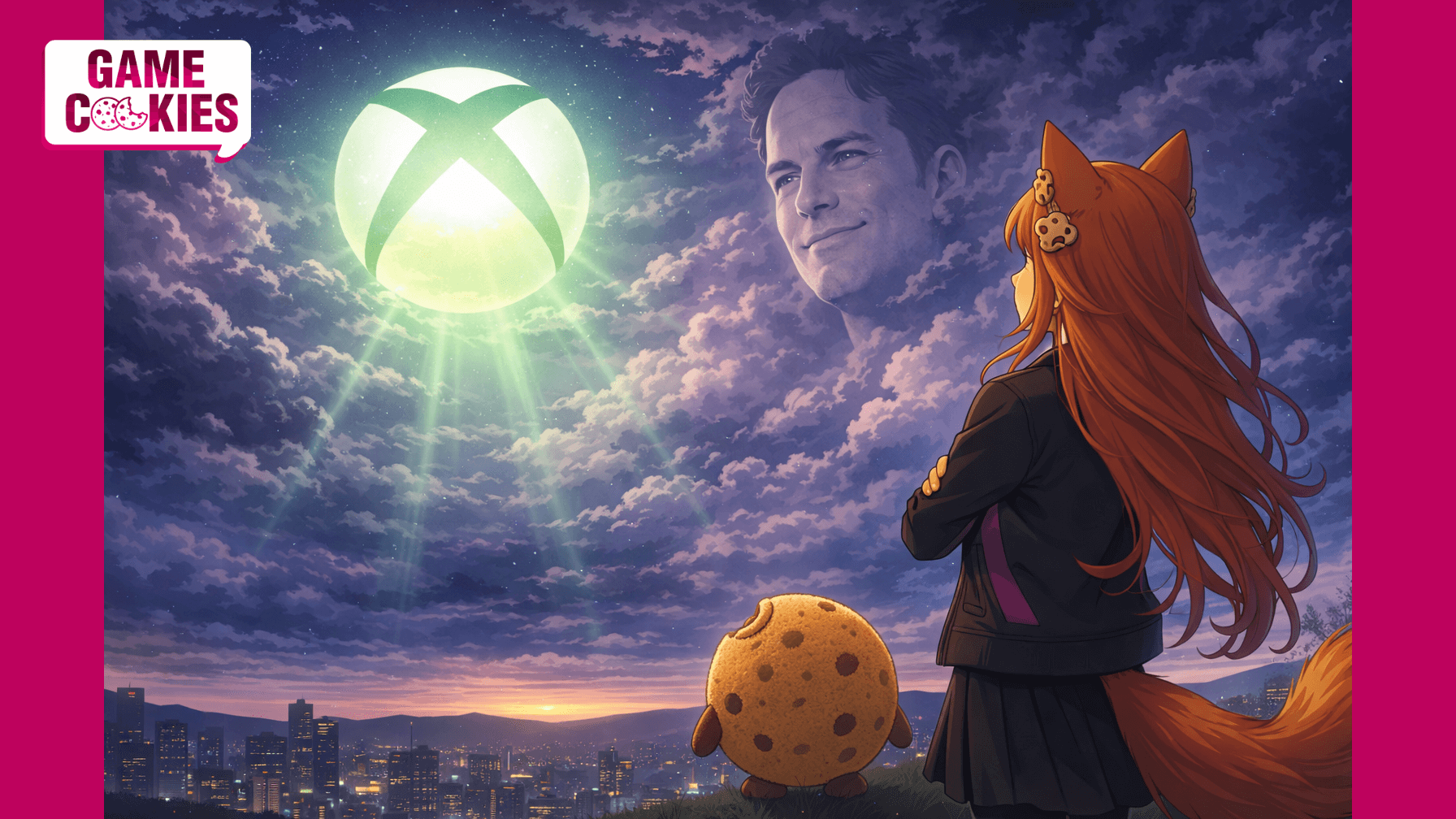
Phil Spencer is stepping down after more than a decade as the public face of Xbox and nearly four decades at Microsoft. Officially, this was planned. He informed Satya Nadella in late 2025 that he wanted to retire, and he will remain as an advisor through summer 2026 to support the transition.
That explanation is clean, respectful, and plausible. After thirty-eight years at one company, retirement is not suspicious. But context matters, and the context around Xbox right now makes this transition feel heavier than a simple generational handoff.
Microsoft’s most recent earnings showed gaming revenue down 9 percent year over year, with hardware revenue dropping 32 percent. Content and services also declined. At the same time, Microsoft’s cloud and AI divisions continue to grow aggressively, which places gaming in a comparative spotlight that it would probably prefer to avoid.
Hardware sales have been trending downward for multiple fiscal years, not just this quarter. That long-term slide does not automatically signal crisis, but it does force strategic reflection at the executive level, especially inside a company that measures performance carefully across divisions.
Spencer’s tenure reshaped Xbox in undeniable ways. He led the acquisitions that fundamentally altered Microsoft Gaming’s scale, bringing Mojang Studios, Bethesda Game Studios, and Activision Blizzard under the Xbox umbrella. Those moves expanded the portfolio dramatically and gave Microsoft ownership of some of the industry’s most powerful franchises. At the same time, Game Pass became the centerpiece of the strategy, built around the belief that subscription scale and ecosystem reach could offset traditional hardware competition.
For a while, that direction felt bold and forward-looking. Then first-party output became inconsistent, some projects failed to meet expectations, studios were closed, and layoffs affected teams that had only recently joined Microsoft. The contradiction between long-term ecosystem growth and short-term cost tightening became harder to ignore.
🦊 Kiki: So Spencer’s leaving.
And everybody’s doing the thing where they pretend this is just like, a normal retirement. Maybe it is. Fine. Whatever.
But he did save Xbox. Like, that’s just true. If you were around for the Xbox One era, you remember how bad it was. The messaging was cooked. The whole vibe was cooked. It felt like Xbox was trying to sell you a cable box with a controller.
He comes in, fixes it. Slowly. And it worked.
And then over the last few years, it got weird again, just in a different way.
Because the console stopped feeling like the point.
And I know people are gonna be like “bro it’s the ecosystem, it’s play anywhere, that’s the future.” Yeah. I understand. I’m not confused about the strategy.
I’m saying the strategy has consequences.
If everything is Xbox, then the box is just… a box. You know? Like are we really acting surprised that hardware sales aren’t popping off when the whole pitch is “don’t worry about the hardware”?
And I’m not even saying they’re wrong for doing it. I’m saying they trained people to stop caring.
I’ve bought every Xbox. I’m the idiot they want. I’m the guy that should be defending it by default. And even I’m sitting there thinking, okay, if the next one drops in 2027, am I actually there day one? Or am I just gonna keep playing on PC and not think about it?
That’s a problem.
🍪 Chip freezes mid-hover like he just saw chat say something that hit too hard.
Leadership Rumors and Internal Pressure
There are rumors suggesting Spencer originally intended to retire after the next generation of Xbox hardware launched, and that revenue pressures may have accelerated the timeline. Sarah Bond, who many assumed would eventually take the top role, also stepped away from her position. None of that proves internal conflict, but leadership transitions rarely occur in isolation from financial reality.
Now Asha Sharma takes over.
Sharma’s background is in product and AI rather than game development. She worked in leadership roles at Meta, at Instacart, and within Microsoft’s CoreAI division, where she helped scale platform-level initiatives. She understands monetization models, large ecosystems, and emerging technology. She also made a point of emphasizing that she plays games herself and understands the culture.
Her opening commitments focused on three themes: delivering great games, reinforcing Xbox’s identity, and shaping the future of play responsibly. She explicitly rejected the idea of flooding the ecosystem with low-quality AI-generated content, which was not an accidental phrase. It was aimed directly at a growing anxiety among players and developers.
🦊 Kiki: So Asha comes in and she’s like, yeah, I hear people want more exclusives.
Good. Because people do.
And I don’t even mean it in the console-war, fangirl, tribal brain way. I mean it in the very simple way where, if your platform doesn’t have stuff that feels like it belongs to your platform, then what are we doing.
Because Xbox spent years pushing “access everywhere” as the whole pitch. Play anywhere, PC day one, cloud, and then you start shipping your own stuff to competitors. Again, I understand why they do it. That’s not the part that confuses me.
The part that confuses me is why people act shocked at the reaction.
If you tell your customers the box is optional, if you tell them the games are everywhere, if you make it feel like buying the console is basically a lifestyle choice instead of the obvious default, then yeah, the “I need an Xbox” feeling disappears.
Sony drops a big exclusive and it feels like a flex. Nintendo drops one and it’s like, alright, everyone shut up, this is the thing now. Xbox drops something and half the conversation is “where is it launching” instead of “holy shit I need this.”
That’s different energy.
And then everybody wonders why the brand feels a little… scattered. Because it is.
🍪 Chip slowly rotates like he’s buffering.
The 2027 Hardware Question
Reports suggest that the next Xbox hardware cycle, potentially targeting 2027, could blur the line between console and PC. The idea of a Windows-based architecture with a console-like interface layered on top has been discussed in industry circles. If that becomes reality, Xbox would effectively become a curated Windows gaming device that combines console simplicity with PC flexibility.
That could be a powerful differentiator, especially if executed well. It could also create confusion if the value proposition overlaps too heavily with traditional PCs. Hardware identity will matter more than raw performance metrics.
🦊 Kiki: So I keep hearing this next-gen idea, like Windows underneath, console interface on top, more PC-like.
Okay. Sure.
But you guys understand the risk, right?
Because if it feels like a PC, people are just going to buy a PC.
Like, I don’t need Microsoft to reinvent “a computer that plays games.” We already have that. It’s called a computer.
A console works because it feels like a clear trade. You lose some freedom, you get simplicity, you get identity, you get a stable target, you get the vibe, you get the ecosystem that actually feels intentional.
If the next Xbox is just “Windows with a controller-friendly menu,” that’s not a reason. That’s a product.
And I know that sounds nitpicky, but it matters. People don’t line up for a product. They line up for a reason.
If Xbox wants hardware to matter again, the box has to feel like it has a point beyond being a cheaper PC alternative.
Because if the pitch becomes “it’s basically a PC,” then congrats, you made the purchase decision annoying.
🍪 Chip stares at an imaginary settings menu and immediately looks tired.
Game Pass and Sustainability
Game Pass remains central to Xbox’s positioning, even if it was not aggressively highlighted in early transition messaging. Subscription models depend on consistent, high-quality output and strong value perception. If first-party cadence feels uneven, subscription enthusiasm cools. That does not doom the model, but it reduces margin for missteps.
Microsoft is disciplined about profitability. That discipline is good for shareholders. It’s less comforting for creative teams who’ve already seen layoffs.
🦊 Kiki: Here’s what I’m actually worried about with all these leadership changes.
It’s not “new CEO bad” or whatever. It’s the corporate reflex.
Because the moment numbers dip, the entire conversation turns into efficiency, alignment, integration, discipline, and all that MBA spellcasting.
And yeah, some of that is necessary. I’m not pretending businesses run on vibes.
But creative teams get cooked by that energy.
If every decision becomes “prove it on a spreadsheet,” people stop taking risks. They stop saying no. They stop pushing back. They stop doing the thing that makes games feel alive.
And I’ve seen this happen a million times, not just at Xbox. Company buys studios, tells everyone it’s gonna be great, then the next year is layoffs, then the year after that is “portfolio review,” and then suddenly the studio is gone and everyone acts like it was inevitable.
It’s not inevitable. It’s just what happens when you treat creative work like a quarterly lever.
So if Asha protects the teams and lets them actually ship games without getting strangled by process, great. Massive W.
If it turns into a platform-first, metrics-first treadmill where everything is “content for engagement,” then it’s gonna feel like that, and people will bounce. They always do.
🍪 Chip pulls out an imaginary tiny hard hat and puts it on, like he’s bracing for another restructure.
What This Transition Really Means
Phil Spencer’s era was defined by rebuilding credibility and acquiring scale.
The next era appears focused on sustainability and structural integration. Less about buying studios and more about aligning hardware, services, AI, and creative output into something cohesive.
Xbox is not collapsing.
But it is redefining itself in a moment where console identity still matters deeply to players, even if executives prefer ecosystem language.
The next two years will determine whether Xbox regains a sharper identity or continues drifting toward a broader but less emotionally defined ecosystem.
⚙️ Stay alert inspired by the data ⚙️ Keep building inspired by the studios still creating ⚙️ And remember that distribution scales, but identity is what people defend
🦊 Kiki · 🍪 Chip · ⭐ Byte · 🦁 Leo