

Hello there, pixel-horror survivors, practical-effects obsessives, and everyone who has ever trusted a suspiciously cheerful room.
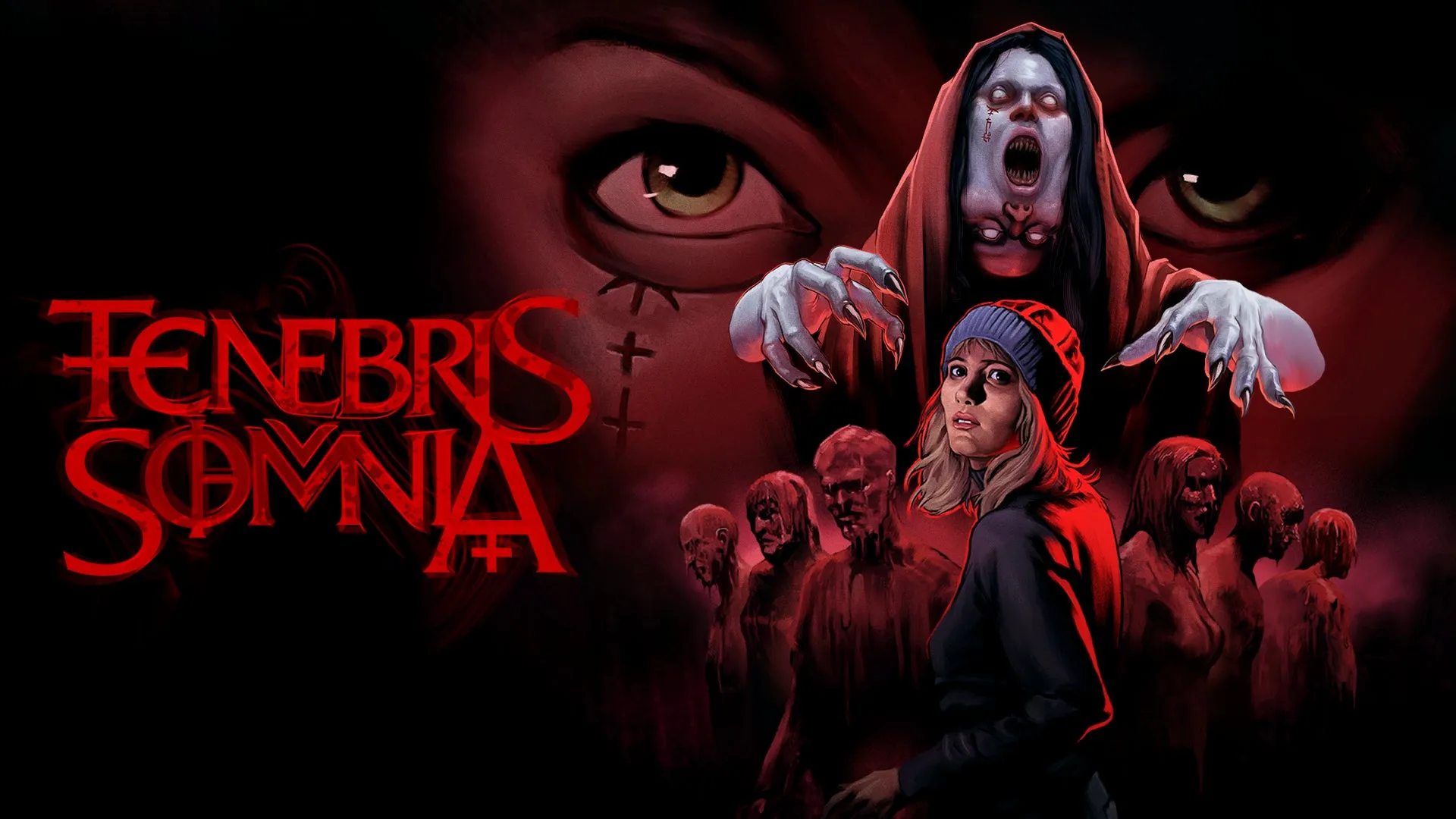
Tenebris Somnia has a particularly nasty trick: it lets a colorful, low-resolution world invite your imagination in, then switches to live action and shows you what was waiting there.
That transition is the first thing people notice. Making it feel like one story is where the work gets interesting.
For this Dialogz, filmmaker and game creator Andrés Borghi spoke with Game Cookies about combining retro survival horror with live-action cinematics, building creatures with an Argentine film crew, and keeping a protagonist emotionally consistent across pixels and performance. His answers also get into the less glamorous decisions that make the illusion possible: postponing rooms until their locations had been filmed, reshooting a scene that felt emotionally wrong, and replacing a practical effect when it failed in the edit.
Steam credits Borghi and Saibot Studios as developers, with New Blood Interactive publishing. The full game is now available on PC via Steam, with a release date of October 16, 2026; a demo is also available.
This interview was conducted in writing and organized by theme. Quoted excerpts are preserved from Borghi’s responses. Kiki’s commentary is Game Cookies’ editorial perspective.
The pixels lower your guard
Borghi describes the pixel-art presentation as a way to make players feel comfortable before unsettling them. Bright colors and an apparently innocent look create an opening. A few carefully chosen details can then make that same world creepy.
The limited detail leaves room for the player’s imagination. Live action changes the relationship: actors, camera movement and sound can convey emotions and reveal horrors with a specificity the game’s visual style cannot provide.
“The hardest part was to find the correct balance between the two. I realized that we need a strong contrast between both styles.”
Making the styles too similar introduced distracting differences, he explains. Their visual distance needed to be large enough for the contrast to work while still leaving the impression that both belonged to the same universe.
🦊 Kiki: That is a much more interesting design problem than putting a spooky video between two rooms. The player has already imagined what those pixels mean. Suddenly showing the physical version changes the image they were carrying around in their head. Every ordinary-looking room after that gets a little less trustworthy.
🍪 Chip checks a brightly colored doorway, then decides the hallway is fine, actually.
Some scenes needed faces. Others needed words.
Borghi says the division between gameplay and live action emerged as he developed the story. Some moments needed a particular horror atmosphere. Others depended on visual information that the footage could communicate clearly, or an emotional response carried by the actors.
He says the cutscenes stayed in their intended positions from the original script. The team did not have to relocate them during development.
An important constraint sits inside that decision: the live-action sequences have no spoken dialogue. Borghi says the team chose that approach to make localization easier. Information requiring dialogue can instead be delivered during gameplay.
That gives the two forms different storytelling responsibilities. Performance, atmosphere and detailed imagery carry the filmed sequences; text can communicate information while the player remains inside the game.
The monster has more than one maker
Asked about practical effects, Borghi starts with the people and the process.
He develops an idea, which concept artist El Toreh turns into a design. Special-effects artist Marcos Berta, whom Borghi says he worked closely with on When Evil Lurks, builds the puppet or prop. Ingrid Ross Aguirre, Anita Figueroa and Yuruani Rodriguez complete the creature’s identity through costume. Borghi and his post-production team then add digital details.
“There’s no war between practical effects and digital effects; they’re two disciplines that work together to achieve the best possible result.”
His hardest example involves a monster he does not want to spoil. The crew filmed the scene with space left for the creature, then filmed a puppet against green screen. Borghi composited it into the footage, matching its lighting, color and size. Fernando Suarez created the CGI tentacles that completed the effect.
The process also included a failure. A practical hand was filmed, but did not work later in the edit. Borghi says he had rushed the shoot and had not given the effect the attention it needed. The finished version used a fully CGI replacement.
He also draws a specific boundary around this production: the effects work did not use generative AI. His explanation is about the team wanting to make the work themselves and enjoy that process.
🦊 Kiki: This is why the “all practical” badge gets exhausting. Look at the actual work: someone designs a creature, someone builds it, someone dresses it, someone lights it, someone makes the pieces sit together in the shot. The useful question is whether those choices make the creature convincing. A rubber hand that breaks the illusion does not deserve immunity because it was physically on set.
🍪 Chip cautiously applauds the effects crew from a safe distance away from the hand.
One protagonist, two performances
A sprite and a live-action actor can belong to the same character and still feel emotionally disconnected. Borghi calls maintaining that continuity the hardest process.
On set, the team had to account for what the character had experienced immediately beforehand in the game. Borghi discussed those circumstances extensively with Clara Kovacic, who plays the protagonist.
A small scene ultimately had to be reshot because its emotional state did not match when he placed it in the game.
That is a revealing distinction. The sequence could exist as footage, yet still fail at the point where the player arrived from the preceding gameplay. The transition needed to preserve what the character was feeling, as well as what she looked like.
Film the room before building the room
The hybrid also changed the order of production.
“We learned the hard way that the rooms and enemies you see in a cutscene couldn’t be created for the game before filming them.”
Designing a room first created a practical location problem. Finding somewhere to film with matching doors, colors and layout was difficult. Borghi says the better approach was to film a location, then recreate it in the game.
Because game development and filming happened in parallel, some rooms had to wait until the corresponding footage existed.
🦊 Kiki: This is the production detail I would put above every pitch deck promising a beautiful hybrid experience. The real building has already decided where its doors go. Your game layout now has to negotiate with architecture. That sounds obvious until two teams are working in parallel and one of them has already built the wrong room.
🍪 Chip compares a floor plan with a photograph and quietly moves a door.
Keep the backtracking. Lose the inventory frustration.
Borghi’s retro influences are specific. He points to the original Resident Evil’s level design, especially how progression opens the space and makes returning through it worthwhile. Silent Hill influenced the combat and its use of melee weapons.
He chose to leave out a limited inventory.
“It’s a mechanic that, if done well, is great, but most of the games that have it only make it frustrating.”
The qualification matters: he recognizes that inventory limits can work, but did not want that friction here.
Between cinematic peaks, Borghi puts much of the responsibility for sustaining interest on the story. Players need hooks and a clear immediate objective beyond the broader goal of finding Iván. Otherwise, movement through the world can become aimless.
New Blood helped tune the fear
Borghi says the original idea developed in his head for a year before he shared it. He designed the game from the ground up, then Tobias Rusjan and Saibot Studios’ development team helped bring it into reality through a process he describes as lasting four years.
New Blood also helped shape the game, particularly its mechanics and difficulty. Borghi says the publisher understood the heart of the project when it came aboard.
The balance he describes is familiar to horror designers: players should face resistance without becoming so frustrated that fear gives way to irritation.
“But the identity of the game was always the same from start to finish.”
Asked which demo feedback prompted major revisions, Borghi does not supply a dramatic turnaround story. He says the team did not receive requests to change the demo and largely took its reception as reassurance that they were on the right path.
That is his account of the feedback the team received, rather than a claim that every player had the same experience.
Argentina is in the work
Borghi locates the game’s Argentine character in its language, architecture and other details. He did not want to force the project to announce its nationality at every opportunity.
“I know full well that the Argentine identity will be there because the game was made by Argentines.”
He takes a similarly practical approach to international comprehension. When something might be unclear to someone from another country, he tries to explain it more clearly without becoming heavy-handed. A visible detail such as yerba mate can help establish place, but he believes much of that identity emerges naturally.
His response about Argentina’s wider games industry is deliberately cautious. He is more involved in film and does not claim an insider’s overview of every local studio. He also recognizes that this project benefited from an unusually fortunate situation: international publisher funding.
He says he is hearing about more Argentine games finding recognition abroad, while acknowledging that barriers remain.
🦊 Kiki: I appreciate that he leaves room for experiences beyond his own. An internationally funded project can tell us a lot about how that project got made. Understanding the conditions facing other Argentine teams requires hearing from them too. Let this game open that conversation without asking it to carry an entire industry on its back.
The story underneath the creatures
When the conversation turns to what international players can connect with, Borghi brings it back to the emotional premise.
“The spine of the story of the game is a love story gone wrong, and any human being can follow that.”
He says he worked carefully to preserve that spine through the lore and fantasy elements. His final ambition is for the experience to move people and remain with them after they finish, whether or not every player finds it frightening.
That brings the conversation back to the hybrid’s central challenge. The visual change can attract attention immediately. The character, story and transitions have to give that attention somewhere to go.
Last Bite
Tenebris Somnia’s combination of pixel art and live action makes an obvious headline. Borghi’s account makes the work behind it worth discussing: a performer matching the emotion of a preceding game scene, a location determining when a digital room could be built, and a creature completed by artists working across physical and digital techniques.
Those decisions give us a useful way to approach the game now that it is available on PC via Steam. Watch what the transition does to the story, what it reveals, and whether the person on the other side of it still feels like the character you were controlling.
The effects are there to make the nightmare believable. Borghi wants the love story to make it stay.
🦊 Kiki · 🍪 Chip · ⭐ Byte · 🦁 Leo
Game information
Tenebris Somnia on Steam: https://store.steampowered.com/app/2121510/Tenebris_Somnia/
Developers: Andrés Borghi and Saibot Studios. Publisher: New Blood Interactive.
By J. L. Miralrío · Game Cookies Dialogz