

Hello there, digital game owners, server-shutdown survivors. Today we need to talk about the movement that started with one dead Ubisoft racing game and somehow ended up inside European institutions, French courts, and the California legislature.
Stop Killing Games used to sound like the kind of campaign that would live forever in angry Reddit threads, YouTube comments, and those Steam reviews people quote when they are about to lose faith in humanity. Now it is something else. It has verified signatures in Europe, a public hearing in the European Parliament, a French lawsuit against Ubisoft, and a California bill moving through the Senate.
That is a weird sentence to write about game preservation, but here we are.
The Crew became the game nobody could ignore
The movement’s villain origin story is still Ubisoft’s The Crew. The open-world racing game launched in 2014, required online servers to function, and eventually became the cleanest possible example of the problem Stop Killing Games is trying to solve.
Ubisoft delisted The Crew, shut down its servers in March 2024, and the game became unplayable for people who had bought it. The bigger outrage came from the way players understood the transaction. They thought they had bought a game. Ubisoft’s position, like much of the modern digital market, leaned on the idea that customers had bought limited access under a license.
That distinction has existed for years, sure. The industry loves pointing that out like it closes the argument. It does not. Because for a normal player, “buy” still feels like buy. If the button says purchase, the box says game, and the customer pays money upfront, the average person is not mentally signing up for a timer hidden in backend infrastructure.
This is where Stop Killing Games found its pressure point. The movement is not asking every publisher to run servers forever. The ask is simpler and much harder for the industry to dodge: when support ends, leave the game in a functional state, offer a reasonable offline path, allow community-hosted access where possible, or be honest from the start that the product has an expiration date.
🦊 Kiki: Look, I know lawyers love the license argument. I get it. The EULA has been there since the ancient cartridge scrolls or whatever.
But bro, normal people do not shop like contract goblins. They see a game, they pay for the game, they expect the game to exist later. Crazy concept, apparently.
And the funny part is, publishers want the emotional benefit of “own this game now” when selling it, then the legal benefit of “you never owned anything, actually” when killing it. That little switcheroo is exactly why people are pissed. It feels slimy because it is slimy.
🍪 Chip clutches a tiny receipt like it personally betrayed him.
Europe forced the conversation into official channels
The most important piece of the Stop Killing Games story is the European Citizens’ Initiative called Stop Destroying Videogames. It gathered more than 1.29 million verified statements of support from EU citizens and reached the required minimum numbers in 24 Member States. That pushed the initiative onto the European Commission’s desk.
The ask is direct: publishers selling or licensing videogames in the EU should be required to leave those games functional after support ends, so they cannot simply disable them remotely. The Commission now has until July 27, 2026 to issue its official reply and say what actions, if any, it intends to take.
That does not mean EU law is suddenly about to rescue every dead live-service game from the graveyard. The European process moves slowly, and it still has to survive lobbying, legal interpretation, technical questions, and the usual institutional mud. But getting this far already changes the tone. This is not just a preservation rant anymore. It is a consumer-rights question sitting in front of lawmakers.
The European Parliament also held a public hearing on April 16, 2026 through the IMCO, JURI, and PETI committees. The hearing framed the issue around consumer rights, ownership, licensing, intellectual property, and whether publishers should be allowed to make sold or licensed games unusable after support ends.
That framing is important. Once the issue leaves “gamers are mad again” territory and enters “digital goods can be remotely disabled after purchase,” it becomes much harder for the industry to dismiss.
🦊 Kiki: This is where the campaign got smarter than people expected.
If you walk into politics yelling “save my favorite dead game,” you might get sympathy, maybe a confused smile, and then everyone goes back to committee paperwork. But if you say, “A company sold consumers a product and later made it unusable remotely,” suddenly people outside gaming can understand the scam-shaped outline.
And yeah, some games are complicated. Servers, licenses, music, moderation, anti-cheat, backend services, all of that is real. But complexity cannot be the magic word that makes consumer rights evaporate. At some point, the company designing the dependency has to own the dependency.
🍪 Chip floats beside a tiny server rack, looking like he wants to unplug himself from the conversation.
California is trying to turn the complaint into law
The U.S. side of this is now centered on California’s AB 1921, the Protect Our Games Act. The bill was introduced by Assembly Member Chris Ward and, as of late May 2026, had moved to the California Senate after passing through the Assembly.
The bill is aimed at digital games first sold or rereleased from January 1, 2027 onward. If a digital game operator plans to stop providing services necessary for the ordinary use of a game, it would need to give purchasers and prospective purchasers notice 60 days in advance. Once those services end, the operator would need to provide one of three options: an alternate version that works independently of company-controlled services, a patch or update that enables continued independent use, or a refund equal to the full purchase price.
The bill also has limits. It does not apply to free games, subscription-only access, or digital games where access cannot be revoked after purchase, such as games made available for permanent offline download. That matters because the industry response often paints these proposals like a giant apocalypse for every live game ever made. The actual bill is much narrower.
Still, if California passes this, publishers will pay attention. California is not some tiny side market. It is one of the most important legal and business jurisdictions for technology, entertainment, and games in the United States. Even a limited law there could push companies to build more serious end-of-life planning into future products.
🦊 Kiki: The refund part is the spice. That is the part publishers really do not want sitting on the table.
Because once refunds become one of the legal options, suddenly “oops, servers are expensive” is not just a sad corporate memo. It becomes a cost calculation. Either preserve access, patch the game, design it better upfront, or give people their money back.
And honestly, good. If a studio knows from day one that a game depends on a kill switch, then planning for the kill switch should be part of production. You budget for servers, marketing, live ops, battle passes, cosmetics, trailers, influencer campaigns, and a million other things. End-of-life cannot always be treated like the awkward trash bag nobody wants to take out.
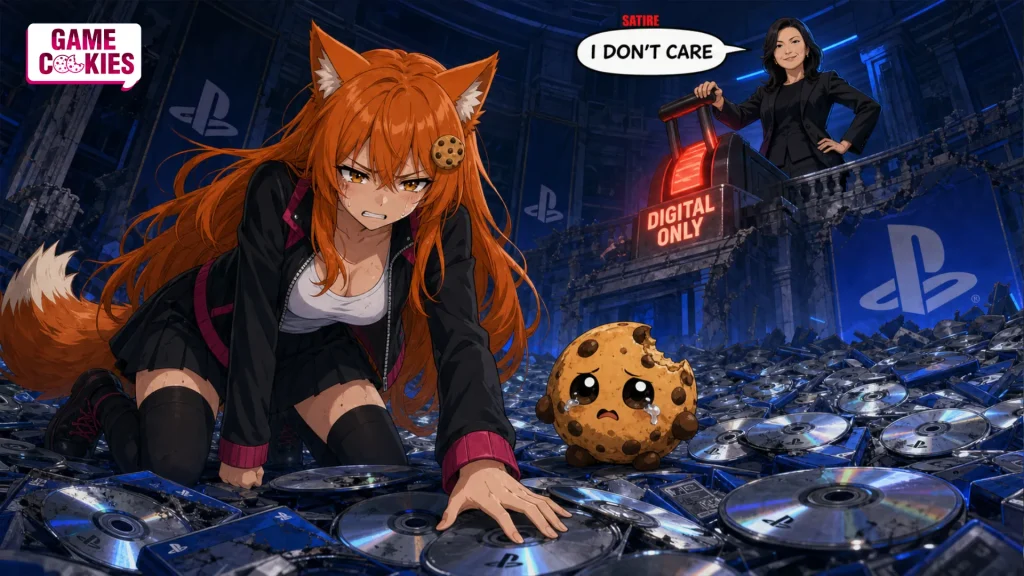
🍪 Chip nervously sweeps a pile of dead server keys under a tiny rug.
The industry’s objections are not all fake, but they are getting old
Publishers and industry groups are not wrong that this is complicated. Some games depend on licensed music, external IP, moderation tools, anti-cheat systems, cloud infrastructure, seasonal content pipelines, player economies, and backend services that were never designed for public release. In some cases, private servers could create legal risk, security issues, or moderation problems.
Those concerns deserve more than a shrug. A bad law could accidentally punish smaller studios, force developers to spend scarce time on legacy infrastructure, or create weird compliance burdens that make online games harder to build.
But the industry’s weakest argument is the old “games are services now, deal with it” posture. That answer sounds worse every year because publishers keep selling digital products with ownership language, collector energy, premium editions, deluxe upgrades, battle passes, cosmetics, and years of monetization. They want customers to emotionally invest like owners, spend like owners, and build communities like owners. Then, when the switch flips, the customer becomes a temporary license holder who should have read the contract better.
That mismatch is exactly what regulators are starting to notice. The fight is not only about whether every game can live forever. It is about whether publishers can design total dependency, sell the product without a clear lifespan, monetize the audience for years, then erase access with no meaningful fallback.
🦊 Kiki: I do not want dumb regulation written by people who think a server is a magic computer in a basement. That would be bad. Nobody needs a law that treats every MMO like a SNES cartridge.
But I am also tired of the industry pretending there are only two options: keep servers alive until the sun explodes, or let publishers vaporize paid games whenever the spreadsheet gets bored. There is a middle ground, and the funny part is players have been explaining it for years. Offline modes, LAN options, private server tools, sunset notices that actually mean something, refunds when a product gets bricked early. None of this is alien technology.
The truth is some companies can do it. Some simply do not want the obligation.
🍪 Chip holds up a tiny sign that says “LAN party?” and immediately gets ignored by a corporate lawyer.
Ubisoft is still the example everyone points at
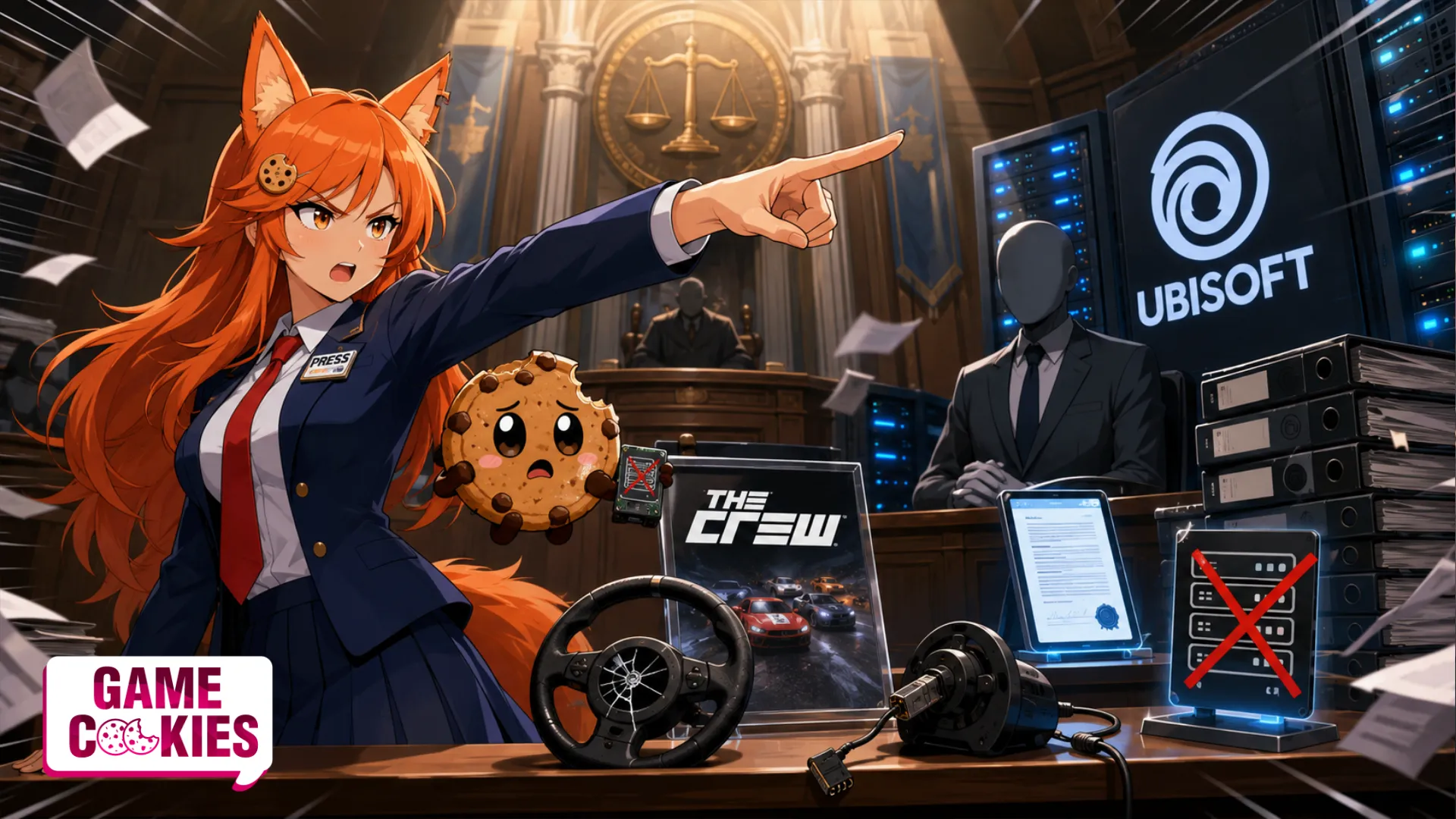
The French lawsuit from UFC-Que Choisir keeps Ubisoft in the center of the storm. The consumer association argues that Ubisoft misled consumers about the permanence of The Crew and used abusive contractual clauses that stripped players of ownership rights. Stop Killing Games supports the case, and the legal question is blunt: can a company sell a game, take the money, and later erase practical access by shutting down the servers?
Ubisoft is not the only company with this problem. Plenty of games have died, and plenty more will. But The Crew became the perfect case study because it was sold upfront, had a long life, had in-game transactions, and then disappeared for everyone. It also hit a nerve because racing games are not obscure server simulations. Players understand the idea of wanting to drive around a map they paid for.
The uncomfortable part for publishers is that The Crew did not vanish quietly. It became a rallying point. It turned one shutdown into a regulatory campaign. It made “you only bought a license” sound less like legal clarity and more like a warning label the industry forgot to print in big enough letters.
🦊 Kiki: Ubisoft probably wishes The Crew had just become another dead game in the pile. Like, quietly gone, a few angry forum posts, maybe a sad YouTube retrospective, then everyone moves on.
Instead, it became the mascot for the whole ownership mess. Which is kind of hilarious in a dark way because The Crew was not even the most beloved game ever. That is the point. You do not need a masterpiece to make people care. You just need a product they paid for getting erased in a way that feels like nonsense.
And once people notice the trick, they start checking every other “purchase” button with side-eye.
🍪 Chip slowly backs away from a digital storefront while protecting his wallet.
Why this fight is bigger than game preservation
Stop Killing Games is not only about nostalgia. Preservation is part of it, sure. Games are cultural works, and losing them matters. But the sharper issue is digital consumer power.
Almost everything is becoming more conditional. Movies disappear from platforms. Software shifts to subscriptions. Books can be edited remotely. Games can require accounts, launchers, servers, authentication checks, and terms that change after purchase. The customer keeps paying full price while ownership gets thinner.
Games are just where the contradiction becomes painfully visible. If a book publisher stops printing a novel, your copy does not dissolve on the shelf. If a film studio stops supporting a Blu-ray, the disc does not call home and die. With always-online games, the company can make every copy fail at once.
That is why lawmakers are listening. The gaming industry accidentally built one of the clearest examples of digital ownership erosion, then acted surprised when people treated it like a consumer-rights issue.
The next phase will be messy. Europe may answer cautiously. California’s bill still needs Senate support and a governor’s signature. The French lawsuit has to work through the courts. Industry lobbying will get louder because once this idea becomes law anywhere important, every publisher will need to think about end-of-life planning before launch.
That is probably healthy. If a game is designed to die, the buyer deserves to know. If a game is sold for money and can be preserved without insane burden, the publisher should have a plan. If the company refuses both, then maybe the word “purchase” should stop doing so much unpaid marketing work.
🦊 Kiki: This is the part where publishers should probably stop acting shocked and start building boring, practical solutions.
Nobody sane expects every dead live-service game to come back like a zombie with perfect matchmaking and seasonal events. But the current model has been too comfortable for companies. Sell the thing, monetize the thing, control the thing, delete the thing, blame the fine print.
Players finally found a way to drag that argument out of Discord fights and into places where lawyers have to sit upright. That alone is a W. A very nerdy W, but still a W.
🍪 Chip gives a tiny exhausted thumbs-up with one dark-brown stubby arm.
In the end…
Stop Killing Games has become one of the rare consumer movements in gaming that managed to escape the usual outrage cycle. It did not stay trapped as a hashtag. It moved into petitions, hearings, lawsuits, and bills.
The campaign could still lose pieces of this fight. California could stall. The EU could answer weakly. Courts could side with contract language. Publishers could lobby hard enough to water everything down.
But the industry already lost the clean version of the argument. Players are no longer asking politely whether digital ownership is fake. They are asking regulators why a paid game can be remotely killed with no real fallback.
That question is going to follow every always-online product from now on.
⚙️ Stay preserved, like the games players refuse to let disappear.
⚙️ Keep asking what “purchase” actually means when the server decides your library is done.
⚙️ And remember, if ownership only exists until the company gets bored, players are not being dramatic for noticing the scam.
🦊 Kiki · 🍪 Chip · ⭐ Byte · 🦁 Leo