

The games industry loves a launch because a launch is easy to photograph. Midnight countdowns, sponsored streams, review embargoes, preorder charts, and a giant concurrent-player number give executives something dramatic to point at. Then Monday arrives, the graph bends downward, and everyone starts speaking about the game in the past tense.
Steam’s first half of 2026 delivered a blunt correction to that habit. According to Alinea Analytics, games sold through Steam generated an estimated $11.1 billion in gross revenue during the first six months of the year, the platform’s strongest half-year on record. Only 21% came from games released in 2026. The other 79% came from the catalog already waiting on the shelf.
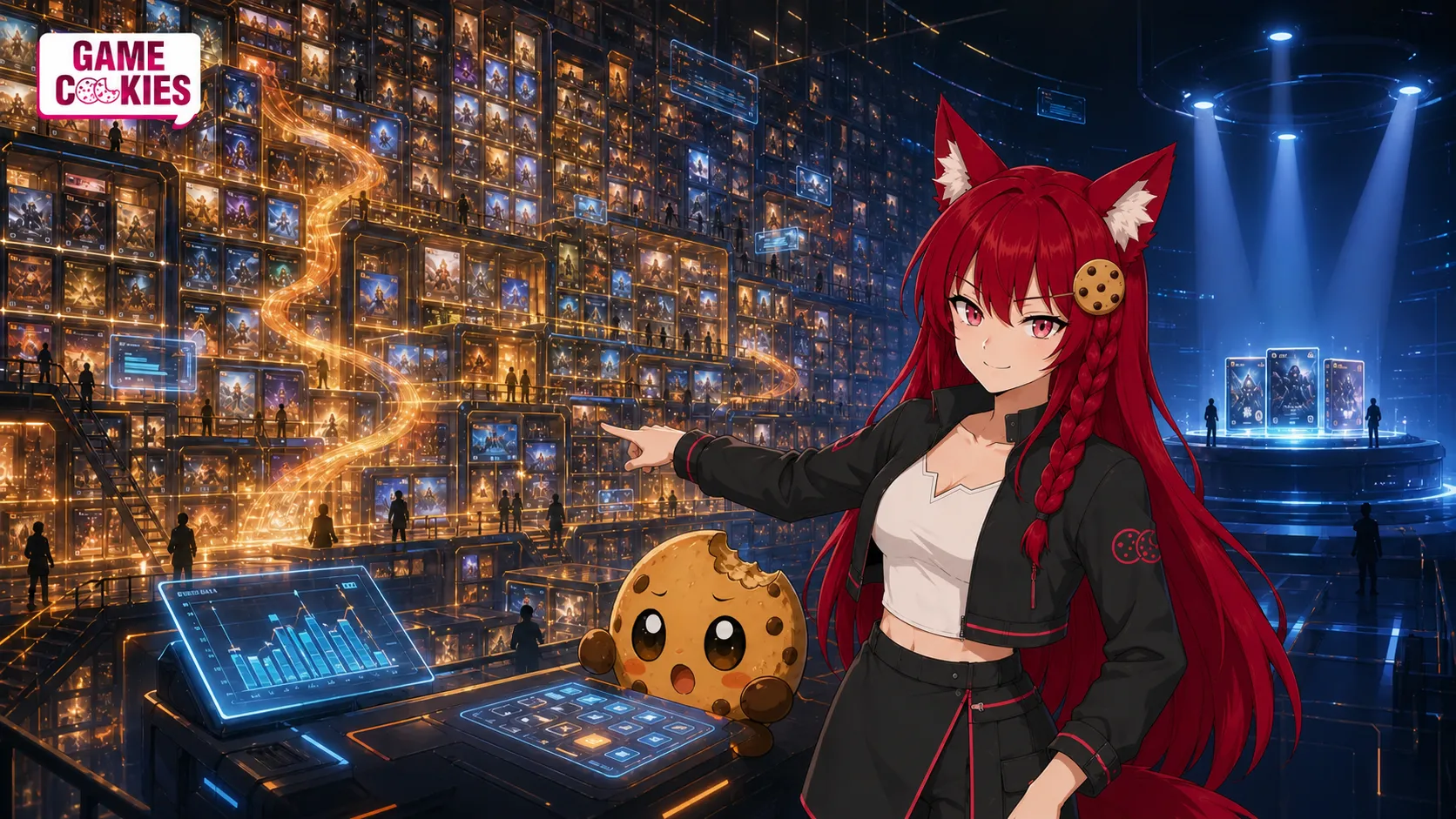
🦊 Kiki: No, Kevin. “Failed to sustain launch velocity” is what happens when your dashboard stops counting the moment the launch-week graph stops looking like a ski jump. Steam kept selling the game. Players kept recommending it. Somebody patched it, discounted it, modded it, and dragged three friends into co-op two years late.
The spreadsheet called the game dead. The customer’s wallet missed the funeral.
🍪 Chip opens the launch dashboard, scrolls past day seven, and discovers the spreadsheet simply ends there.
A record built after release day
The headline number comes from Alinea Analytics’ July 9 market estimate. Its model puts H1 2026 revenue 14.5% above the same period in 2025 and 8% above the holiday-heavy second half of 2025. Alinea also estimates that Steam’s half-year revenue has grown 4.7 times since H1 2017. A storefront that used to depend on the calendar’s biggest releases now earns more from the accumulated weight of everything that came before.
The composition changed as the total grew. New games represented 29% of Steam revenue in H1 2024, 27% in H1 2025, and 21% in H1 2026. Back-catalog revenue therefore rose from 71% to 79% in two years. Release schedules can make any individual half look unusually strong or weak, but an eight-point shift beside a record total deserves attention.
⭐ Byte: The $11.1 billion figure is an external estimate of gross consumer revenue generated by games on Steam. It is not a disclosed Valve financial result, Valve profit, or a clean estimate of Valve’s store commission. The 79% bucket means games released before 2026, so it includes recent hits, live-service games, and decade-old favorites. It should not be read as 79% retro games.
New releases still mattered. Alinea’s estimated leaders included Forza Horizon 6, Resident Evil Requiem, Crimson Desert, Slay the Spire 2, and Subnautica 2. Fresh games generated billions collectively and gave players new reasons to open Steam. The surprise sits in the ratio: every launch shared the register with a catalog measured in years, genres, updates, discounts, and unfinished wishlists.
The catalog became the competition
A game launching on Steam no longer competes only with the other titles arriving that week. It competes with polished games from last year, definitive editions from five years ago, indies that never stopped receiving updates, multiplayer games kept alive by communities, and classics discounted below the price of lunch.
That choice is brutal for a new release. An unfamiliar $70 game asks a player to trust the trailer, the reviews, the performance on their exact hardware, and the promise that the launch build will be worth the price. A familiar older game may already have years of patches, thousands of reviews, mature guides, mods, complete expansions, and a 50% discount. One purchase is a bet. The other arrives with receipts.
Steam itself is built to keep that library moving. Seasonal sales reactivate wishlists. Personalized recommendations connect players to games adjacent to what they already play. Community hubs, workshops, guides, reviews, broadcasts, and update notices keep store pages visible long after the launch campaign has ended. In 2025, Valve even described a discovery experiment that uses players’ actual playtime to recommend recent and upcoming games, another reminder that behavior matters more than the release calendar.
The pattern is visible in individual games. Alinea’s June 2025 Steam analysis estimated that a 90% discount pushed 2018’s Star Wars Battlefront II back into the month’s top ten with 751,000 copies sold. Stardew Valley, already nearly a decade old, sold another estimated 583,000 copies during a 50% discount. Strong games can keep finding new customers when price, visibility, updates, and reputation line up.
🦊 Kiki: Look, the older game has years of patches, thousands of reviews, mature mods, and a 70% discount. The new one is asking $70 for a trust fall.
Of course people chose the safer option. Nobody owes launch week a sympathy purchase because the marketing budget has feelings. If the plan only works after everyone forgets every good game already on Steam, congratulations: you built a business model around group amnesia.
🍪 Chip compares the two store pages, circles “Mostly Positive” on the cheaper game, and is removed from the innovation workshop.
Launch week is a checkpoint, not the finish line
Publishers still organize too much of the business around the opening burst. Marketing spend climbs toward release day. Review scores become instant verdicts. Player-count charts are treated like cardiograms. A game can be labeled a disappointment before patches, discounts, word of mouth, or new hardware have had time to expand its audience.
Steam’s revenue mix rewards a longer view. A launch creates awareness, reviews, wishlists, community discussion, and the first cohort of players. Those assets can compound. A well-timed update creates another store event. A discount converts people who were interested but price-sensitive. A sequel sends players back to the original. A mod restores attention. A handheld PC makes an older game convenient again. A viral clip introduces a title to an audience that missed the original campaign.
That does not excuse weak launches. Technical problems can poison reviews and turn curiosity into avoidance. Abandoned roadmaps teach buyers to wait. Aggressive monetization can erase goodwill faster than a discount can rebuild it. Longevity begins with a product players want to recommend and a publisher willing to keep it purchasable, functional, and visible.
The investment logic changes once the catalog is treated as an active business. Post-launch support stops looking like charity for existing customers. Compatibility work, store-page maintenance, sensible pricing, community tools, regional availability, and carefully timed promotions become acquisition work. Every old game is a possible front door to a franchise.
🦊 Kiki: I love how “lifetime value” sounds brilliant until somebody mentions lifetime maintenance.
Suddenly patches are cost centers, the roadmap becomes aspirational literature, and the community manager is holding the whole village together with one Discord announcement and a GIF.
You cannot ask a game to earn forever after treating it like a disposable coffee cup. Even the cup gets a recycling bin.
🍪 Chip opens the engagement flywheel and finds a hamster labeled “unpaid community goodwill.”
The winners will design for the long tail
Steam’s 79% back-catalog share does not hand every publisher a magic formula. Huge catalogs can bury smaller games, and discounts can train customers to wait. Established franchises have an advantage because awareness, reviews, and community knowledge accumulate around them. A new studio cannot manufacture ten years of trust before launch.
Small teams can still compete on durability. Stable performance widens the hardware range. Clear positioning helps the right audience recognize the game. Demos and wishlists reduce the cost of discovery. Updates give creators and press a reason to return. Mod support, co-op, replayability, and player-made stories can generate attention without buying another launch-sized campaign. A price that matches the promise can turn curiosity into an impulse purchase.
Large publishers face a different opportunity. Their back catalogs contain known characters, proven mechanics, and years of accumulated demand. Yet many still make those libraries harder to buy through delistings, broken launchers, missing language support, abandoned multiplayer dependencies, or versions that run worse on modern hardware than they did at release. Steam’s record suggests preservation and maintenance can sit beside remakes and sequels as revenue strategy.
Alinea identified several contributors to the record, including growth among Asian players, higher prices, viral co-op games, smarter catalog promotions, and publishers returning after experiments with their own launchers. Tom’s Hardware summarized the same five drivers, while PC Gamer highlighted the shrinking new-release share. No single lever explains $11.1 billion. The common thread is access: more players, more price points, more discovery paths, and more games that remain available when attention circles back.
⭐ Byte: Back catalog does not mean free money. Discounts can lift unit sales while lowering revenue per copy, and support costs vary by game. The useful signal is the revenue mix: 79 cents of every estimated Steam revenue dollar in H1 2026 came from titles released before the year began. Publishers should measure lifetime revenue, discount performance, reactivation costs, and player retention instead of declaring victory or failure from launch-week units alone.
Players have already rejected the expiration date
Players rarely experience a library in the order a publisher’s calendar intended. Someone buys a first gaming PC and discovers a decade at once. A friend starts a co-op campaign years late. A television adaptation revives a franchise. A sequel announcement sends everyone back to the previous entry. A summer sale turns a game that was too expensive into the easiest yes of the weekend.
The industry’s language has been slower to catch up. It still divides games into launches and leftovers, as though entertainment spoils when the campaign ends. Steam’s numbers describe a market where relevance can be delayed, repeated, or rebuilt. The audience decides when a game becomes current.
That should change how success is reported. Peak concurrent players remain useful for capacity planning and momentum, but they cannot describe the full commercial life of a game. First-month sales show the opening, not the whole curve. A title that converts wishlists across three years, resurges during updates, and anchors a publisher sale may create more durable value than a louder launch that disappears by the next quarter.
🦊 Kiki: Can we please let somebody replay a 2018 shooter without diagnosing civilization?
It was discounted. It runs on the laptop. Their friends bought it. Sometimes a turnip is just a turnip. The backlog has no political program. It is a pile of good games that marketing failed to erase.
🍪 Chip buys the old game for $7.50 and somehow survives without submitting a political statement.
In the end…
Steam’s estimated $11.1 billion half-year is a platform story, but the 79% underneath it is a product strategy. New games pull attention into the store. Good catalogs keep converting that attention after the trailers, reviews, and launch streams have moved on.
The strongest lesson is patience backed by maintenance. Ship something worth returning to. Keep it working. Give people reasons to notice it again. Price it intelligently. Respect the community that carries it between marketing beats. A launch can start the relationship, but Steam’s record was built by games that refused to vanish when the countdown reached zero.
⚙️ Stay curious about the games earning a second, fifth, or fiftieth life.
⚙️ Keep separating launch noise from lifetime value like Byte refusing to let one peak-concurrent chart run the whole meeting.
⚙️ And remember: the backlog is not where games go to die. It is where impatient marketing departments discover that players own calendars too.
🦊 Kiki · 🍪 Chip · ⭐ Byte · 🦁 Leo
Tips, corrections, and suspiciously immortal Steam backlogs: contact us here!