

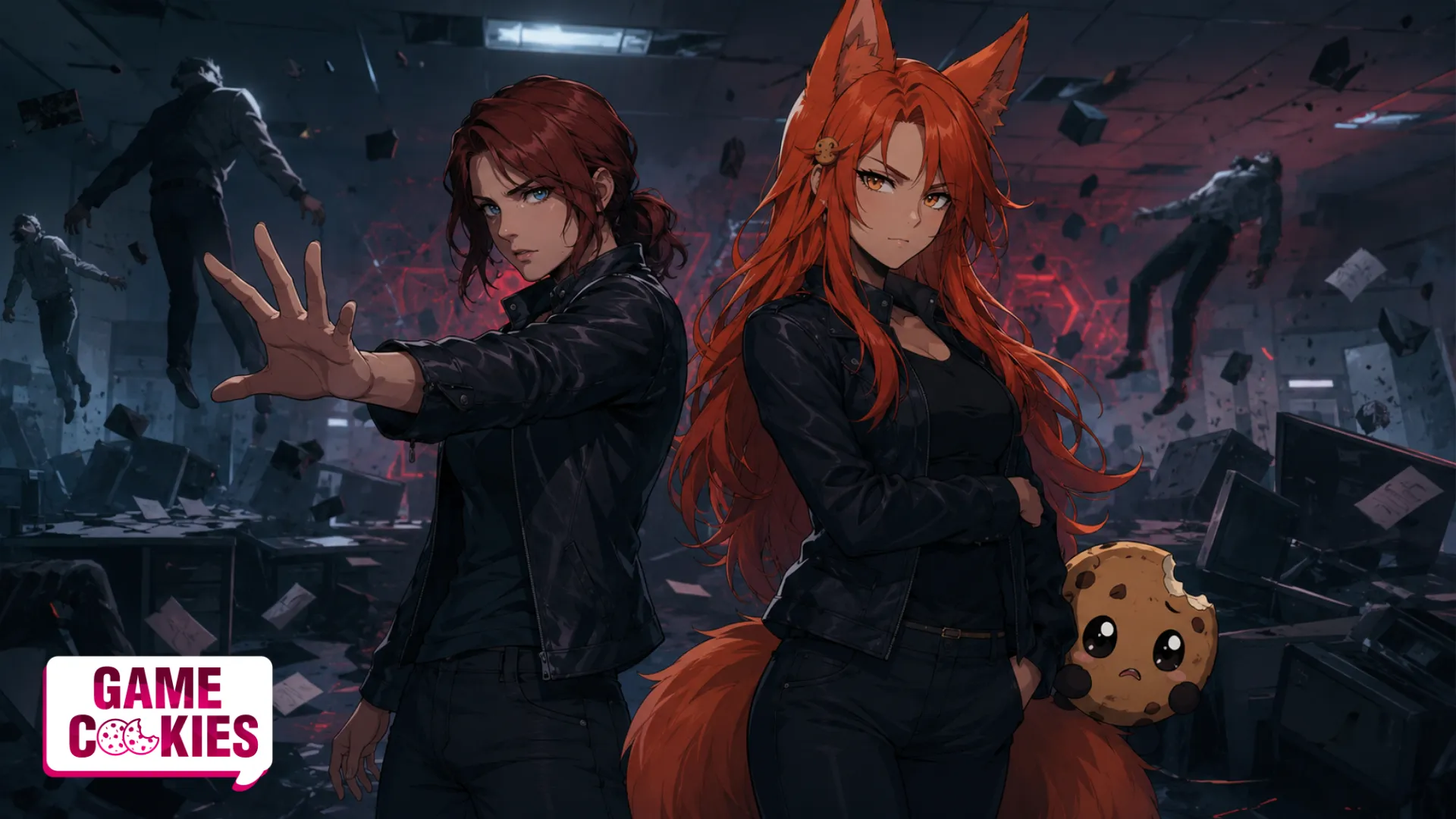
Hello there, lighthouse watchers, Bureau interns, and anyone who has ever explained Control to a normal person and realized halfway through that you sound insane.
Remedy Entertainment Plc has a new CEO, and he is saying something that should make fans slightly nervous, slightly hopeful, and very aware that vibes do not pay invoices.
Jean-Charles Gaudechon, Remedy’s newly appointed boss, says Alan Wake and Control “should have sold more.” He wants Remedy to keep making the strange, authored games it is known for, but he also wants those games to reach a wider audience.
That is the polite version.
The less polite version is that Remedy has spent years making games people adore, critics celebrate, and the industry treats like sacred objects whenever it wants to sound cultured. Then the business side walks in wearing an FBC badge and asks why the numbers are still smaller than the reputation.
Remedy’s problem is painfully familiar
Alan Wake 2 was Remedy’s fastest-selling game, reaching 1 million copies by the end of December 2023 and 1.3 million by early February 2024. Remedy also said it sold over 50% more copies, and over three times more digital copies, in its first two months than Control did in its first four months.
Those numbers are respectable. For most studios, they would be a victory lap. For Remedy, they are complicated because the studio’s cultural weight is bigger than its commercial footprint.
This is the weird thing about Remedy. People talk about Alan Wake 2 like it rewired survival horror. People talk about Control like it is the cool art-school cousin of the action genre. Sam Lake can show up at an awards show and half the internet suddenly remembers it has taste.
Then you look at the business side and the picture becomes less dreamy. Alan Wake 2 needed time to become profitable. It eventually passed 2 million sales and started generating royalties after recouping development and marketing costs, but that delay matters. High-budget, strange, single-player games are expensive beasts.
So Gaudechon’s comment is blunt, but he is not inventing a problem out of nowhere. Remedy’s games have impact. They have identity. They have extremely committed fans. What they have not consistently had is the kind of mainstream reach that lets a studio scale comfortably while making expensive, weird games for people who enjoy being confused in premium lighting.
🦊 Kiki: I hate how reasonable this is because my first instinct was to hiss at the business guy. Like, oh great, the former EA executive has entered the haunted Finnish art building. Everybody hide the red rooms. But then you look at the numbers and, yeah, fine, annoying point received. I’ve had too many conversations where people praise Control like it is sacred scripture and then admit they played it through a subscription, a sale, or “eventually.” That is the curse. Remedy makes games that become part of the industry’s personality, but the cash register does not care how many video essays you inspired. Bro, the ATM is not subscribed to your lore channel. It wants money.
🍪 Chip curls into a tiny cookie ball under a desk lamp.
The Annapurna deal is Remedy trying to make the weirdness travel
The big move behind this strategy is Remedy’s partnership with Annapurna. Announced in August 2024, the agreement has Annapurna co-financing Control 2, now known as Control Resonant, while helping bring Control and Alan Wake to film, TV, and other audiovisual formats.
This is where the strategy starts to make sense. Alan Wake already plays with live action, television language, horror fiction, author mythology, and meta-storytelling. Control is basically a paranormal prestige show trapped inside a brutalist office building. These worlds were built for adaptation before the deal existed.
The opportunity is obvious. A good show or movie can introduce millions of people to a world they were never going to discover through a $60 game, a platform-exclusive PC storefront, or a recommendation from a friend who says things like, “The haunted building is kind of alive, but also bureaucracy is the monster.”
The risk is also obvious. Adaptations can sand off the parts that made a franchise worth adapting.
Alan Wake cannot become generic prestige horror with a typewriter. Control cannot become a basic paranormal procedural with cleaner lighting and less architecture trauma. The thing that makes Remedy valuable is also the thing that makes Remedy hard to sell quickly. Its worlds are not elevator pitches. They are strange little machines that slowly convince you to care.
🦊 Kiki: This is where I start side-eyeing everyone in the room. Because “broader audience” can mean “more people get to experience the cool thing,” which is good. Love that. Feed the lighthouse. But it can also mean somebody in a meeting says, “Can the Oldest House be less confusing?” and suddenly Jesse Faden is explaining the plot to a handsome FBI guy named Mark. No. Jail. Straight to narrative jail. If Annapurna lets Remedy stay weird, this could work. If the adaptation treats weirdness like a branding filter instead of the actual engine, then congratulations, you made another expensive mood board with better catering.
🍪 Chip peeks over a stack of case files, visibly sweating chocolate chips.
Remedy buying Control back was the serious business move
Before the Annapurna deal, Remedy made another important move: it bought the full rights to the Control franchise from 505 Games.
That purchase included the original Control, the in-development sequel, the multiplayer spin-off that became FBC: Firebreak, and all future Control products. It also gave Remedy more freedom over publishing, distribution, marketing, and long-term franchise decisions.
That matters because Remedy’s new strategy depends on ownership. You cannot seriously build a cross-media franchise, self-publishing pipeline, sequel strategy, and long-term brand plan while key rights are still split across old agreements.
So when Gaudechon talks about maximizing what Remedy already has, the company has already done some of the hard legal and business work. It owns the thing. It found a media partner. It has a sequel coming. It has a recognizable connected universe.
Now the uncomfortable part begins: making the audience bigger without turning the identity into corporate wallpaper.
Control Resonant has to carry more than a sequel usually carries
The next major test is Control Resonant. The sequel is currently expected in 2026 and shifts focus toward Dylan Faden rather than Jesse.
That is a bold choice. Jesse Faden became the face of Control. She gave the first game its emotional anchor, its deadpan cool, and its slightly exhausted “I guess I run the paranormal government now” energy. Moving the sequel toward Dylan means Remedy is asking players to follow the franchise deeper into its own mythology instead of giving them the safest continuation.
That can work. Remedy’s audience likes bold. But commercially, this is the kind of decision that makes Gaudechon’s “should have sold more” comment more interesting.
If the goal is to grow the audience, Control Resonant cannot rely only on existing cult loyalty. It needs to explain itself better without becoming simpler. It needs marketing that sells the hook fast. It needs a launch plan that does not make people feel like they need a corkboard, a wiki tab, and three lore podcasts before pressing start.
The first Control sold because it looked cool, played well, and slowly revealed just how strange it really was. The sequel has to do that with higher expectations, more financial pressure, and a company strategy now openly built around turning critical prestige into wider commercial reach.
🦊 Kiki: Dylan as the lead is such a Remedy decision. Any normal company would go, “People liked Jesse, keep Jesse, sell jacket, done.” Remedy hears that and goes, “What if we hand the keys to the unstable brother connected to cosmic horror?” I respect it. I also want the marketing team to sleep with both eyes open because this is not the easy path. If you want more players, you need to make the invitation cleaner. The game can still be weird inside. The front door just needs to stop looking like a tax form possessed by David Lynch. People are not scared of lore, they are scared of homework pretending to be marketing.
🍪 Chip places a tiny “PLEASE EXPLAIN THE LORE GENTLY” sticky note on the Oldest House door.
FBC: Firebreak is the warning sign sitting in the hallway
The awkward shadow over all of this is FBC: Firebreak. Remedy’s multiplayer Control spin-off was supposed to expand the universe into a different format. Instead, it struggled to sustain traction, and its Open House update became its final major content update.
That does not mean Remedy should avoid expanding its worlds. It means franchise expansion is not magic. A universe people like in one form does not automatically become valuable in every form.
A Control co-op shooter sounds logical on a whiteboard, but a whiteboard cannot tell you whether players will actually show up, stay, and convince friends to join.
This is the part of Gaudechon’s strategy that needs discipline. Remedy has valuable IP, but the value comes from tone, authorship, mystery, and trust. Stretching those worlds into new formats can grow the audience. Stretching them into the wrong formats can make the brand feel thinner.
The film and TV push could avoid some of Firebreak’s problems because Alan Wake and Control are story-first worlds. They are better suited to adaptation than to trend-chasing multiplayer expansion.
Still, the lesson should stay taped to the studio wall: the audience does not owe every experiment patience just because the logo says Remedy.
🦊 Kiki: This is why “franchise” is such a dangerous little word. It sounds clean. It sounds like spreadsheets wearing cologne. But players do not fall in love with franchise architecture. They fall in love with a mood, a character, a scene, a mechanic, some bizarre little detail that gets stuck in their head at 2 a.m. Firebreak proves the logo alone is not enough. You cannot just put the paranormal sticker on a different business model and expect the cult to assemble like unpaid interns. Gamers can smell “please expand the revenue base” through three layers of smoke machine.
🍪 Chip gently lowers a tiny caution cone beside the glowing red portal.
The real challenge is protecting Remedy from becoming normal
Gaudechon is saying the right business words: audience growth, franchise strategy, cross-media reach, better commercial performance.
After Alan Wake 2 took time to become profitable, after Control became beloved but still smaller than its reputation, and after Firebreak showed how difficult expansion can be, Remedy clearly needs a sharper commercial machine.
The concern is whether that machine can serve the art instead of chewing it into safer pieces.
Remedy’s advantage is specificity. The studio makes games that feel like they escaped from someone’s haunted hard drive. Alan Wake 2 had musical madness, live-action nightmares, detective boards, literary ego, and horror pacing that refused to behave. Control turned concrete, office lighting, government language, and paranormal absurdity into a playable fever dream.
These are commercial assets, but only if Remedy understands that their weirdness is the product.
Gaudechon’s best path is probably the least glamorous one: make the games easier to discover, easier to buy, easier to explain, and easier to enter, while letting the inside stay dangerous. The front-facing business can become cleaner. The creative core should stay messy, surreal, and slightly hostile to boring people.
Because yes, Alan Wake and Control should have sold more. But the answer cannot be to make them feel like everything else that sells more.
In the end…
Remedy is standing in a rare position. It owns more of its future, has an adaptation partner, has a major sequel on the way, and has enough cultural credibility that even its business problems become industry talking points.
That credibility is valuable, but it is not a safety net forever. Strange games still need smart packaging. Auteur studios still need commercial discipline. Cult classics still need enough buyers to keep the cult from becoming a memorial service.
If Gaudechon can help Remedy find a bigger audience without sanding down the madness, this could be a necessary evolution. If the studio starts treating weirdness as a problem to fix, the Bureau may need to open a new containment wing.
⚙️ Stay paranatural, like Remedy trying to turn cult obsession into actual reach.
⚙️ Keep questioning the franchise plan, especially when “broader audience” starts sounding too clean.
⚙️ And remember, the haunted typewriter still needs a sales department.
🦊 Kiki · 🍪 Chip · ⭐ Byte
Tips, rumors, or cursed documents? Send them here.