🍪 Pokémon Winds and Waves at €79.99: Are We Paying Extra for Pretty Water?

Hello there Pokémon trainers, physical-copy collectors, tired parents, and everyone who still remembers when buying a new game didn’t feel like checking airfare.
A new rumor has put Pokémon Winds and Waves back in the price discourse. GamingBolt reported that Amazon Germany listed the upcoming Switch 2 Pokémon game at €79.99 for the physical edition, with the game still expected in 2027. The listing has not been confirmed by Nintendo, and the price could still be a retailer placeholder. Still, once Pokémon, €80, and Switch 2 appear in the same sentence, the internet does what the internet does. It starts yelling near a cash register.
The obvious question is whether Nintendo is preparing to charge Pokémon fans more because the game finally has better water, better islands, and a shiny new Switch 2 label on the box.
The less funny question is whether fans are being trained to accept a new ceiling for first-party games.
The rumor is real, but the panic needs context
GamingBolt’s report says Amazon Germany listed Pokémon Winds and Waves at €79.99, and because this appears to be a physical version, the outlet argues that the game could land at $79.99 in the United States under Nintendo’s newer Switch 2 pricing structure. It also points to Yoshi and the Mysterious Book, priced at $60 digital and $70 physical, as the current example of Nintendo separating physical and digital prices.
That does not make $80 Pokémon confirmed.
Nintendo Life pushed back on the direct conversion panic, noting that the listing also uses the standard December 31, 2027 placeholder date. It also notes that €79.99 is already normal territory for many major first-party Switch 2 games in Europe, while Mario Kart World is €89.99 physical at full RRP in that region. The more grounded read is that this Amazon listing tells us something about European physical pricing, not necessarily the final U.S. MSRP.
There is still a reason fans are annoyed. Pokémon Legends: Z-A Switch 2 Edition launched at €69.99, so if Winds and Waves ends up at €79.99, that would still be a visible jump for the franchise. Even if the U.S. price lands lower, the message is clear enough: Pokémon is moving into the same pricing conversation as Mario Kart, Zelda upgrades, and Nintendo’s bigger Switch 2 bets.
🦊 Kiki: Okay, so first thing: calling this “confirmed $80 Pokémon” is sloppy. Don’t do that. That’s how you hand Nintendo fans the easiest counterargument in the world.
But also, bro, let’s not pretend people are inventing the concern from nothing. Pokémon has been cruising on nostalgia, creature design, and fan patience for years. Scarlet and Violet sold like monsters while running like someone tried to tape an open-world game to a bicycle.
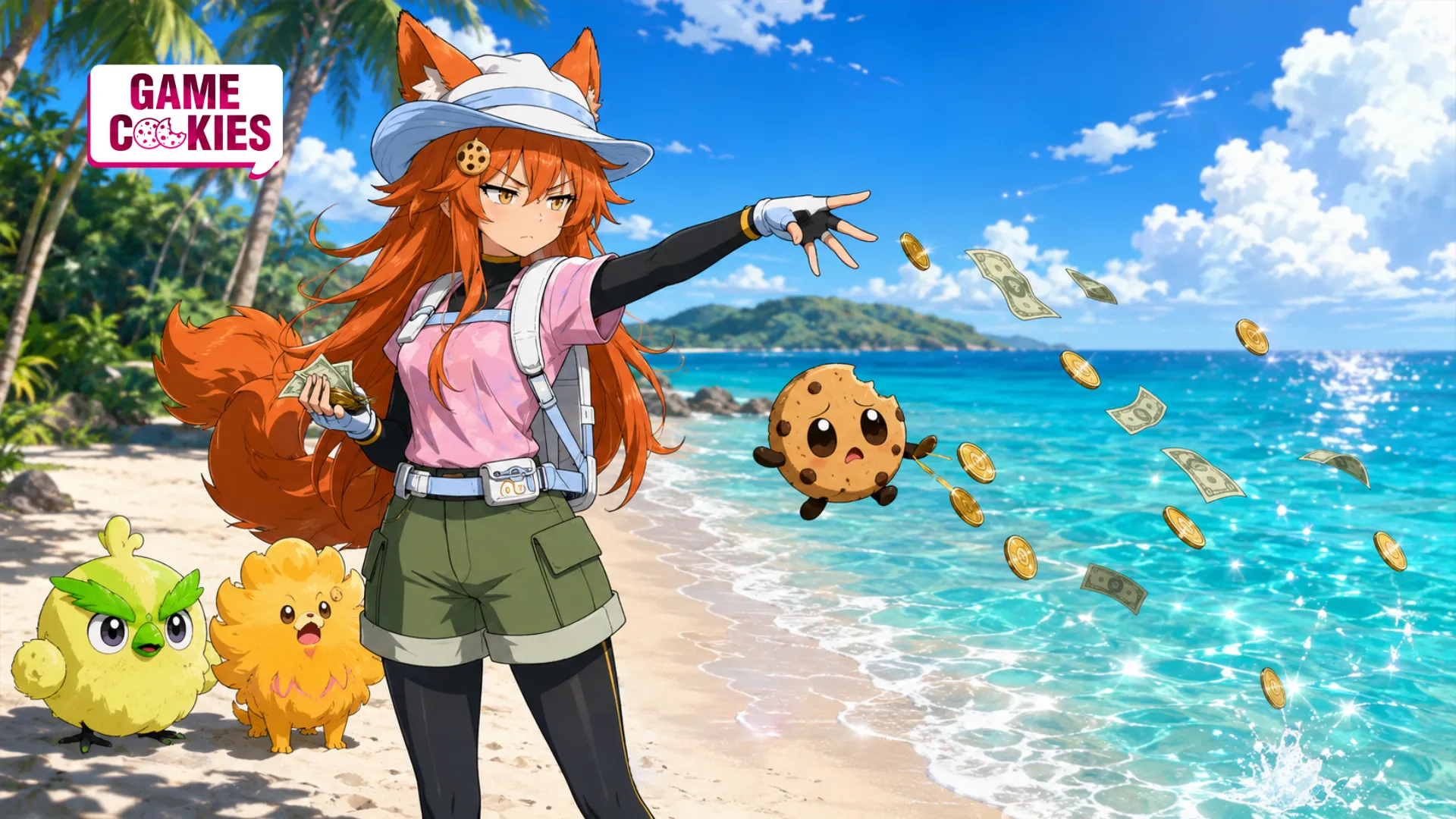
So when I see a new Pokémon game with tropical water, island travel, underwater stuff, and a physical listing near €80, yeah, I’m going to ask the rude question. Are we paying extra because the water looks good now? Because if “the water looks nice” is the premium feature, that’s not a new generation. That’s a hydration tax.
🍪 Chip floats beside a tiny price tag, slowly turning it over like it personally betrayed him.
Nintendo already changed the rules for physical games
The bigger issue is not one Amazon page. It is Nintendo’s new pricing logic.
Nintendo officially said that, beginning with Yoshi and the Mysterious Book, new Nintendo-published digital Switch 2 exclusives will have a different MSRP from physical versions. The company says the difference reflects the cost of producing and distributing packaged games, and that retailers still set their own prices.
Gematsu reported the clean example: Yoshi and the Mysterious Book is $59.99 digital and $69.99 physical. Nintendo later clarified through IGN that the cost of physical games was “not going up,” framing the change as digital versions being lower than their boxed counterparts.
That explanation is technically fair and still a little slippery.
Physical cartridges do cost more than a download. Packaging, shipping, retail margin, storage, logistics, and flash memory are real costs. Nintendo is not inventing those from thin air. But the consumer sees the shelf price, not the internal spreadsheet. If Pokémon shows up at a higher physical price, most players are not going to say, “Ah yes, flash memory economics.” They are going to say, “Why is my monster-catching game suddenly premium priced?”
And the answer may be simple: because Nintendo thinks enough people will pay it.
Pokémon is the perfect test case because fans always show up
Pokémon has a power most franchises dream of. It does not need to win every technical argument. It does not need to impress every critic. It does not even need to fully convince the people complaining about it online.
It needs to be Pokémon.
That is why this rumor matters. A price increase attached to a smaller franchise is a risk. A price increase attached to Pokémon becomes a market experiment with training wheels. Nintendo and The Pokémon Company already know demand exists. The question is how much resistance exists once demand meets a higher price.
GamingBolt’s framing is blunt: if Winds and Waves follows the Switch 2 physical-versus-digital pattern, physical collectors could end up paying $80 for the series’ tenth-generation debut. That is speculation for now, but it tracks with where premium game pricing is heading across the industry.
Fans are not wrong to be sensitive here. Pokémon’s recent history gives them reason to demand proof before paying more. If Winds and Waves looks polished, runs well, expands the formula meaningfully, and actually uses Switch 2 hardware in a way that feels substantial, a higher price will still annoy people, but at least there is a product argument.
If it launches rough, empty, or weirdly undercooked again, then the price conversation gets uglier fast.
🦊 Kiki: This is where Pokémon fans have to stop doing the thing where they complain for six months and then preorder both versions with a plushie.
I get it. I do. I have my comfort franchises too. There are games I buy while fully aware I’m being emotionally mugged by my childhood. That’s embarrassing, but at least it’s honest.
The problem with Pokémon is that the brand has trained people to separate love from standards. People will say, “I know it runs badly, but I love Pokémon.” Fine. But the second the price climbs, that sentence has to change. If the game wants premium money, then it needs premium performance, premium content, and a reason beyond “look, the ocean has reflections now.”
🍪 Chip hugs a tiny Poké Ball, then nervously checks his wallet and hides behind Kiki’s tail.
Xbox already opened the $80 door
Nintendo is not operating in a vacuum. The broader industry has been pushing prices upward for years, and Xbox has already crossed the line publicly.
In 2025, Microsoft increased prices across Xbox consoles and controllers worldwide. It also said certain first-party Xbox games would rise to $79.99 starting that holiday season, citing market conditions and rising development costs.
That matters because once one platform holder normalizes $80, the others get cover. They can point at development budgets, inflation, tariffs, hardware costs, subscriptions, live-service pressure, and whatever else is making CFOs sweat. Some of those pressures are real. Some of the consumer-facing outcomes still feel terrible.
Xbox also has Game Pass as a pressure valve. If a first-party Xbox game costs $80, Microsoft can still say, “Well, you can play it through the subscription.” That does not make the price hike painless, but it changes how many players experience it.
Nintendo does not have that same structure for new first-party releases. There is no day-one Nintendo subscription equivalent that turns a $70 or $80 Pokémon into a monthly access decision. You buy the game, buy the other version if you are deep in the sickness, maybe buy DLC later, and then Nintendo smiles from a very expensive hill.
PlayStation is raising hardware, not first-party game prices yet
Sony is playing a different game for now.
PlayStation has raised hardware prices. In March 2026, Sony announced new recommended retail prices for PS5 hardware, with the U.S. PS5 moving to $649.99, the PS5 Digital Edition to $599.99, and the PS5 Pro to $899.99. Sony cited pressure in the global economic landscape as the reason for the increase.
That is brutal, especially because console pricing used to get friendlier as a generation aged. Now we have late-cycle hardware getting more expensive, which feels backwards to anyone who grew up expecting slim models, bundles, and price cuts.
But Sony has not officially moved its first-party PS5 games to a standard $80 price point in the same way Microsoft announced for some Xbox first-party titles. That distinction matters. PlayStation is squeezing the hardware and services side more visibly, while Nintendo and Xbox are more directly tied to the software price conversation.
Nobody looks innocent. They just look greedy in different departments.
🦊 Kiki: Sony raising hardware prices this late in the generation is wild. That one still annoys me because consoles used to age like electronics, not wine. You waited, and eventually the box got cheaper, smaller, or bundled with something decent.
Now it’s like, congrats, you waited and the console got more expensive. Amazing. Very normal. Love that.
But for this Pokémon story, Sony is useful because it shows the wider mood. Everyone is looking for somewhere to push. Hardware, subscriptions, boxed games, deluxe editions, early access. The pressure always finds the player eventually.
🍪 Chip places a tiny coin on the table, watches it roll away, and gives up chasing it.
Steam is different because the store is not setting one premium ceiling
PC pricing is messier, but that messiness is also why Steam still feels like the pressure release valve.
Steam’s own documentation says partners are responsible for setting and managing their product prices, while Steam provides tools for pricing, discounts, and regional conversions. In other words, there is no single Steam platform rule saying new premium games must be $70 or $80. Publishers can push prices higher, but the storefront is built around publisher control, discounts, regional tools, and a much wider spread of game prices.
That does not mean PC gamers are immune to price hikes. They are not. Big publishers can still launch at $70. Some special editions already go higher. Regional pricing can be painful. But Steam has constant sales, competition from indies, older games with long tails, bundles, and a culture where waiting six months is normal.
Console ecosystems are more locked. Nintendo is especially locked. If you want mainline Pokémon, you are on Nintendo hardware, inside Nintendo pricing, with Nintendo’s rules.
That is the part fans feel in their bones.
Is the higher price justified?
Maybe. That is the annoying answer.
If Winds and Waves is a major technical step forward, if it runs properly, if it gives players a rich region, stronger exploration, better animation, meaningful systems, and a full package without the usual “we’ll fix it later” energy, a higher price has an argument. People may still reject it, but at least the product can stand in the ring.
If the game only gives us prettier beaches, better water shaders, and another round of “please understand, open world is hard,” then no. At that point, players are paying a premium because Pokémon nostalgia is one of the strongest currencies in gaming.
Nintendo is not committing a literal crime against gamers. That framing is funny, and yes, Kiki would absolutely throw it into a thumbnail. But the real issue is more boring and more dangerous: companies keep checking how much friction players will tolerate before changing habits.
A rumor becomes a test. A test becomes a price. A price becomes normal.
Then everyone acts shocked when the next beloved franchise arrives with the same tag.
🦊 Kiki: The “crime against nostalgia” line is good for a joke, but the actual consumer issue is simpler. Stop rewarding games before they prove themselves.
That’s it. That’s the whole annoying adult answer.
Do not preorder because the starter Pokémon looks cute. Do not buy both versions because the box art is pretty. Do not defend a higher price with imaginary quality before the game is in people’s hands. If Nintendo wants premium trust, cool, then Nintendo can earn premium trust. Fans do not owe a corporation an interest-free loan because they remember choosing Charmander when they were eight.
🍪 Chip raises one tiny arm like he wants to object, remembers he also likes cute starters, and slowly lowers it.
Should gamers step up?
Yes, but not by yelling “boycott” for twenty minutes and then buying the Double Deluxe Ocean Nostalgia Edition at midnight.
Gamers step up by being boring with money. Wait for performance coverage. Wait for actual gameplay. Wait for reviews from people who care about technical quality. Buy digital if physical pricing feels inflated. Buy used if you can. Skip launch if the value is not there. Make the pricing decision visible through behavior instead of just comments.
That matters more with Pokémon than almost anywhere else because Pokémon is bulletproof until the money changes. Social media outrage is noise if sales keep landing like nothing happened.
The better demand is not “games should never cost more.” That argument is too easy to dismiss. Games can cost more when they justify more. The demand should be cleaner: if publishers want higher prices, players should demand higher standards at launch.
For Pokémon Winds and Waves, that means no technical disaster. No empty open world. No “wait for patch 1.2.” No premium pricing while leaning on childhood memory like it is a payment plan.
Nintendo can charge what it wants. Players can also decide that good-looking water is not enough.
In the end…
The Amazon Germany listing may end up being nothing more than a retailer placeholder. It may also be the first little smoke signal for where Nintendo sees Pokémon pricing going on Switch 2. Either way, the conversation is useful because it puts the franchise under the correct pressure before launch.
If Pokémon wants to be treated like Nintendo’s premium future, it has to stop behaving like fan patience is infinite.
Pretty water is nice. A polished game is better.
⚙️ Stay skeptical, inspired by every player who checks the receipt before joining the hype.
⚙️ Keep waiting for proof, inspired by the fans who remember Scarlet and Violet a little too clearly.
⚙️ And remember, nostalgia can open your wallet, but it should not be allowed to empty it without asking questions.
🦊 Kiki · 🍪 Chip · ⭐ Byte · 🦁 Leo