

Hello there, disc collectors, bandwidth accountants, and everyone who has ever bought the boxed version because it was somehow cheaper than the digital sale. Today we are talking about Mexico, Sony’s 2028 disc cutoff, and the awkward moment when “digital convenience” starts looking like one company owning every cash register.
Sony announced on July 1, 2026, that it will stop producing physical discs for new PlayStation games beginning in January 2028. Titles released before the cutoff, along with games already scheduled for physical production, are expected to remain available on disc. Sony says approximately 80% of its full-game software sales were already digital during its 2025 fiscal year.
Now the decision may face an antitrust challenge in Mexico.
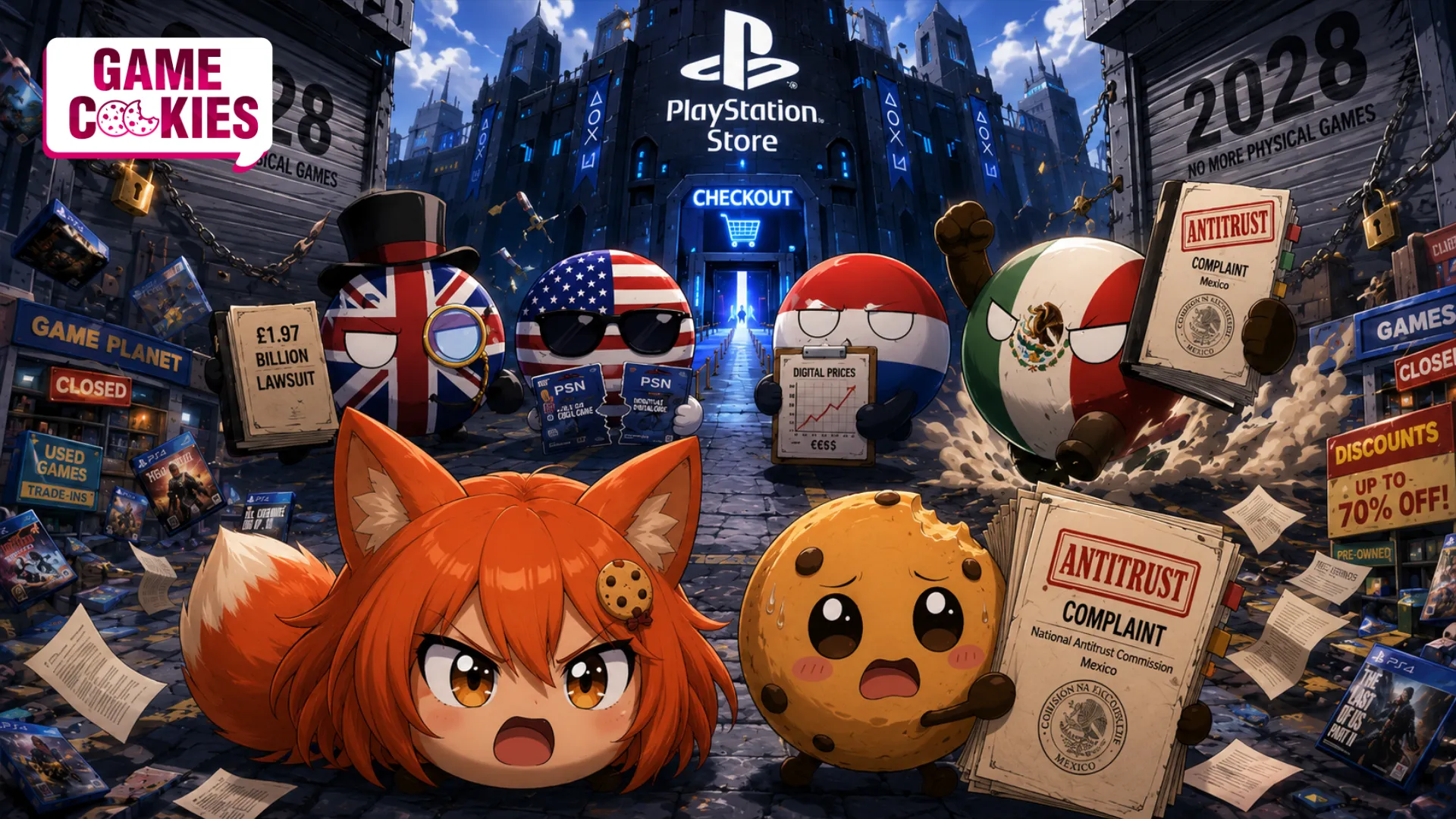
Iraís Reyes, a member of Mexico’s lower house of Congress, and Luis Donaldo Colosio, a Mexican senator, have announced plans to present a complaint as private citizens before Mexico’s National Antitrust Commission, the federal authority responsible for investigating anti-competitive conduct.
Their argument is that eliminating physical games could force PlayStation owners to purchase every new release through Sony’s own digital marketplace. Sony would control the console, the store, the payment system, the distribution rules and the commission collected from publishers.
Mexico cannot directly determine how PlayStation operates in the United States, Europe or Asia. However, a serious investigation could influence a much larger international debate over closed digital marketplaces.
The real question is no longer whether Sony should be forced to keep stamping plastic discs forever. Regulators may instead need to decide whether a console company can remove its main source of retail competition while preserving complete control over the only digital store available on its hardware.
What actually happened
Sony’s commercial reasoning is not difficult to understand. Digital games do not require discs, plastic cases, manufacturing facilities, warehouse space, shipping networks or retailers holding unsold copies.
Digital distribution gives Sony lower operational costs, better margins and far greater control over pricing, promotions and access. It also allows games to be sold instantly across multiple countries without producing separate physical inventories for each region.
For customers, however, the disappearance of discs changes more than the delivery method.
Physical copies currently allow stores to compete over the same PlayStation game. Retailers can cut prices, offer bundles, clear older stock, include preorder bonuses or absorb part of the margin to attract customers.
The Mexican lawmakers specifically mentioned Liverpool and Sanborns, two major Mexican department-store chains, alongside GamePlanet, one of the country’s most recognizable specialist video game retailers. These businesses can currently sell the same physical release at different prices.
The used-game market creates another competitive layer. Players can purchase second-hand copies, trade games, lend them to friends or recover part of the original price by selling them after completion.
Once new releases become digital-only, those stores may continue selling consoles, controllers, storage drives and PlayStation credit. They will no longer be able to sell the actual game independently of Sony’s store.
📢 The complaint argues that Sony would become both the platform owner and the only practical seller of new PlayStation games.
The politicians have announced their intention to submit the complaint. Mexico has not ruled against Sony, and its competition authority has not yet publicly concluded that the company violated the law.
That distinction matters. This is the beginning of a possible legal process, not a completed antitrust case.
🦊 Kiki: Sony’s pitch is basically, “Most of you already shop in our store, so we removed the other stores to make things easier.” Yeah, easier for whom? I use digital games constantly, but I also enjoy the magical consumer experience of seeing one retailer charge $70 while another one quietly panics and drops the boxed copy to $45.
That price pressure still matters even when you personally download most of your games. Sony does not have to lose every sale to physical retail for discs to create competition. The possibility that you can walk away from the PlayStation Store is already doing work. Remove that exit, and suddenly every sale price becomes Sony generously negotiating with itself.
🍪 Chip floats between two identical PlayStation Store checkout screens and slowly realizes they are both connected to the same cash register.
Why this matters outside Mexico
The complaint begins with Mexican consumer conditions, but the commercial structure exists almost everywhere PlayStation operates.
A PlayStation owner cannot purchase a compatible digital copy from Steam, the Microsoft Store or Nintendo’s eShop. Sony decides which software can run on the console and which marketplace can distribute it.
Consumers technically choose the ecosystem when buying the hardware. After that purchase, however, changing platforms is expensive. Moving to another console may mean buying new hardware, abandoning an existing digital library, losing account-based purchases and separating from friends who play within the same ecosystem.
Physical games currently weaken that lock-in. Multiple retailers can sell a product that still runs on Sony’s hardware, and Sony does not control every resale or discount.
When discs disappear, the initial console purchase becomes much more consequential. Players are selecting both a gaming device and the retailer from which they may need to buy every future release.
The issue can be particularly visible in markets where reliable high-speed internet, unlimited data and large storage upgrades cannot be assumed.
Modern blockbuster games frequently exceed 100 GB. A digital-only customer must provide the bandwidth to download the game, the storage to keep it installed and continued access to the accounts and servers responsible for validating the license.
Sony saves the cost of manufacturing and transporting a disc. Some of that burden moves to the player through internet service, storage expansion and dependence on the platform’s infrastructure.
🦊 Kiki: I love when companies describe digital-only distribution as if the product simply teleports into your home through pure innovation. The factory disappeared, the truck disappeared and the store disappeared, but now I need a faster internet plan, another SSD and a sacred promise that the authentication server will still remember me in fifteen years.
The convenience is real. So is the dependency. Downloading a game at midnight is great. Discovering that your entire library exists at the pleasure of one account system is less cute. Companies keep selling us the first half of that sentence and hoping nobody reads the terms attached to the second half.
🍪 Chip tries to fit a 150 GB download inside a tiny toy SSD, gets flattened by the progress bar and continues loading at 3%.
The legal fight already exists elsewhere
Mexico would not be the first country to examine Sony’s control over digital PlayStation sales.
In the United Kingdom, Sony is defending itself against a consumer lawsuit valued at £1.97 billion, approximately $2.7 billion. The claim represents around 12 million British PlayStation users and accuses Sony of abusing a dominant position by requiring digital games and downloadable content to be purchased through the PlayStation Store.
The trial began before the United Kingdom’s Competition Appeal Tribunal in March 2026. Sony denies the allegations and argues that it invested billions in developing and maintaining the PlayStation ecosystem. Its lawyers also point out that Microsoft and Nintendo operate similar controlled console stores.
In the United States, a separate class-action case challenged Sony’s 2019 decision to stop third-party retailers from selling complete PlayStation game download codes.
Retailers could continue selling PlayStation Store credit, but the final purchase of the game generally had to take place through Sony’s marketplace. Sony agreed to a settlement worth approximately $7.85 million while denying wrongdoing. A final fairness hearing is scheduled for October 15, 2026.
The Netherlands has another consumer case. Dutch organization Stichting Massaschade & Consument is seeking approximately €400 million and claims PlayStation users pay a digital premium because Sony controls the only digital storefront available on its console.
The organization argues that Sony’s disc phaseout strengthens its case by removing physical retail and the second-hand market, leaving the company with greater power over prices and access.
These cases use different laws and will be decided by different courts or regulators. They keep returning to the same structural problem: players cannot choose between competing digital stores after entering the PlayStation ecosystem.
🦊 Kiki: Sony pointing at Nintendo and Microsoft and saying, “They do it too,” is a fantastic explanation of the console business and a slightly less fantastic antitrust defense. Congratulations, the entire neighborhood built the same locked gate. That may explain why the gate is common. It does not magically create another entrance.
The industry got comfortable because physical retail kept the closed-store problem partially hidden. You could always buy the disc somewhere else, so the digital monopoly felt optional. Sony has now placed an expiration date on that option while multiple lawsuits are already arguing that its store has too much control. The timing could not be more lawyer-friendly if Sony had included free evidence with every preorder.
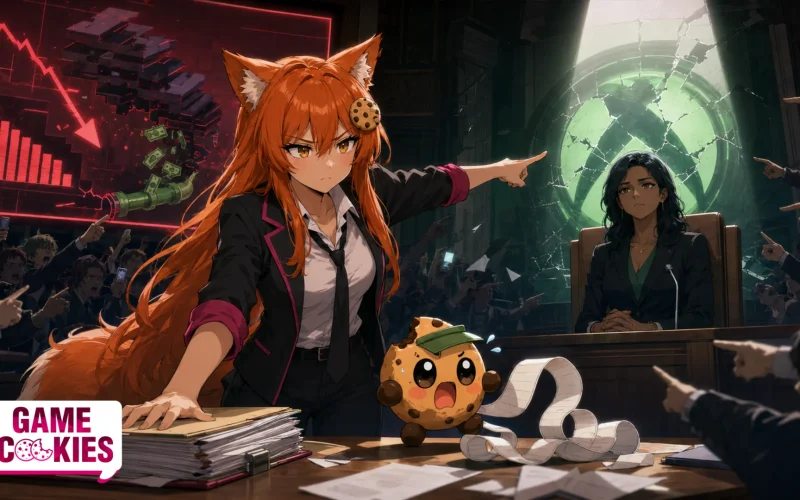
🍪 Chip enters wearing a tiny legal wig, opens three enormous case files and immediately disappears beneath the paperwork.
The 80% digital argument has a missing piece
Sony’s strongest defense is consumer behavior. Approximately 80% of its full-game sales were digital in fiscal 2025. Microsoft’s digital share is reportedly even higher, and the broader direction of the market is obvious.
Most customers have already accepted digital purchasing because it is immediate, convenient and frequently integrated with subscriptions or online promotions.
However, choosing digital most of the time does not mean customers want physical games eliminated.
A player may download multiplayer games for convenience while buying a physical collector’s edition of a favorite release. Someone may purchase digitally during a strong sale, then choose a discounted disc when the PlayStation Store remains at full price. Parents may prefer physical games as gifts. Other customers rely on resale to make expensive releases affordable.
A customer can prefer digital distribution and still benefit from physical competition.
Despite digital sales dominating the percentage split, Sony reportedly sold more than 70 million physical discs during the relevant period. The format is declining, but tens of millions of units do not represent a market that has already vanished.
The public backlash also shows that the concern extends beyond collectors. A “Don’t Kill the Disc” petition started by the head of Canadian retailer PNP Games passed 170,000 signatures during its first week. Supporters raised concerns about ownership, resale, preservation, accessibility and retail employment.
Spanish consumer organization FACUA has warned that Sony could gain overwhelming control over prices once physical competition disappears.
The number of people using an alternative does not fully measure the competitive pressure created by its existence.
A retailer discounting physical stock can push Sony toward a digital promotion. Used copies limit how long publishers can maintain launch pricing. Lending and resale give a purchased game value beyond the original account.
Without those options, the PlayStation Store no longer needs to compete with another seller offering the same product.
🦊 Kiki: The 80% number tells us how people bought games. It does not prove they voted to burn the remaining shelves. I buy most games digitally because getting up from the couch is a hostile design decision. I still want the physical copy sitting at another store for $20 less when Sony decides a seven-year-old game deserves to remain at full price.
Companies love treating convenience as consent for whatever comes next. Players chose downloads, so apparently they also chose permanent platform dependence, no resale and one approved checkout. That survey had some suspiciously preselected boxes.
🍪 Chip proudly holds a physical game marked “$29.99,” notices the digital version costs “$69.99,” and begins checking whether the box contains classified national secrets.
What regulators could realistically change
The most realistic outcome is unlikely to be a government order forcing Sony to manufacture discs indefinitely.
European Commissioner Michael McGrath has already indicated that European authorities cannot simply require a private company to continue producing a particular physical product. Companies generally remain free to choose which goods and services they offer, provided they comply with competition and consumer-protection rules.
That leaves regulators with other possibilities.
Sony could be required or encouraged to restore full-game download codes that third-party retailers can sell at independently determined prices. Retailers currently sell PlayStation credit, but store credit does not create competition over the price of an individual game.
Authorities could examine the commission Sony charges publishers, the rules controlling promotional pricing and whether developers can offer different prices through outside sellers.
Digital consumer rights could also receive more attention. Refunds, gifting, account inheritance, license transferability, long-term access and the ability to resell purchases all become more important when physical ownership disappears.
A more aggressive remedy could involve competing storefronts on PlayStation hardware. Sony would strongly resist that option, citing platform security, privacy, development costs and the investment required to maintain the ecosystem.
A narrower intervention involving digital codes, pricing rules or stronger consumer protections would be easier to implement without completely opening the console.
⭐ Byte: A Mexican decision would apply domestically and would not automatically bind foreign courts. Its international importance would come from the reasoning. If a competition authority formally recognizes that removing physical distribution strengthens control over a closed digital market, lawyers and regulators elsewhere gain another framework they can examine. The precedent would be persuasive rather than universal, but persuasive decisions can travel quickly when several countries are studying the same commercial structure.
What happens next
Mexico’s National Antitrust Commission must first receive and evaluate the complaint. The regulator replaced the former Federal Economic Competition Commission, commonly known as Cofece, as part of a major restructuring completed in late 2025. A PlayStation investigation could become an early high-profile test of how the new authority approaches international technology platforms.
If the complaint is dismissed, Sony’s 2028 plan will continue without meaningful interference from Mexico. Other console companies may interpret the outcome as another indication that regulators are unlikely to challenge digital-only distribution.
If the authority opens an investigation, the process could reveal internal pricing data, commission structures and Sony’s own analysis of how physical retail competes with the PlayStation Store.
Those findings could matter to consumer groups and courts pursuing similar cases in other countries.
A ruling against Sony would carry even greater significance. It would not automatically rewrite PlayStation policy worldwide, but it could encourage new complaints against closed console marketplaces and pressure platform holders to introduce more competitive ways to sell digital games.
Microsoft and Nintendo would have every reason to watch closely. Both companies operate controlled digital stores, and both could face similar questions as physical distribution declines.
Sony may ultimately continue with its plan. Digital purchasing is already dominant, physical manufacturing is expensive and many customers will accept the transition without changing platforms.
The company’s larger risk is that the disc announcement gives existing legal challenges a much clearer story. Sony is removing the most visible retail alternative from an ecosystem where it already controls the only full digital storefront.
Mexico may not save the PlayStation disc.
It could help determine what consumer protections, retail competition and ownership rights must replace it.
⚙️ Stay price-aware like every player who discovered the seven-year-old digital edition still costs $69.99.
⚙️ Keep watching the regulators like Chip watching a download bar after someone touches the Wi-Fi router.
⚙️ And remember: when the disc disappears, Sony does not only lose a piece of plastic. Players lose the nearest competing checkout.
🦊 Kiki · 🍪 Chip · ⭐ Byte · 🦁 Leo
Tips, leaks, and suspiciously permanent digital licenses: contact us here!