
Hello there… laid-off builders, exhausted specialists, and people quietly wondering whether the only real job security left is making something of your own.
A LinkedIn post from concept artist Sam Santala pulled together one of the clearest snapshots of the mood in games right now. Not the press-release mood. Not the executive-panel mood. The actual working-people mood.
Sam said he wants to start his own studio after more than a decade in games doing work-for-hire without ownership. That hit a nerve fast. Hundreds of reactions, more than a hundred comments, and a flood of replies from artists, programmers, producers, founders, and ex-execs who all seemed to be circling the same hard truth: a lot of game developers are tired of building other people’s companies while their own careers stay one layoff away from collapse.
The post hit because it said the quiet part out loud
Sam’s point was simple. He has spent years contributing to major projects, but without ownership, and with the current wave of layoffs and shareholder-driven decisions, he feels this may be the moment for developers to build their own studios and projects instead. He even edited the post to say he especially wanted to hear from programmers and designers willing to scope something smaller.
That last part matters. This was not some big visionary manifesto about making the next mega-franchise from day one. It read more like someone standing in the wreckage of the current market and asking, honestly, if other people are also done waiting for stability to come back.
The comments tell you immediately why it spread. A lot of people did not answer with theory. They answered with recognition. They had already been thinking the same thing.
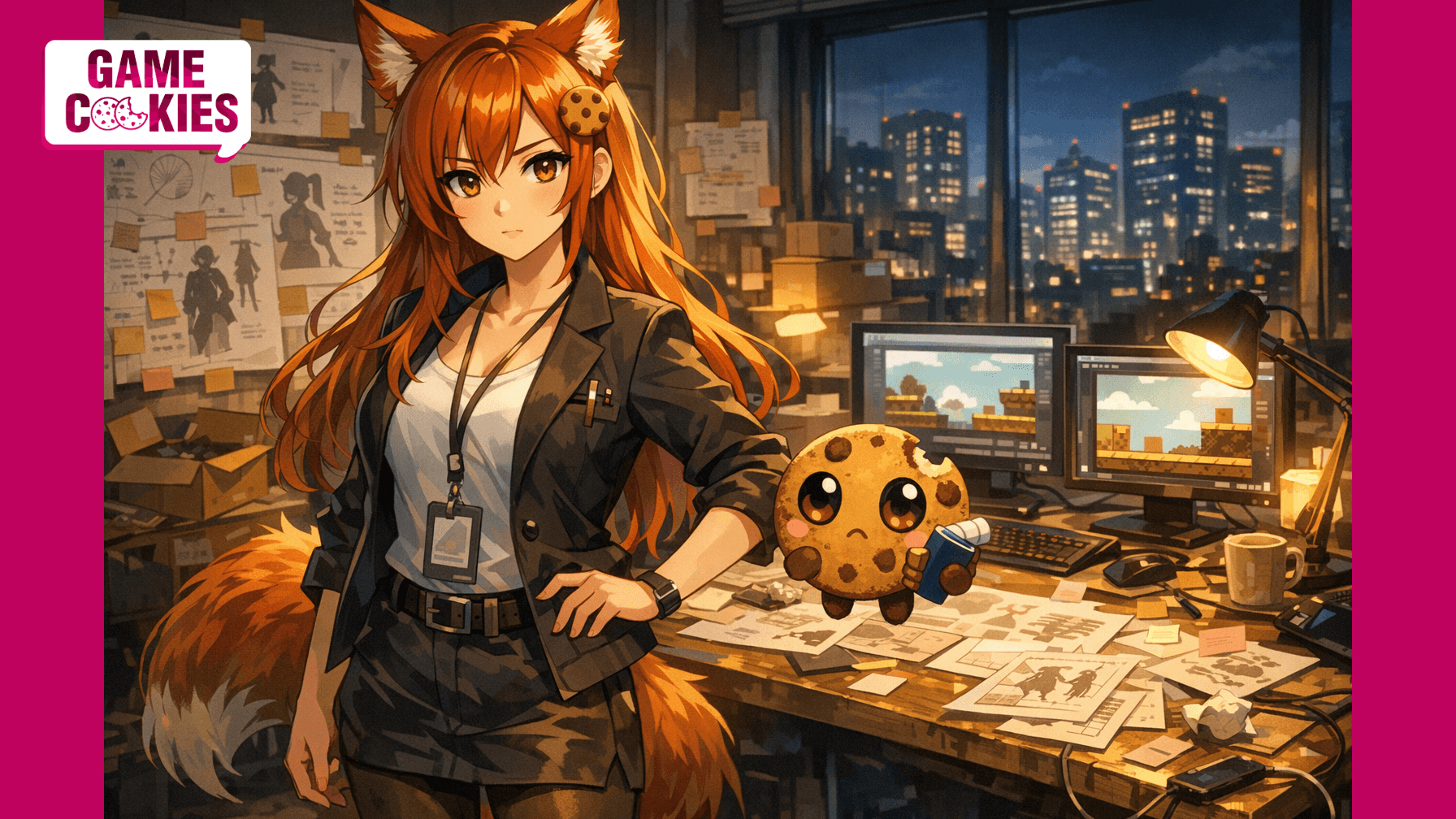
🦊 Kiki: Yeah, this one feels real. You can tell when a post is farming engagement and when someone finally snaps and says what half the industry has been muttering in private chats for two years.
The part that hit me was the ownership bit. That has been sitting under so much of the layoffs conversation. People spend ten, fifteen, twenty years making beautiful work for brands, studios, publishers, whatever, and then one quarter goes bad or some shareholder wants a prettier chart and suddenly your badge stops working. Cool. Great system.
So of course people are fantasizing about their own studio. That is not delusion by itself. That is what happens when the official path stops feeling like it protects anyone except the people already insulated from consequences.
🍪 Chip scrolls through the comment thread with huge eyes, then slowly looks up like he just realized everyone has been having the same crisis at once.
The hunger is real, but so is the imbalance
One of the clearest patterns in the replies was that plenty of people want in, but not all skills are equally available. Sam himself noticed it. The thread filled up with artists, concept artists, 3D specialists, illustrators, VFX people, and general creatives ready to collaborate. But again and again the same constraint appeared: not enough programmers, not enough technical builders, not enough people who can turn visual ambition into a working prototype.
That imbalance is brutal because it exposes a larger industry truth. Talent is everywhere, but the pieces do not connect automatically. You can gather a room full of incredible art talent and still be miles away from a viable studio if nobody can build the actual game loop, prototype efficiently, or structure the production pipeline.
And even when technical people do show up, many of them arrive with the same caveat: they want to make something small, practical, and survivable. That word kept hovering over the conversation, even when people did not say it directly. Survive first. Dream second.
🦊 Kiki
This is the part where the fantasy starts colliding with math.
Everybody wants to start a studio until they realize a studio is not a mood board. It is not a Discord full of energy. It is not twenty artists posting fire emojis under each other’s portfolio links. You need someone to actually build the thing. Then you need someone to ship it. Then you need someone to keep the lights on while it is being built. Then you need someone to explain why the thing matters in a market where ten thousand games are already screaming for attention.
Also, and this sounds meaner than I intend, there is always a weird glut of people who want to “be part of something big” and a much smaller pool of people who want to wrestle a prototype into existence on a random Tuesday night after freelance work. Those are not the same level of commitment. The thread kind of exposed that without meaning to.
🍪 Chip holds up a tiny sign that says “NEEDS CODE” while nervously standing in front of a mountain of gorgeous concept art.
The adults in the room brought the cold water
The most useful comments were not the cheerleading ones. They were the people who had already done it and came in with scar tissue.
A former studio executive said he had seen this idea hundreds of times and watched most attempts fail, usually because the creative side underestimated the business side. That comment cut through the romance instantly. Great art, great design, and great taste are not enough if nobody understands company structure, funding strategy, budgeting, contracting, legal exposure, staffing, payroll, and the dozen invisible ways a small company can die before its first real shot.
Other veterans said similar things with different wording. Start small. Lower your outgoings. Bootstrap if you have to. Take contract work if it keeps the studio alive. Do not open with a giant dream project. Build a vertical slice. Build a prototype. Build something boringly achievable before you start pitching a revolution.
It is not glamorous advice, but that is why it is valuable. Almost everyone who had actually run a studio said some version of the same thing: the creative dream is not the hard part. The hard part is turning the dream into a business without letting the business kill the dream first.
🦊 Kiki
This was my favorite part of the thread because older devs came in like battle-scarred NPCs giving side-quest warnings.
Not to crush the vibe. Just to stop people from walking into the forest barefoot.
And honestly, good. The industry needs more of that. There is way too much fake founder energy online. Too much “let’s build the future” and not enough “who is doing payroll, who is handling contracts, who is paying for the first six months, and why does everyone assume passion is legal tender.”
The strongest advice in that whole pile was basically: find the person who actually likes business. Not tolerates it. Likes it. Because if the whole founding team secretly thinks business work is cringe admin stuff they will handle later, that studio is already halfway to becoming a cautionary Reddit post.
🍪 Chip puts on reading glasses and flips through a folder labeled “grants, contracts, taxes, panic.”
What people actually seem to want is not a startup. It is a way out
That is what makes the post interesting beyond one person’s callout. This was not just a startup thread. It was a pressure valve.
A bunch of game workers are clearly no longer convinced that the traditional path offers stability, loyalty, or a fair trade for the years they pour into it. So the dream of “my own studio” is doing double duty. It is creative ambition, yes. But it is also a response to fear. A response to instability. A response to being treated like headcount in an industry that still depends on highly specialized human work while behaving like that work is infinitely replaceable.
Some replies were optimistic. Some were deeply practical. Some sounded half-burned out. Some were offering real collaboration. A few were basically saying they would love to join, as long as somebody can pay an actual living wage. One person said the only stability left may be in each other. That line probably captures the thread better than anything else.
There is no neat ending here. No studio was formed in the comments. No miracle fund appeared. But the reaction still matters because it shows where the emotional center of the industry is drifting. More people are thinking about ownership. More people are thinking smaller. More people are willing to build slow if it means building something that is theirs.
🦊 Kiki
That is really the story to me. Not “wow, indie uprising.” Not “layoffs create innovation.” I hate that spin. It sounds way too clean, and this is not clean.
This is people looking at the regular route and going, okay, so what exactly are we protecting by staying loyal to a system that clearly is not loyal back? Their mortgage? Their visa? Their health insurance? Their sanity? Their identity as devs? A lot of this thread reads like people trying to hold onto all of that at once while also admitting the normal ladder feels busted.
And yeah, some of these future studios will fail. Probably most of them. That does not make the impulse unserious. It makes it human. When the house keeps shaking, people start learning how to build their own shelter, even if they only have scrap wood and stubbornness.
🍪 Chip quietly offers a little blueprint titled “small game, small burn, maybe hope.”
⚙️ Stay sharp, like the veterans warning that passion alone does not fund payroll.
⚙️ Keep building, like the devs who would rather prototype something small than wait for stability to return.
⚙️ And remember, when enough talented people stop believing the old system will protect them, the urge to build something of their own stops being a fantasy and starts becoming a market signal.
🦊 Kiki · 🍪 Chip · ⭐ Byte · 🦁 Leo