

Hello there, wishlist hoarders, backlog archaeologists, and battle-pass clock-watchers…
We wanted more games worth getting excited about. Looking at autumn 2026, we can now appreciate the small administrative problem hidden inside that wish: several of them want the same money, the same weekend, and the same remaining patch of our attention.
As of October 9, September’s releases are already competing with October arrivals and November preorders. December does not need another surprise blockbuster to become crowded; the games we are considering now can follow us straight into the holidays. We have an abundance of choice, while our wallets and evenings remain stubbornly finite.
The autumn receipt is already getting long
September gave us Onimusha: Way of the Sword on September 4, Marvel’s Wolverine on September 15, and CONTROL Resonant on September 24. Gears of War: E-Day followed on October 6. Those are released games, already asking for space in the queue.
The announced calendar keeps going. Call of Duty: Modern Warfare 4 is scheduled for October 23, while Phantom Blade Zero is due October 28 in the US and October 29 globally. Nintendo’s Ocarina of Time remake is scheduled for November 5, followed by Grand Theft Auto VI on November 19. Future dates remain schedules, rather than completed launches.
For one hypothetical PS5 shopping basket, US standard-edition prices are $69.99 for Wolverine, $59.99 for CONTROL Resonant, $69.99 for Modern Warfare 4, $59.99 for Phantom Blade Zero, and $79.99 for GTA VI. All five fit the same console, so this comparison does not quietly smuggle in a hardware purchase.
⭐ Byte:
That selection totals $339.95 before tax, without deluxe upgrades, DLC, subscriptions, or hardware. It illustrates the cost of five particular purchases at their listed prices; it does not measure typical spending or assume everyone wants all five. Choosing fewer games, waiting, or finding discounts changes the bill.
🦊 Kiki:
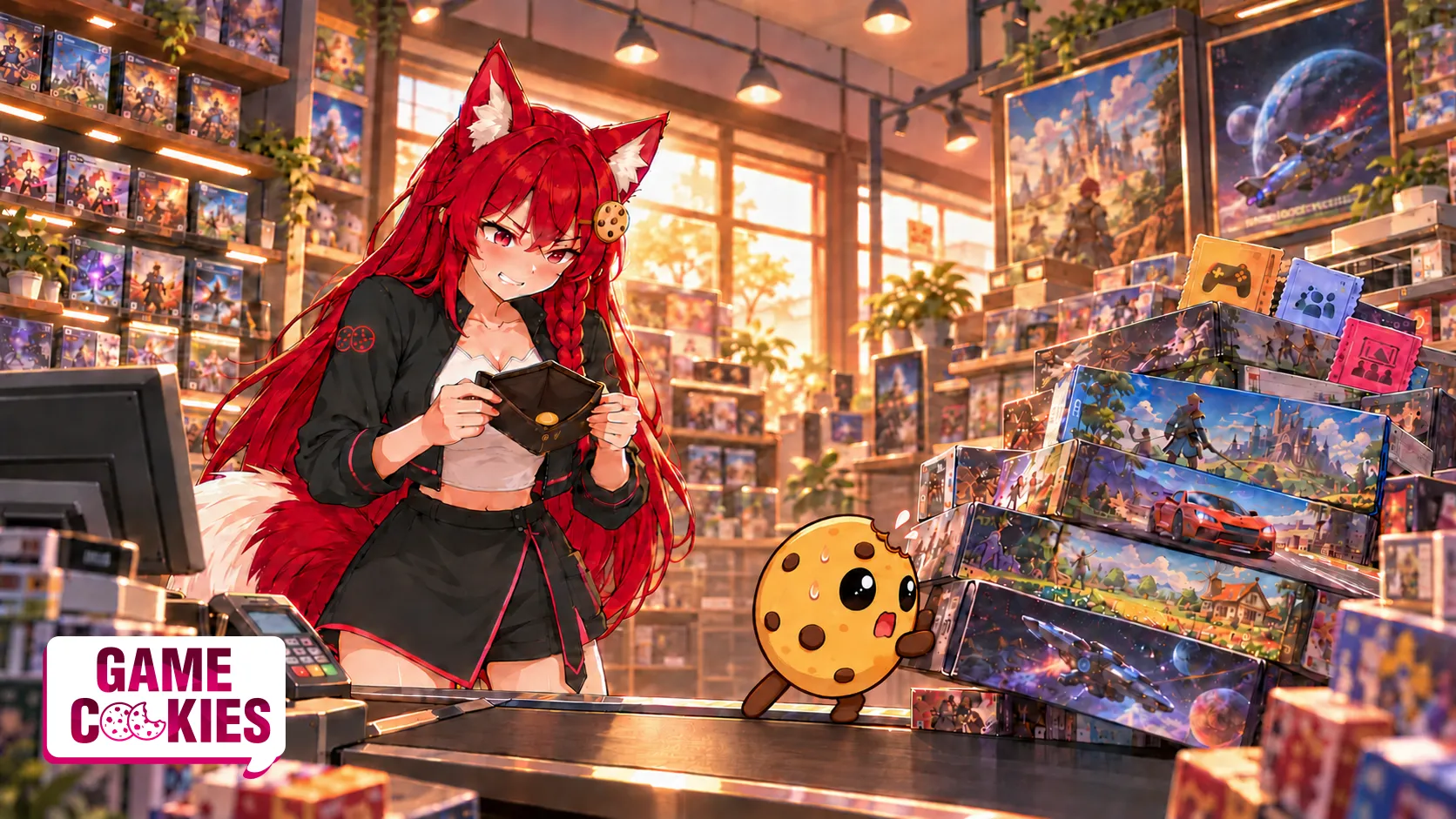
Five games, $339.95, and we have successfully purchased a second problem: when to play them. The sensible objection is that we can simply choose, and yes, absolutely, the checkout button has never acquired legal custody of our arms. But imagine opening that basket to remove one game and immediately beginning its defense: this one has the combat, that one has the world, and this one has been on the wishlist forever. Congratulations, we have appointed five defense attorneys and left the wallet without representation. Every game can make a reasonable case. The total still gets a veto.
🍪 Chip folds the imaginary receipt into a tiny stretcher and lowers the wallet onto it.
Affordable indies still share the same budget
We also have tempting alternatives below blockbuster prices. Moonlighter 2: The Endless Vault reached 1.0 on September 2, following its 2025 Early Access debut, with a $29.99 US standard price. Well Dweller arrived September 22 at a $19.99 standard price, and TOEM 2 followed September 29 with the same $19.99 list price.
Order of the Sinking Star launched October 8 at $29.99. Together, those four list prices total $99.96 before tax. That is a standard-price illustration rather than a discounted checkout quote: TOEM 2’s listed $16.99 introductory offer runs through October 13.
Their variety makes the choice harder in a genuinely welcome way. Moonlighter combines adventuring with shopkeeping, Well Dweller offers a dark-fairy-tale metroidvania, and TOEM 2 is built around photography. Thekla advertises more than 1,000 interconnected puzzles in Order of the Sinking Star, which gives us a concrete reason to consider its place in the queue without pretending we know everyone’s completion time.
We should resist turning that abundance into a complaint against small developers. A lower price can make a game easier to buy while leaving the attention problem intact. The same player can sincerely want a clever puzzle adventure, a quiet photography trip, and a huge action game, then have to postpone two of them.
The games we already play want October too
New purchases compete with games that already have our friends, routines, and progress inside them. Epic’s Fortnitemares began October 1, with Reload’s Nitemare Island arriving October 8. Returning modes and Halloween additions give existing Fortnite players fresh reasons to log in during the same month as several major launches.
Overwatch’s A Grim Doctrine season began October 6, with Graveyard Games running through November 2. Apex Legends’ Marked midseason schedule includes repeated ranked-ladder windows across October, including October 6 to 11 and October 13 to 18. These are specific invitations to return during an already busy stretch.
Free-to-play content needs careful accounting. We can enjoy these games and events without automatically buying a premium pass or shop cosmetic; those purchases are optional, and EA explicitly separates free rewards from paid battle-pass tracks. Their unavoidable demand, if we decide to participate, is time.
A subscription can reduce particular purchase costs, too. Gears of War: E-Day is included with Game Pass Ultimate and PC Game Pass, making a full-price retail calculation irrelevant for some subscribers. Access is valuable, but even a huge subscription library cannot provide an extra Saturday.
🦊 Kiki:
Free events can be excellent, and developers adding things to a game people enjoy deserve credit. My objection begins when we treat every invitation like a summons. Imagine opening a game to relax, inspecting three event menus, calculating which rewards expire first, and deciding that tonight requires an efficiency plan. We came here to fight monsters, and somehow the monsters have issued homework. Of course we can close the menu. We should remember that before scheduling a second game around the first game’s chores. A haunted map can have our evening. It does not get power of attorney over October.
🍪 Chip peels a tiny appointment sticker off the controller and tucks the calendar under a blanket.
More choice also means more competition to be noticed
The scale extends well beyond our selected autumn releases. Independent tracker SteamDB’s release statistics show more than 20,000 game releases on Steam in 2026 as of October 9. That is one storefront’s count, covering many kinds of games, rather than a count of indies, a quality score, or evidence that 2026 has already broken the annual record.
For us, a large catalog offers more chances to find something unusually well matched to our tastes. For developers, it creates a difficult competition for discovery and attention. A game can look interesting enough to wishlist and still lose this month’s purchase to another release, or lose tonight’s session to the multiplayer group we already know.
AI belongs in that discussion cautiously. GDC’s 2026 survey of more than 2,300 industry professionals found 36% using generative-AI tools in their jobs, including 30% among respondents working at game studios. Those figures establish reported adoption; they do not explain Steam’s release count or prove that an inevitable flood is coming.
Tools could lower some production barriers, but that possibility remains an inference. Easier production would still leave creators needing to make something people want and help those people find it. Our capacity to notice, afford, and play another game does not automatically expand with the capacity to make one.
We can choose a season we actually want to play
We can respond without pretending the industry’s release calendar is our personal assignment. Picking the next game we genuinely want to start, rather than everything we might eventually enjoy, gives each purchase a clearer purpose. A wishlist can hold possibilities without becoming a queue of overdue obligations.
That approach also leaves room for different kinds of players. Some of us would happily spend the holidays inside one enormous adventure; others would prefer several smaller games or familiar evenings with friends. We can compare the actual enjoyment we want instead of treating hours of content as a contest everyone has to enter.
🦊 Kiki:
Buy the game you want to play, and give yourself permission to mean later when you say later. We do not need to punish a small studio for releasing near a giant, and we do not need to purchase its game immediately to prove we respect it. Recommend it when the recommendation is earned, keep it on the wishlist, and return when there is room. The fair objection is that launches matter to developers, which makes this genuinely difficult. Players still cannot personally underwrite every worthy project. Admiration is plentiful. The money is attached to groceries.
🍪 Chip places one game beside the controller and gently wheels the rest of the stack out on a trolley.
A crowded autumn can be wonderful for gaming while making individual choices uncomfortable. We can celebrate the range of work arriving and still refuse to turn September through December into a spending race. The best outcome is having games we are excited to play, with enough money and time left to enjoy them.
🍪 Missed part of the gaming week?
The Sunday Cookie Box delivers five handpicked Game Cookies stories in one free Sunday email.
⚙️ Stay curious about the games beyond the biggest launches.
⚙️ Keep a little room in the budget and the calendar.
⚙️ And remember: your wishlist is allowed to wait.
🦊 Kiki · 🍪 Chip · ⭐ Byte · 🦁 Leo
Tips, leaks, and suspiciously overbooked gaming weekends: contact us here!