

Hello there… price watchers, frustrated players, and anyone who’s looked at a console price lately and just paused for a second.
There’s a shift happening, and it’s not subtle anymore. Games, hardware, subscriptions, everything around this space is moving upward at the same time. And the justification always sounds the same. Inflation. Costs. Market pressure. The usual language.
But when you actually look at what’s happening underneath, it doesn’t feel like pressure. It feels like direction.
The $70 Game Was Just the Start
The industry didn’t jump to expensive overnight. It walked there, step by step.
The first big shift was the move to $70 games around 2020. That landed quietly, almost conveniently, at a time when engagement was at an all-time high. People were stuck at home, spending more time and money on games than ever.
And nothing rolled back.
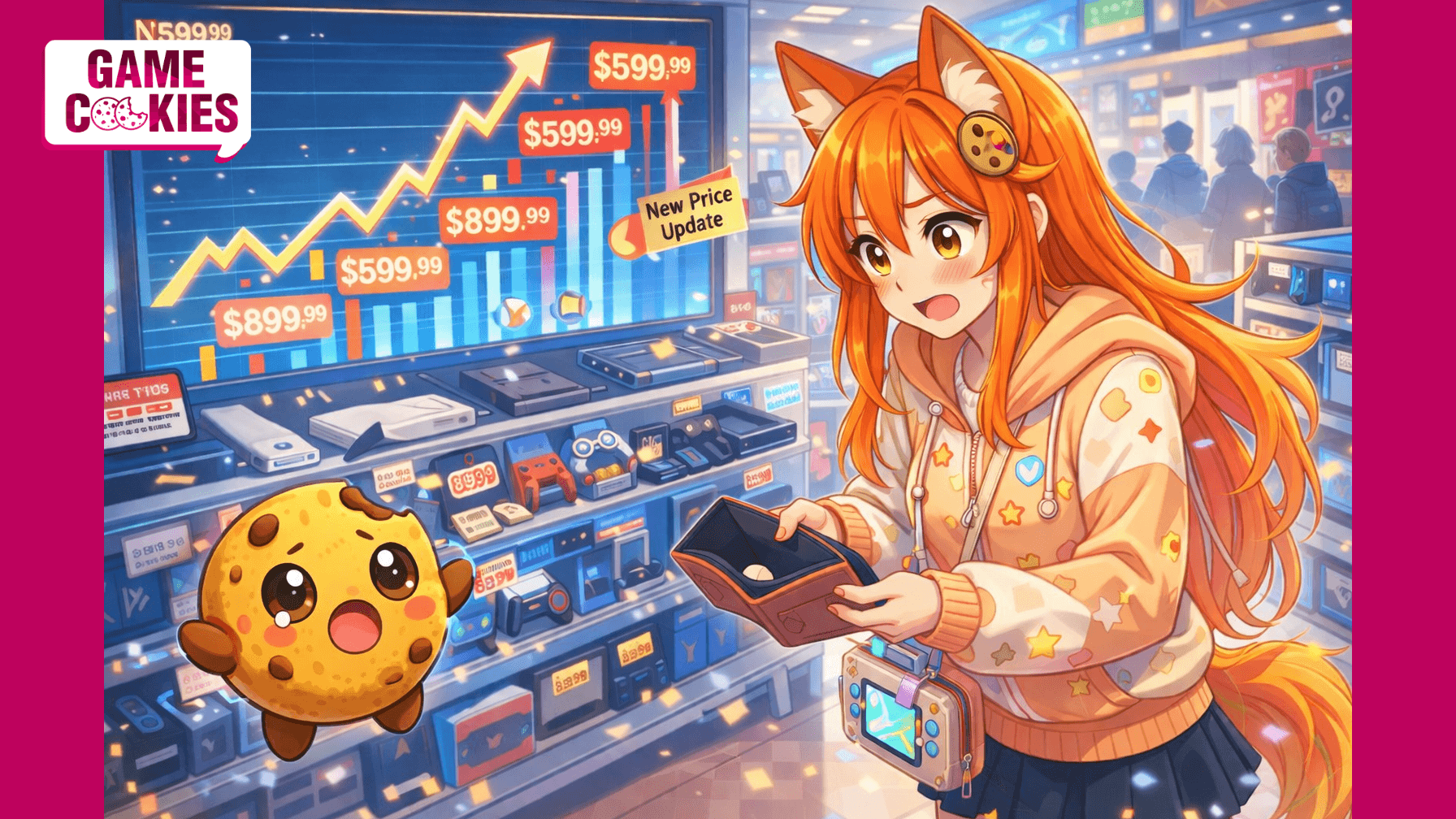
From there, it just kept stacking. Hardware increases. Subscription hikes. Access costs layered on top of base costs. Now you’re looking at consoles pushing close to $1,000 in some cases, depending on configuration and region.
The argument from companies is that this is inevitable. That it’s just the market catching up.
But the pattern doesn’t behave like something reacting to pressure. It behaves like something being normalized.
🦊 Kiki: I’ve seen this before. Not in games, just… everywhere.
Like, you’re told “yeah prices are going up because of X,” and you go, okay, fair. Pandemic, supply chain, whatever. You accept it. You adjust.
Then X goes away.
Prices don’t.
And suddenly it’s something else. And then something else again. And you’re still paying more every year for basically the same thing.
And now it’s hitting games the same way. I mean, you look at this and you’re like… wait, why is everything going up at the same time?
Hardware, games, subscriptions, services… all of it.
That’s not random. That’s coordinated behavior across the entire industry.
🍪 Chip slowly lowers a tiny “SALE” sign… then flips it upside down
Where the Money Is Actually Going
There’s a convenient narrative that rising costs come from development getting more expensive. Bigger teams, bigger games, higher expectations.
That’s partially true. But it’s incomplete.
A lot of recent spending hasn’t gone into making better games. It’s gone into bets. Expensive ones. Live service pushes. Studio expansions. Projects that never shipped or underperformed heavily.
And when those bets fail, the cost doesn’t disappear. It moves.
It moves downstream.
🦊 Kiki: The Concord thing is the clearest example. And yeah, I’m gonna say it.
You don’t burn hundreds of millions on a project, watch it flop, and then magically separate that loss from your pricing strategy. That money has to come back from somewhere.
And suddenly everything costs more.
People joke about a “Concord tax,” but honestly… it doesn’t feel like a joke. It feels like a mechanism.
Like, you messed up, and now I’m paying for it.
And the wild part is they still frame it like “market conditions.” No. That’s internal decisions.
🍪 Chip holds up a tiny calculator… it bursts into crumbs
The Disappearing Middle
There’s a deeper structural problem here.
Gaming wasn’t built as a luxury space. It grew because it was accessible. You didn’t need to be wealthy to get in. You could buy one game and stretch it for months. That was the model.
Now that entry point is moving.
Higher hardware cost means fewer new players. Higher game prices mean fewer purchases per player. Subscriptions shift ownership into ongoing payments.
And over time, that changes who participates.
The lower and middle segments start pulling back. Not because they don’t want to play, but because the math stops working.
🦊 Kiki: This part actually bothers me more than the pricing itself.
Because like… games were the thing you could afford when nothing else made sense. I’ve been there. A lot of people have.
You buy one game. You play it for months. That’s your entertainment. That’s your social life sometimes.
Now imagine that same situation, but the entry cost is way higher, and everything is fragmented into subscriptions or recurring payments.
You don’t get locked out instantly. You just slowly get pushed into worse versions of access.
Free-to-play. Limited experiences. Systems designed around whales.
And yeah… you start to see why people justify piracy even if they don’t agree with it.
🍪 Chip tries to hold a giant coin… gets squashed under it
One Price for Everything, Value for Nothing
Another shift that gets overlooked is pricing structure itself.
There used to be variation. Different types of games had different prices. Smaller games cost less. Bigger ones cost more. It wasn’t perfect, but it reflected scope.
Now most AAA games sit in the same band regardless of actual value.
At the same time, development costs inflate with features that don’t necessarily improve the experience. Systems, mechanics, side layers that increase scope but not engagement.
And that disconnect is starting to show.
🦊 Kiki: This is where it gets kind of dumb.
You have games adding systems nobody asked for. Like full-on features that sound cool in a pitch meeting but don’t actually matter when you’re playing.
But those systems cost money to build.
So now the game is more expensive… without actually being better.
Meanwhile, you’ve got smaller games doing one thing really well, selling cheaper, and people are like, yeah I’ll take that instead.
It’s not even a protest. It’s just common sense.
🍪 Chip carefully chooses a small glowing indie gem over a giant shiny AAA box
Valve and the Other Path
While some companies are pushing prices up, others are adjusting access.
Valve corporation’s approach with regional pricing is a good example. Instead of flat conversions, pricing reflects local purchasing power. That changes what affordability actually means across markets.
On top of that, lowering barriers for developers, reducing royalties in some ecosystems, and enabling smaller teams to ship viable products.
It’s not altruism. It’s alignment.
More developers, more games, more players who can afford them.
🦊 Kiki:
Yeah, Valve isn’t doing this out of kindness. They’re just not dumb.
If more people can afford games, more people buy games. If more developers can make games, more games get sold.
It’s just… functional logic.
Compare that to what’s happening on the other side, where everything is getting more expensive and more restrictive at the same time.
One side is opening doors.
The other is adding toll booths.
🍪 Chip builds a tiny ladder next to a giant locked gate
What Happens Next
If this continues, the industry doesn’t collapse overnight.
It shifts.
Fewer new players entering through traditional console ecosystems. More movement toward PC, indie, and alternative platforms. More fragmentation between high-spending users and everyone else.
And eventually, fewer people growing up with games the way previous generations did.
That part matters more than it sounds.
🍪 Fortnite was never supposed to look mortal, and that is exactly why this matters
🦊 Kiki: This is the part nobody wants to talk about.
If you cut off the entry point, you don’t just lose players now. You lose players later.
Because the people who spend the most on games later in life are usually the ones who grew up playing them.
If kids can’t get in the same way… that pipeline breaks.
And yeah, that doesn’t hurt next quarter. It hurts in like 10, 15, 20 years.
Which is exactly why nobody in a quarterly-driven system is going to care until it’s too late.
🍪 Chip tries to water a plant… but the soil is cracked and dry
In the end…
The idea that gaming is becoming “for the rich” sounds dramatic until you follow the trajectory.
Prices rising across every layer. Ownership turning into access. Entry costs creeping upward. Value becoming harder to justify.
None of it feels temporary.
It feels like a direction the industry is testing… and slowly committing to.
⚙️ Stay aware like Valve
⚙️ Keep questioning like the players pushing back
⚙️ And remember… pricing doesn’t drift this consistently without intent
🦊 Kiki · 🍪 Chip · ⭐ Byte · 🦁 Leo