

Hello there… industry survivors, price-watchers, and everyone who’s getting a little tired of watching the business side of games become its own genre of horror.
Today’s edition has that very specific 2026 energy where nothing technically looks on fire from the outside, but once you look closer, half the room smells like smoke. Disney is cutting deep again and Marvel is caught in it. Another batch of Disney-linked games quietly vanished from Steam. A rumored studio collapse has landed right after one of the year’s more talked-about releases. Sony proved people will absolutely panic-buy a console before a bad price hike hits. And Take-Two got rewarded by the market because a leak reminded investors just how absurd GTA Online’s cash machine still is.
That’s the mood today. Less celebration, more structural weirdness.
Marvel gets cut, and Marvel Games probably feels it even if no one says so
The Walt Disney Company has reportedly laid off around 1,000 employees as part of another broader restructuring wave, with Marvel Entertainment losing about 8% of staff across comics and entertainment. The heaviest mention seems to land on film-adjacent and visual development teams, and while Marvel Games wasn’t explicitly named, pretending this has zero downstream effect would be naïve.
Marvel does not run major internal game development the way people sometimes still assume. Disney moved away from that years ago and leaned into licensing, which means Marvel Games functions more like a strategic management and franchise coordination layer than a traditional dev floor. So even if Wolverine, Marvel Tokon: Fighting Souls, Fortnite collaborations, and other active projects are still moving, cuts in that ecosystem can still slow approvals, reduce bandwidth, tighten oversight, and make new pitches harder to get through.
That matters more than people think. Licensed game businesses do not break only when a studio closes. They also break when the people who review, support, manage, coordinate, and champion projects disappear one spreadsheet at a time.
🦊 Kiki: This is the part corporate people always try to make sound harmless. “Don’t worry, they don’t develop the games internally.” Yeah, cool, but somebody still has to review deals, keep franchise direction coherent, answer partners, approve milestones, push projects forward, and stop brand teams from turning everything into legal soup. I’ve seen this kind of thing before. The damage doesn’t always hit in a dramatic headline. Sometimes it shows up six months later when a project starts feeling slower, safer, more confused, more committee-driven. Then everybody acts shocked. No, you cut the connective tissue. That’s what happened.
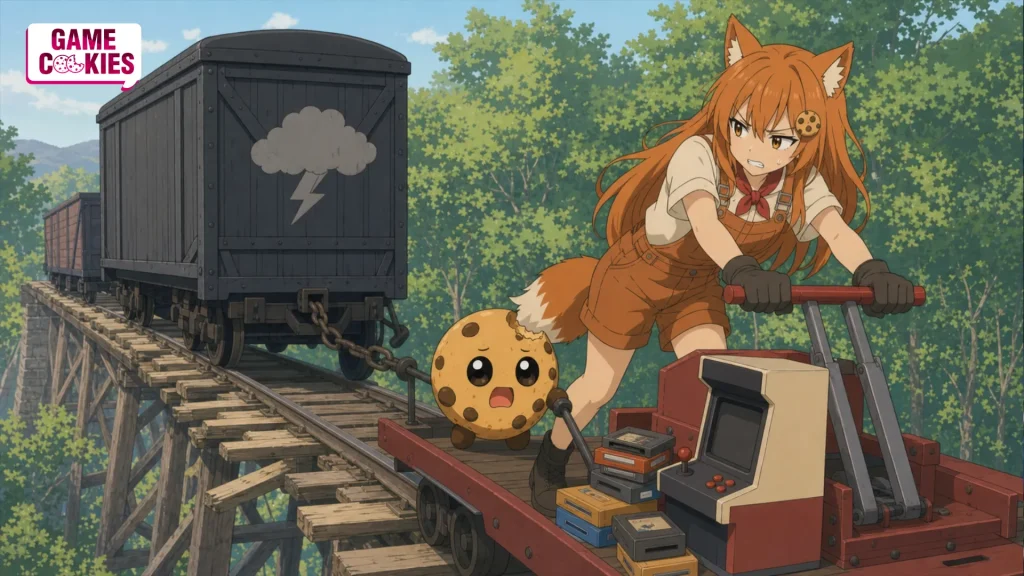
🍪 Chip curls into a worried little ball and stares at a licensing flowchart like it personally insulted him.
Disney is also quietly scrubbing games off Steam, which is not a comforting look
At the same time, Disney has delisted another batch of games from Steam, reportedly 15 more after 14 already disappeared in January. Some of these are old enough that licensing expiry is an easy explanation. Some are not. That is where it starts feeling less like routine catalog maintenance and more like one of those corporate cleanup phases where access gets treated as disposable.
There is no confirmed official explanation tying these removals directly to layoffs, internal restructuring, or Disney’s broader platform strategy. That part stays speculative. Still, when games connected to major entertainment IPs keep vanishing while the parent company is restructuring and shifting priorities, people are not wrong to read that as instability.
And there’s another ugly layer here: delisting has become so normalized that companies barely need to justify it anymore. A game can exist, work, still have players, still have historical value, and still get swept away because it no longer fits whatever licensing or storefront math is being optimized that quarter.
🦊 Kiki: I hate how casually the industry now accepts delisting. We talk about preservation all day, then shrug the second a company decides a game has become administratively inconvenient. And Disney especially gives off that weird energy where the IP is treated as sacred until the actual product becomes old, messy, or less useful to the current strategy. Then it’s just gone. I don’t even need to be dramatic here. It already looks bad on its own. When you’re cutting staff and scrubbing catalog at the same time, people are going to assume the machine is choosing efficiency over stewardship. They’re probably right.
🍪 Chip reaches toward a disappearing Steam page like he’s watching a friend fade out of existence.
The Wuchang rumor sounds less like a business failure and more like an internal implosion
One of today’s messier stories is the report that @eenzee Games, the studio behind Wuchang: Fallen Feathers, may have effectively shut down after internal conflict. Reports claim director Xia Siyuan was dismissed before Chinese New Year, the team was dissolved after staff refused outsourcing reassignment, and Siyuan may have already founded a new studio.
That is a bizarre sequence if the game really performed the way early chatter suggested. Which is why this story stands out. If true, it does not read like a clean sales problem. It reads like a leadership fracture, a control fight, or some kind of internal breakdown the public is only seeing through fragments.
That also makes it one of those stories where people rush too fast into simple narratives. “The game failed.” Maybe not. “The studio ran out of money.” Maybe not. “Everything is fine because the company hasn’t confirmed it.” Also maybe not. Silence does not stabilize a rumor when multiple outlets are pointing in the same direction. It just leaves the vacuum open longer.
🦊 Kiki: This one annoys me because it has that all-too-familiar smell of adults in charge blowing up the room and then leaving workers to sit in the smoke. If the reports are true, you had a successful launch, momentum, attention, actual upside, and somehow still ended up in a situation where the team gets dissolved and shoved toward outsourcing? That’s not normal. That’s not just “the market is tough.” That sounds like ego, politics, or a power struggle so dumb it overrode common sense. And when leadership goes silent during stuff like this, it rarely makes me think they’re protecting the team. Usually it makes me think they’re protecting themselves.
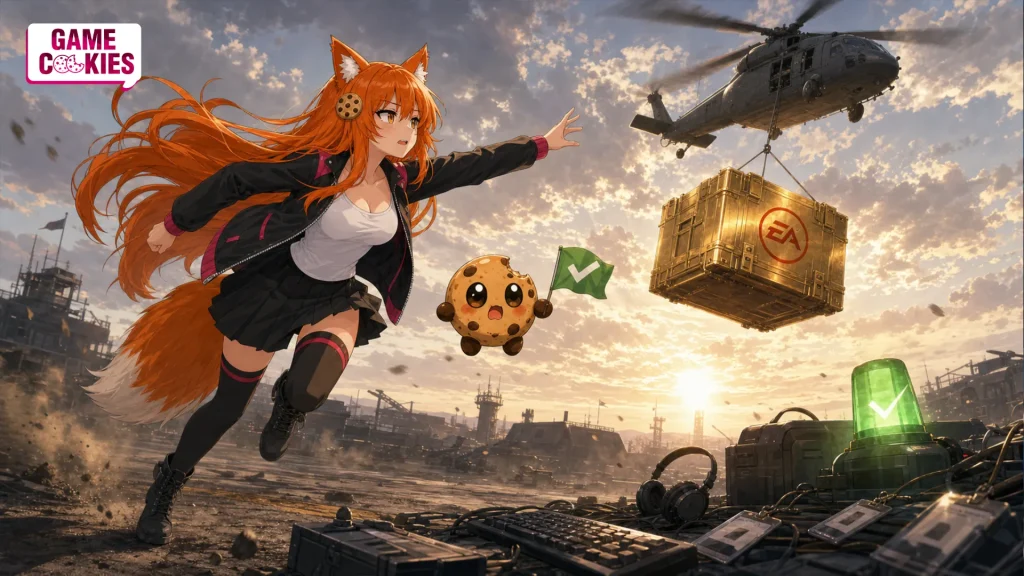
🍪 Chip slowly lowers a tiny party flag that still says “successful launch.”
Sony’s price hike worked exactly the way everyone expected
Before Sony’s April 2 increase hit, PS5 sales in the US had their strongest week of 2026, with consumers rushing to buy ahead of the higher prices. Circana’s Mat Piscatella said weekly US spending on video game hardware nearly doubled versus the same week a year earlier. That is the cleanest example you’ll see all month of a company creating urgency and consumers responding with pure fear-of-missing-the-old-price behavior.
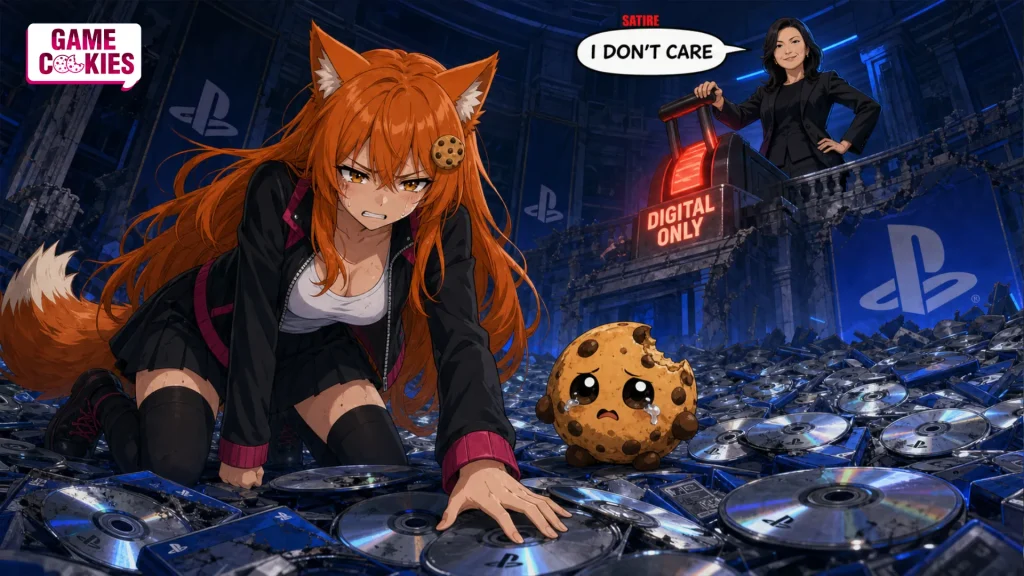
The new US pricing is rough. The PS5 Digital Edition is now $600, the disc model $650, and the PS5 Pro has climbed to $900. That is no longer “premium but understandable.” That is the point where the machine itself starts feeling like a luxury stress test.
The ugly joke is that Sony can point to the sales spike and say demand remains strong. Technically true. But the spike happened because people were trying to avoid the new reality, not because they were excited by it. Panic-buying before a price increase is not healthy enthusiasm. It is preemptive damage control by consumers.
🦊 Kiki: I need companies to stop acting like this stuff proves confidence in the platform. No, people were trying to dodge getting robbed harder next week. That’s not brand love. That’s survival shopping. I’ve done it myself with other stuff. You see the price hike coming, you feel insulted, and then you buy early anyway because the later option is even worse. And now we’re in this stupid place where a PS5 Pro costs enough that people have to mentally justify it like a minor life investment. I don’t think that’s normal, and I’m tired of being told it is.
🍪 Chip shakes his empty wallet and one single coin falls out with maximum sadness.
Take-Two gets rewarded because a leak reminded the market how huge GTA still is
Then there’s the most cursed business story in the pile. A leak tied to Rockstar Games’s hacker situation reportedly exposed enough GTA Online revenue context to increase investor confidence, helping lift Take-Two’s stock and adding around $1 billion in valuation. The market basically looked at a security breach-adjacent mess and responded with: wow, that cash machine is even bigger than we thought.
There is something darkly fitting about that. It is one of the most modern game industry stories imaginable. A hostile event happens. Sensitive information gets out. The public learns just how much money one live-service monster continues to generate. Investors smile.
It also reinforces a reality that shapes way more of this industry than executives like to admit publicly. When one product prints at that level, it distorts expectations everywhere else. Budgets get justified badly. Timelines get bent. Strategy gets warped around recurrence, scale, and retention. And when GTA 6 is sitting on the horizon, every number attached to the current machine becomes fuel for even bigger expectations.
🦊 Kiki: This is so broken it loops back around into comedy. Imagine being in the middle of a hacker mess and the market goes, “Actually thank you, this makes us even more bullish.” Of course they did. GTA Online has been carrying absurd business gravity for years. Once investors get a fresher look at how massive that thing still is, they stop caring about the ugliness of how the information surfaced and start daydreaming about GTA 6 printing money at planetary scale. That’s the sickness. Not even the leak. The fact that the leak becomes a hype signal. We are so financially cooked as an industry.
🍪 Chip stares at a stock chart going up while everything else around him catches fire.
What today actually says about the industry
None of these stories live in the same lane on paper, but they rhyme more than they should. Disney trims staff and loses institutional capacity while quietly pulling games off sale. A studio with a hit on its hands may still implode from internal conflict. Sony proves consumers will stampede before a hardware increase. Take-Two Interactive gets a market reward from leaked proof that its biggest machine is even bigger than expected.
That all points to the same underlying tension. The business side of games is getting harsher, less sentimental, and more openly ruled by leverage. IP leverage. Price leverage. Investor leverage. Corporate restructuring leverage. And the people closest to the actual work, whether developers, support teams, or players, usually absorb the weirdness last and loudest.
⚙️ Stay skeptical ⚙️ Keep watching the business layer ⚙️ And remember — a company can post confidence while quietly cutting the parts that made the whole thing function
🦊 Kiki · 🍪 Chip · ⭐ Byte · 🦁 Leo
Contact us here!