

Hello there, demo collectors, wishlist explorers, and players who apparently need to get past a bouncer before trying a game.
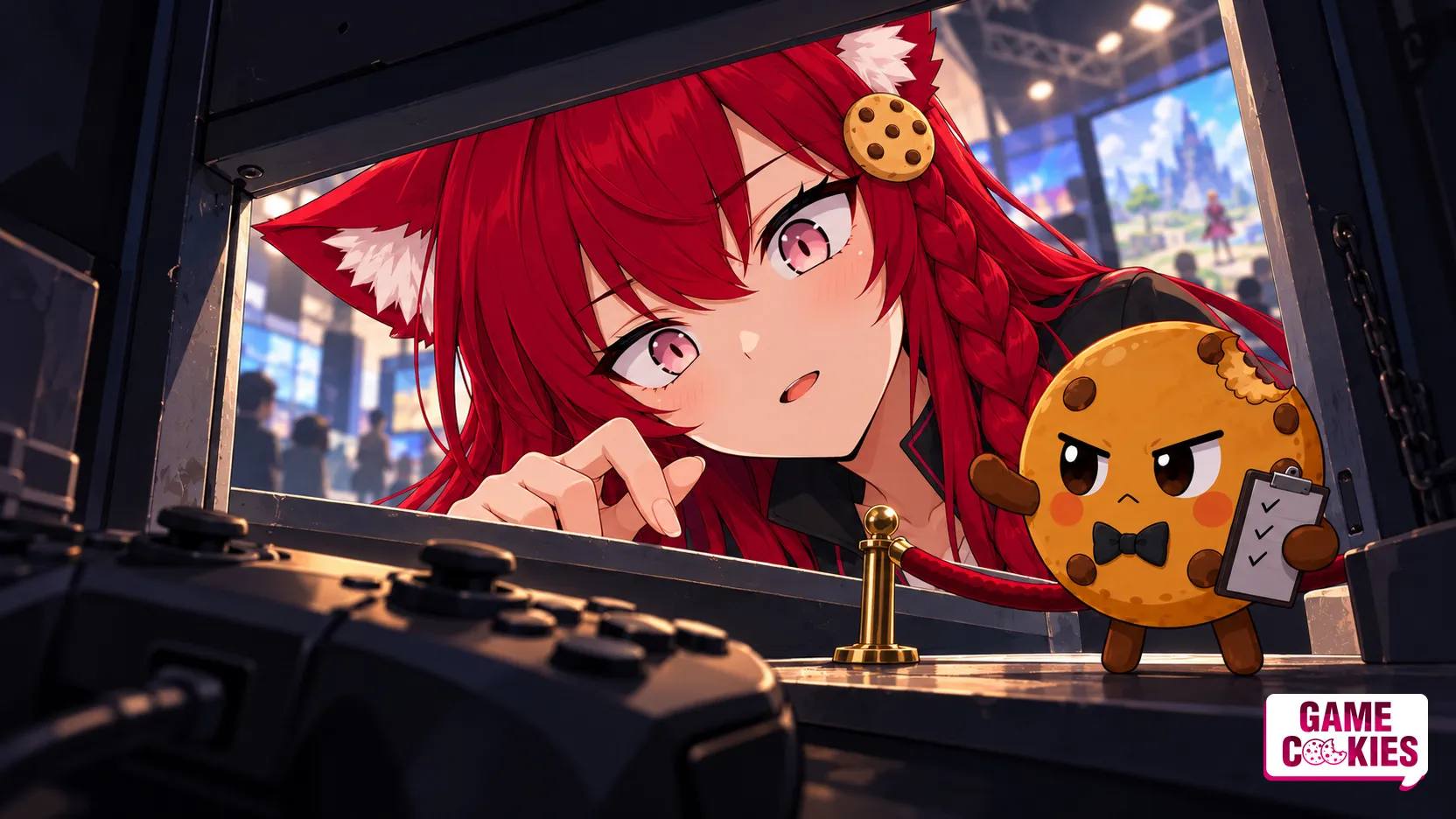
🦊 Kiki: I came for a free sample. Chip has a clipboard, a velvet rope and the expression of someone protecting the nuclear launch codes. The sample is a video game. Please let me press a button.
Yesterday, we looked at how a game's first competitor could appear before the original launches. Today, there is another consequence worth examining: the door between an unfinished game and its future players can get smaller.
Digital Sun is restricting the first ReVamp playtest. Alliance Arts has cancelled the planned public demo for Drunken Goddess Reflux. Both describe fears about imitation before release, although their explanations and replacement plans differ.
The immediate result is concrete. Some players who expected an easy way to try these games now face a more controlled route. That deserves attention even without a confirmed clone of either title.
Two studios, two changes of plan
In its October 19 Steam announcement, Digital Sun says ReVamp's test will begin on October 29 through its Discord community, with access granted in waves. It hopes to open the public playtest around January. The March 25, 2027 release remains unchanged.
The studio cites reports of games being reverse-engineered, copied and released ahead of their originals. Its statement does not explicitly mention AI. This is a narrower initial test and a delayed wider opening, rather than an already available demo being taken away.
Alliance Arts is more explicit about the technology. Its October 16 announcement cancels Drunken Goddess Reflux's October 19 public demo, citing imitation using AI or other tools and difficulty managing intended video and streaming restrictions.
The replacement is limited closed play sessions, with applications through Discord, selection by lottery and participation rules accepted in advance.
Neither announcement identifies an existing clone of its own game. These are protective decisions based on perceived risk. They also give us two specific cases, not enough evidence to declare the public demo extinct.
The developer's choice is understandable
An unfinished build carries more than a premise. It lets someone examine how interactions connect, how a sequence unfolds and what happens when the player pushes at the edges. For a developer worried about imitation, deciding how widely to distribute that material is a serious production choice.
The distance to launch matters. A team still finishing its game may have months of testing, balancing and iteration ahead. It cannot necessarily compress that work simply because another project has appeared.
Digital Sun's marketing manager Israel Mallén reinforced the concern in comments to PC Gamer, explaining the risk of sharing a build with tens of thousands of players while launch remains months away. He also urged more attention from platforms.
A smaller test can be a reasonable compromise: enough people to learn from, with a more manageable release of the build. Developers already have good reasons to test in stages. Nobody owes the internet unrestricted access to unfinished work.
Still, a closed community is not a guarantee against copying. Limiting distribution can reduce exposure; it cannot erase what people have already seen or guarantee what every participant will do.
The difficult question is whether the protection gained is worth the opportunities left outside.
Players pay with friction
A demo gives a player something a trailer cannot: a turn at the controls.
You find out whether movement feels right, whether the opening makes sense and whether the appealing idea stays appealing once you are the person doing it. You may discover a game you would have scrolled past. You may also discover that it is not for you. Both are useful.
Now consider the extra steps: join a server, locate instructions, accept conditions, apply and wait. For an enthusiastic follower, that can be perfectly reasonable. For somebody casually exploring unfamiliar games after work, it may be the point where they move on.
That is the discovery cost we should take seriously. It is possible to lose a chance at a player before that person becomes invested enough to ask for access.
We do not have figures showing how many people these particular decisions will deter, or what they will mean for sales. The trade-off does not need an invented percentage to be understandable.
🦊 Kiki: A demo used to answer, "Will I enjoy this?" A guest list adds, "How much administration am I willing to do to find out?" I already have a job. My entertainment does not need an onboarding department.
🍪 Chip checks the controller's name against the list. The controller is not on it.
A smaller audience can mean a different kind of feedback
There is another potential cost beyond attention.
People who join a development community and apply for a test have already demonstrated interest. They may arrive with more knowledge, more patience or more willingness to forgive confusing parts than a stranger who clicks a demo on impulse.
That does not make their feedback bad. Committed players can be excellent at finding problems, describing them and returning to check a fix. A small test can produce useful, detailed conversations that a larger release struggles to support.
But feedback from committed followers answers a different set of questions from feedback from people encountering the game cold. A tutorial can feel obvious after you have watched months of development updates. A mechanic can seem intuitive when somebody has already explained why it works.
Our concern is the possible gap between those audiences. We have not seen the studios' recruitment criteria or results, so we cannot judge the actual diversity or quality of their testing.
The practical challenge is to protect the build without losing the confused newcomer whose first five minutes reveal something important.
Platforms should help keep that door open
The tempting advice is to tell every developer to reveal less and release later. It leaves the original problem sitting on the smallest team's desk, next to marketing, testing, community management and making the actual game.
Platform protections deserve more serious discussion. Digital Sun has asked for stronger protection for original work. Here is what we would want that conversation to include.
First, clear routes for reporting suspected copies, with a way to submit evidence about what was reproduced and when. A developer should be able to explain a specific concern without relying entirely on a viral complaint.
Second, careful review rather than treating similarity alone as proof. Shared genres and familiar mechanics are part of games. A useful process has to examine the actual work and the complaint, with a way to challenge mistakes.
Third, better support for controlled tests that still reach beyond a studio's existing fan base. If access needs to be limited, recruiting unfamiliar players should not become a second project.
These are recommendations, not promises that a particular policy will eliminate cloning. They also cannot make every demo safe. The goal should be to give developers more workable choices than broad exposure or retreat.
Kiki's verdict: the free sample should not need a bouncer
🦊 Kiki: I understand why a developer would close the door a little. What annoys me is how quickly the bill reaches the player. The studio gets another risk to manage. We get another form to fill out. The person treating somebody else's work like a shopping catalogue has somehow created paperwork for everyone else. Impressive efficiency. Terrible contribution.
The useful future for AI tools includes more small teams getting their ideas into playable form. It should also include those teams feeling able to let people try what they have made. Faster production loses some of its appeal if discovery becomes harder for the creators doing interesting work.
One cancelled public demo and one restricted first playtest do not predict the end of trying before buying. They do show that fear of copying can change access before any copy of the affected game has been established.
For now, players can follow the official projects and respect the conditions of their tests. Developers deserve room to make decisions about unfinished builds. Platforms should be asked what would help those decisions stay open to more people.
Because a game finding its audience is one of the best things a demo can do. Losing that meeting would be a miserable price for making imitation faster.
🍪 Missed part of the gaming week?
The Sunday Cookie Box delivers five handpicked Game Cookies stories in one free Sunday email.
🎮 Stay curious like a player trying a game beyond their usual wishlist.
🎮 Keep respecting the test rules, like Chip guarding the demo booth.
🎮 Remember: a game finding its audience is one of the best things a demo can do.
🦊 Kiki · 🍪 Chip · ⭐ Byte · 🦁 Leo
Tips, discoveries, and suspiciously exclusive demo guest lists: contact us here!
Would you join a closed test for a game you barely know, or would you move on to the next demo?