

By J.L. Miralrío | October 8, 2026
Hello there, end-credit readers, patch-note detectives, and next-game hopefuls…
The credits roll. Players debate the ending, request a balance patch, and start asking about the next game. Somewhere behind that perfectly ordinary cycle sits a much less comfortable question: who will still be there to make it?
This week offers a welcome development at Bit Reactor and a painful one at Gravity Well. Some developers are returning to the former. More than 40 have lost their jobs at the latter. These are separate situations with different histories, not evidence of one shared cause. Together, they deserve attention from anyone who expects a good team to survive long enough to make another good game.
Bit Reactor’s return is real. The recovery is incomplete.
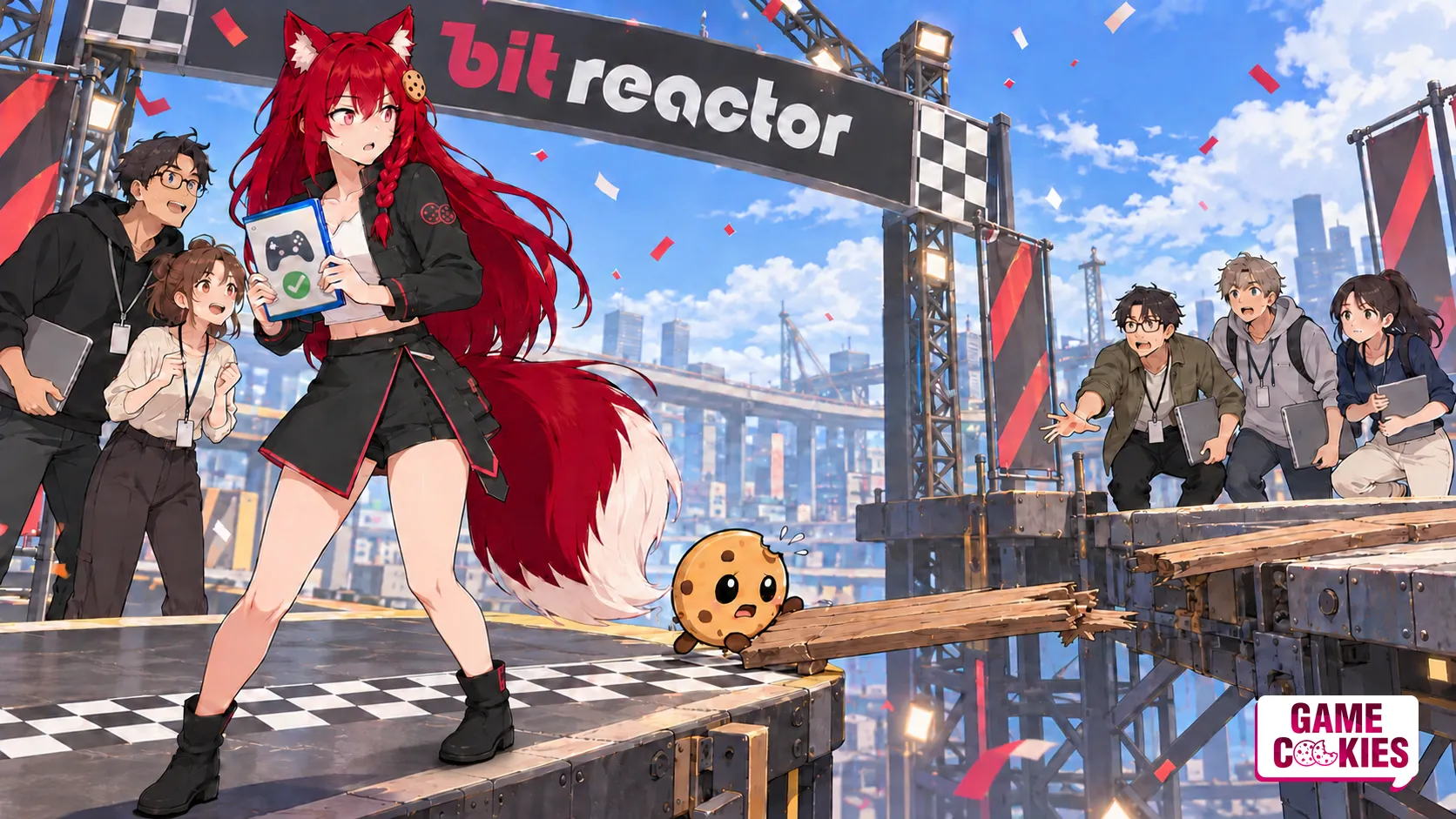
In an October 7 statement, Bit Reactor CEO Greg Foertsch said the studio had begun bringing more team members back to work that week as it continued supporting Star Wars Zero Company. He attributed the earlier furloughs to unexpected business developments outside the studio’s control and said the decision was intended to make it possible to bring back as many people as possible.
The statement does not specify how many returned or promise a date for everyone else.
Stephen Totilo’s reporting for Game File adds a more precise, attributed measure: one person familiar with the situation said the returning workers brought the studio’s paid headcount above half its pre-furlough level. Game File reports that others still remain without pay. Its earlier reporting described most of the team being furloughed before release, remaining employees but losing pay and benefits.
⭐ Byte: Above half of the original paid headcount is the reported measure. It does not tell us what percentage of furloughed workers returned, and it does not establish a full recovery.
🦊 Kiki:
I’m glad people are getting their work back. That deserves an actual moment of relief. Then I want the camera to stay on the people still waiting. A studio announcement can turn the page in three paragraphs. Your bills are less impressed by narrative pacing.
And please retire the idea that a launch is the final boss of employment. The player gets an achievement. The developer would probably prefer next month’s salary.
🍪 Chip lifts a tiny victory flag, notices the empty chairs behind him, and folds it away for now.
Gravity Well lost its funding before its new world reached players
Gravity Well’s official statement, covered by WN Hub on October 7, describes a different problem. The studio lost its funding during the summer and had not secured a replacement partner. It laid off the majority of its team, more than 40 developers.
Leadership said employees had been informed as the situation developed. A much smaller team will continue, although the studio described its future as uncertain. The announcement asks other employers to consider the affected developers and explicitly says the departures do not reflect their skills or ability.
Gravity Well’s official profile describes its project as an unannounced original IP. Its website lays out an appealing pitch for a studio: experienced developers, an anti-crunch approach, significant profit-sharing, and a planned peak team of 80 to 85 people. Those are stated ambitions and principles, not proof of current staffing or financial security.
For players, the immediate loss is harder to picture than a canceled release date. There may be no familiar trailer to mourn. There is a group of people whose next collaboration has been broken apart before the audience could judge what they were building.
🦊 Kiki:
“From the people who made…” is one of gaming’s most powerful spells. It gets a new studio onto my watchlist immediately. The trouble is that a résumé cannot pay an artist while a funding deal is being negotiated. We get excited about the talent, then talk about the financing as though it were an optional settings menu.
A promising team deserves a chance to make its case with a game. Losing that chance before the reveal is miserable. Nobody even gets to argue about whether the combat looked good.
🍪 Chip opens a collector’s box marked only with a question mark and finds an unfinished concept sketch inside.
A familiar studio name cannot preserve a team by itself
It would be easy to flatten these stories into a single explanation about publishers, investors, or game sales. The available evidence does not justify that. Bit Reactor’s announcement describes a partial return after furloughs. Gravity Well describes layoffs after funding fell away. Neither announcement supplies enough financial detail to reconstruct the whole business behind the decision.
The useful connection is what happens to the people making the games.
A team builds shared knowledge through daily work: which change breaks the save system, why a movement animation feels wrong, how a mission should react when the player ignores the obvious route. Some of that knowledge lives in documentation. Some lives in the people who solved the problem together.
When those people leave, rebuilding the capability takes more than putting the studio logo on another vacancy. New hires need time to learn the project. Remaining staff need time to explain it. A smaller team may have to choose between fixing an existing problem and developing something new.
That is the player-facing risk, not a claim that a particular patch or sequel has already been canceled. Staffing continuity matters because the game we buy and the games we hope to buy next depend on actual people being available to do the work.
Buy the game you want. Ask better questions about its future.
Players should not have to reverse-engineer a funding agreement before buying a tactics game. We can still be more demanding about the promises attached to a studio’s future.
For Bit Reactor, the next useful updates are about the remaining furloughed staff and the scope of continued support. For Gravity Well, they concern new financing, the smaller team’s plans, and whether development can move forward. Those are more informative than treating either an optimistic announcement or an impressive list of past credits as a guarantee.
A game’s popularity also cannot tell us, on its own, how much cash its developer has available. A sales total leaves out costs, contractual terms, and when money reaches the studio. We should resist declaring a company financially secure from a milestone headline, just as we should resist inventing a culprit when those details remain private.
🦊 Kiki:
I want the next good game. For that, I need the people who made the last one to have a realistic chance of working together again. Keeping the logo alive while the team scatters is a very expensive way of preserving stationery.
Buy something because you want to play it. Recommend it because it is good. You are allowed to care about developers without accepting a second unpaid job as their studio’s emergency financing department. The people signing the business deals still have to explain how the work continues.
🍪 Chip carefully tapes a developer’s name back onto the credits while an oversized corporate logo slides off the wall behind him.
Bit Reactor’s returning workers are good news. Gravity Well’s departing workers deserve opportunities. The standard worth keeping in view is simple: a great game should be the beginning of what a team can build, not the last time we see those names together.
🍪 Missed part of the gaming week?
The Sunday Cookie Box delivers five handpicked Game Cookies stories in one free Sunday email.
⚙️ Celebrate the people returning, and keep asking about the people still waiting.
⚙️ Watch the funding, the staffing, and the promises about what comes next.
⚙️ And remember: you cannot patch a studio with a launch trailer.
🦊 Kiki · 🍪 Chip · ⭐ Byte · 🦁 Leo
Tips, leaks, and suspiciously empty credits: contact us here!