

Hello there, boundary-breaking modders, suspiciously athletic Tarnished, and everyone who has looked at a game and thought, “Fine. But what if I brought my own physics?”
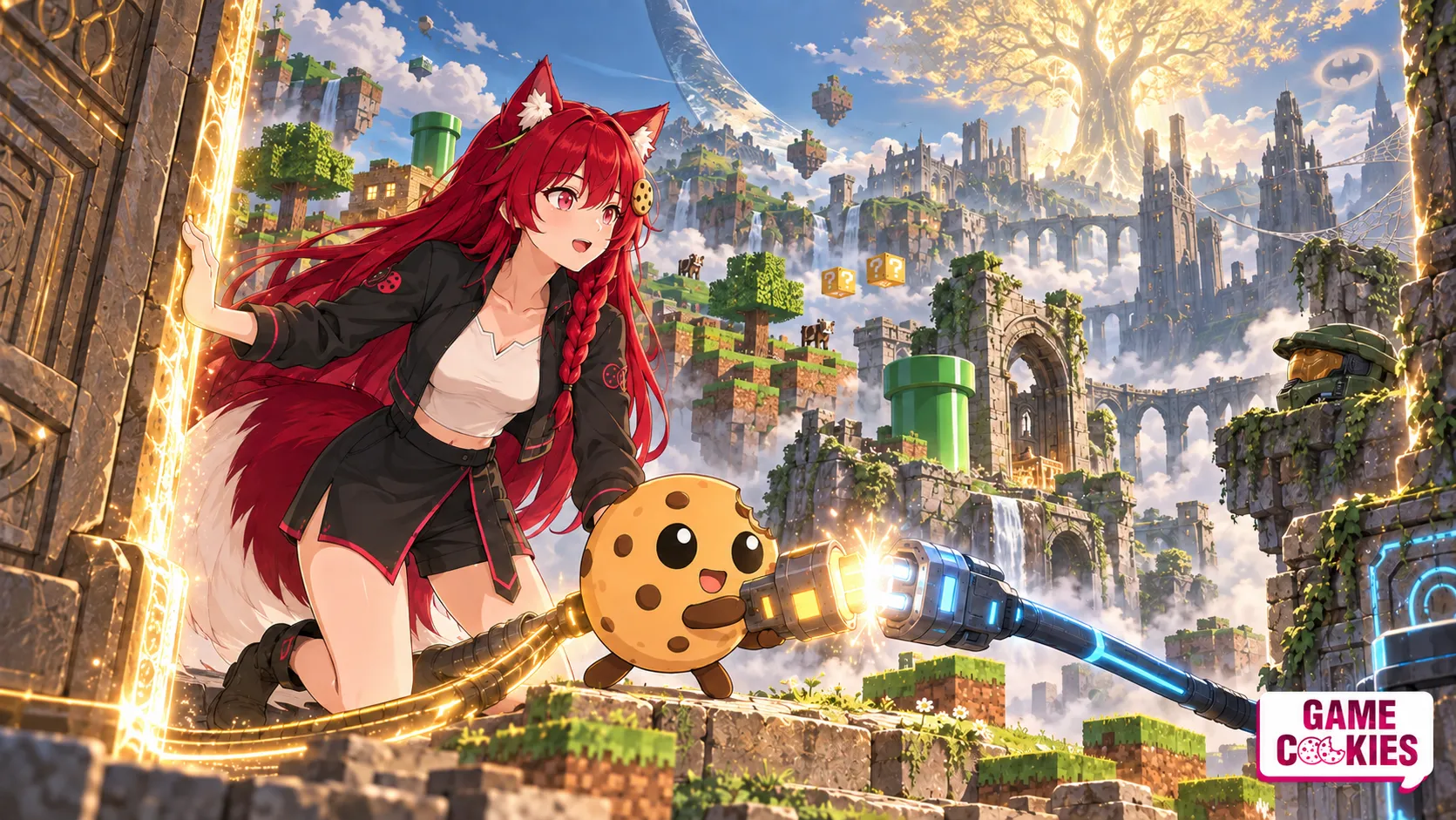
Mario moving through Elden Ring. Minecraft systems crossing into Skyrim. A new runtime loading Modern Warfare 2 maps. The AI-assisted modding conversation has reached a wonderfully strange place: familiar games are becoming ingredients for experiences their original developers never shipped.
The excitement around videos such as Gaming will never be the same and The AI unlock has begun raises a serious question beneath the spectacle. If software becomes easier to understand, connect and rebuild, how much control will its original creators retain over what people do with it?
The public projects offer a more interesting answer than “AI can copy any game now.” Several different techniques are involved, often drawing on years of community research. Their potential is substantial. So are the gaps between an extraordinary experiment and a replacement you can trust with your evening, your saves or an entire online community.
First, ask which game is actually running
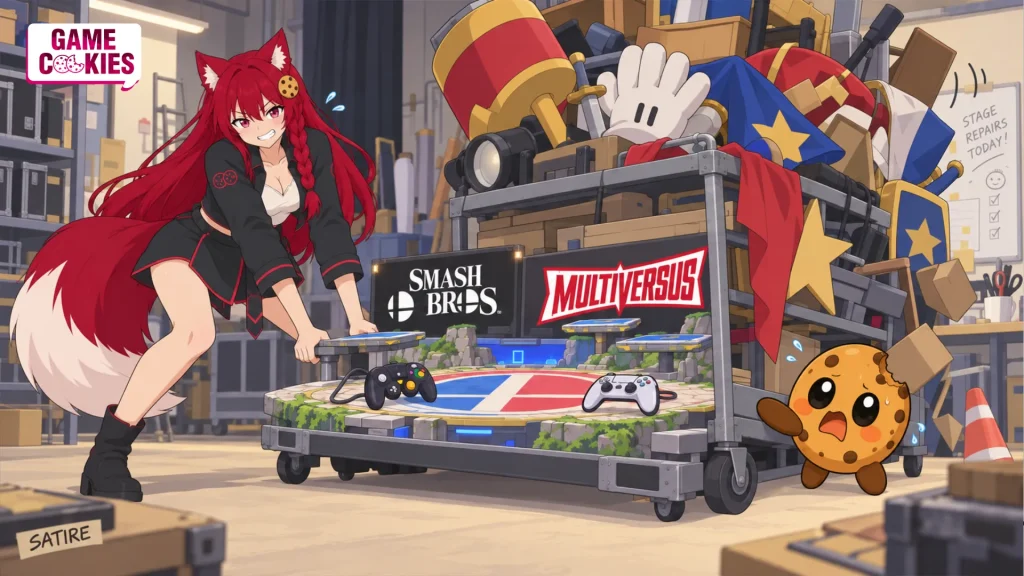
ER Mario brings Super Mario 64 movement into Elden Ring using libsm64, a library built on earlier decompilation work. Elden Ring supplies the environment and collision information. A hidden host character continues handling interactions such as doors and saves. The result combines existing systems rather than demonstrating that someone recovered all of Elden Ring’s original source code. Its README does not establish which AI model, if any, produced the implementation.
SkyCraft takes another route. Minecraft and Skyrim keep running, with plugins exchanging information between them. Minecraft supplies its movement and inventory systems while Skyrim supplies its world. The documentation describes block placement and combat across that connection. It also warns that the project is experimental and that heavily scripted opening sequences can cause trouble.
These distinctions matter because they explain both the achievement and the remaining limits. Connecting two complicated games is impressive engineering. It does not require pretending that both games have been recreated from scratch.
🦊 Kiki:
Yes, I want to see Mario deal with an Elden Ring boss. I want to watch years of careful encounter design meet a plumber whose opening argument is a triple jump. That is a perfectly respectable use of technology. But when somebody says AI “rebuilt the whole game,” I have one tiny, annoying question: why is the original game still running? You can tell me the clever answer. I will probably like it more. A mod that makes two incompatible systems cooperate already has a story worth telling. It does not need to arrive wearing a fake Nobel Prize.
🍪 Chip removes a cardboard medal from the connector cable and plugs it back in.
The AI breakthrough still has human names in the credits
There are also genuine new implementations in this wave. IW4L is a Rust-based runtime that loads maps, models and other data from a Modern Warfare 2 installation the player owns. Its author says the project was written by an LLM. The same documentation credits existing tools and reverse-engineering work, and explicitly identifies incomplete gameplay, bugs and synchronization problems.
The Skate 3 Rust Engine is particularly clear about its foundations. It credits dumbad with more than two years of research into the original game before the rewrite. AI coding tools helped develop a new implementation from that groundwork. Matching every part of the original gameplay remains unfinished.
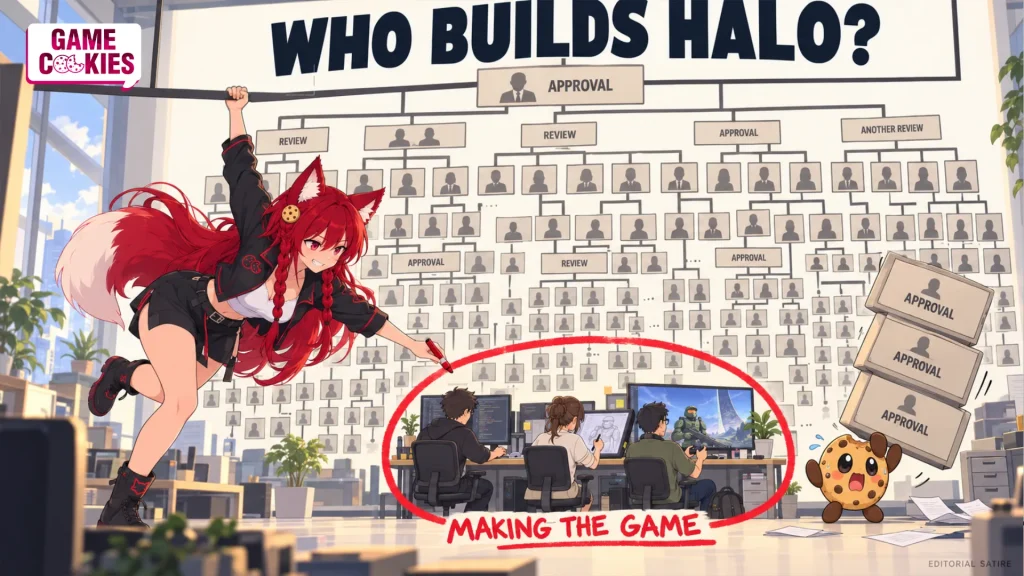
That is a meaningful change in how accumulated knowledge can be used. A difficult body of research may become easier to turn into another working system. It also means a claim about how quickly the final code appeared tells us little unless we know what knowledge, tools and testing were available beforehand.
⭐ Byte:
To compare development time fairly, count research, setup, generated code, failed attempts, human review and maintenance. The Skate project’s reported two-plus years of prior research belong in that picture. A short rewrite period alone cannot establish a universal speedup, a complete replacement cost or how quickly an unfamiliar game could be reconstructed.
🦊 Kiki:
Give the AI credit for the work it helped do. Then leave the humans in the credits. Apparently this is now a controversial demand. Imagine spending years figuring out undocumented systems, publishing your tools, and opening your phone to discover that the entire achievement happened last Tuesday because somebody typed confidently. Wonderful. Your contribution has been promoted to “available context.” I like faster tools. I would also like us to stop treating the person who built the ladder as an inconvenient detail in the story about how quickly someone reached the roof.
🍪 Chip adds the missing names to the credits until they push the victory speech off the screen.
The best possibility is more player freedom
For players, the strongest promise is greater freedom to adapt a game: different controls, unusual combinations of mechanics, new ways to revisit a familiar world and, potentially, better tools for maintaining older experiences. Those are opportunities to pursue, rather than features every current project already delivers.
There is a useful difference between generating more content and giving people more control over content they already value. A player who loves a world but dislikes one system may want to change that system. A small modding group may want to explore an idea too strange or too narrow to survive a commercial greenlight meeting.
Lowering the cost of experimentation could make more of those attempts possible. It could also make the attempt easier for people with a strong creative idea who still need technical help. They would remain responsible for checking whether the result works. The audience gets to judge the experience, not merely the tool used to produce it.
Preservation raises a higher bar. Keeping an older game meaningfully playable requires its behavior, dependencies and data to survive together. A rebuilt renderer or a working movement system can contribute to that effort without preserving the entire experience. Community documentation and repeatable testing remain valuable precisely because another person needs to be able to continue the work.
The boss after the demo is maintenance
Read the limitations before imagining a seamless universal game blender. SkyCraft documents a multiplayer boundary: players can share the Minecraft side while retaining separate Skyrim worlds and quests. ER Mario lists visual and interaction issues and instructs users to keep the mod offline. Those caveats describe the practical experience more honestly than a highlight clip can.
A project also needs someone to handle the next update, the next hardware configuration and the bug that appears three hours after the impressive part. For players, trustworthy installation instructions, clear compatibility information and useful support can matter as much as the original trick.
Rights require their own care. The Skate project says its code license does not grant rights to EA’s assets or trademarks. ER Mario likewise separates its own code license from the games’ content. Those statements are reasons to examine each project’s requirements, not blanket legal clearance for downloading, modifying or redistributing anything that technically works.
🦊 Kiki:
I am excited about the impossible crossover. I am slightly less excited about explaining to a friend that the door works unless you entered it carrying a block while the other game was thinking about a quest. That friend has twenty minutes before dinner. They were promised a game, not an unpaid internship in bug reproduction. Please build the ridiculous thing. Then tell us which bits are held together with hope. An honest experimental mod is easy to cheer for. The “finished revolution” that needs six warnings before the start button has chosen a much harder difficulty setting.
🍪 Chip reaches for the start button, then unfolds the warnings into a picnic blanket.
Game companies should compete on what survives copying
These projects suggest a broader pressure for software makers. If reproducing a visible feature or assembling a narrow alternative becomes easier, customers may gain more options for meeting their needs. That is an inference from the direction of the work, not evidence that an AI can reconstruct an arbitrary commercial service from a screenshot.
A game still earns its audience through design, performance, art, community and the experience of playing it. A software service still has to deliver reliable results, protect entrusted information and keep working when something changes. A convincing imitation of the interface settles very little about those responsibilities.
For studios, a constructive response would be to make legitimate experimentation easier where practical: better tools, clearer boundaries and documentation that helps modders build without guessing. That does not require abandoning authorship or ignoring abuse. It means recognizing that people extending a game can also be expressing how much they want to keep playing it.
🦊 Kiki:
My favorite outcome here is more people making wonderfully unreasonable things that are actually fun. My least favorite is a fresh industry competition to announce that developers, artists and everyone who knows where the bugs live have become unnecessary. Try keeping the project healthy for a while before giving that speech. And to companies wondering what happens when a feature gets easier to reproduce: give people more reasons to stay. Make the experience better. Help them when it breaks. “It would be annoying to replace us” is a remarkably sad thing to put where your value proposition should be.
🍪 Chip turns the exit sign into a welcome sign, then goes back to fixing the door.
AI-assisted modding deserves attention because it may expand who can change software and what they can attempt. The strongest case for it needs neither magical claims nor erased credits. Give players more possibilities, keep the evidence visible, and see which experiments become experiences worth returning to.
🍪 Missed part of the gaming week?
The Sunday Cookie Box delivers five handpicked Game Cookies stories in one free Sunday email. Open your Sunday Cookie Box.
🧩 Stay curious like the modder who asked whether those worlds really had to stay separate.
🧩 Read the credits like Chip checking who built the connection.
🧩 And remember: getting it to run earns the applause. Keeping it fun earns the next session.
🦊 Kiki · 🍪 Chip · ⭐ Byte · 🦁 Leo
Tips, discoveries, and suspiciously ambitious crossovers: contact us here!