🍪 Mass Effect: Andromeda Still Explains Why Big Games Break

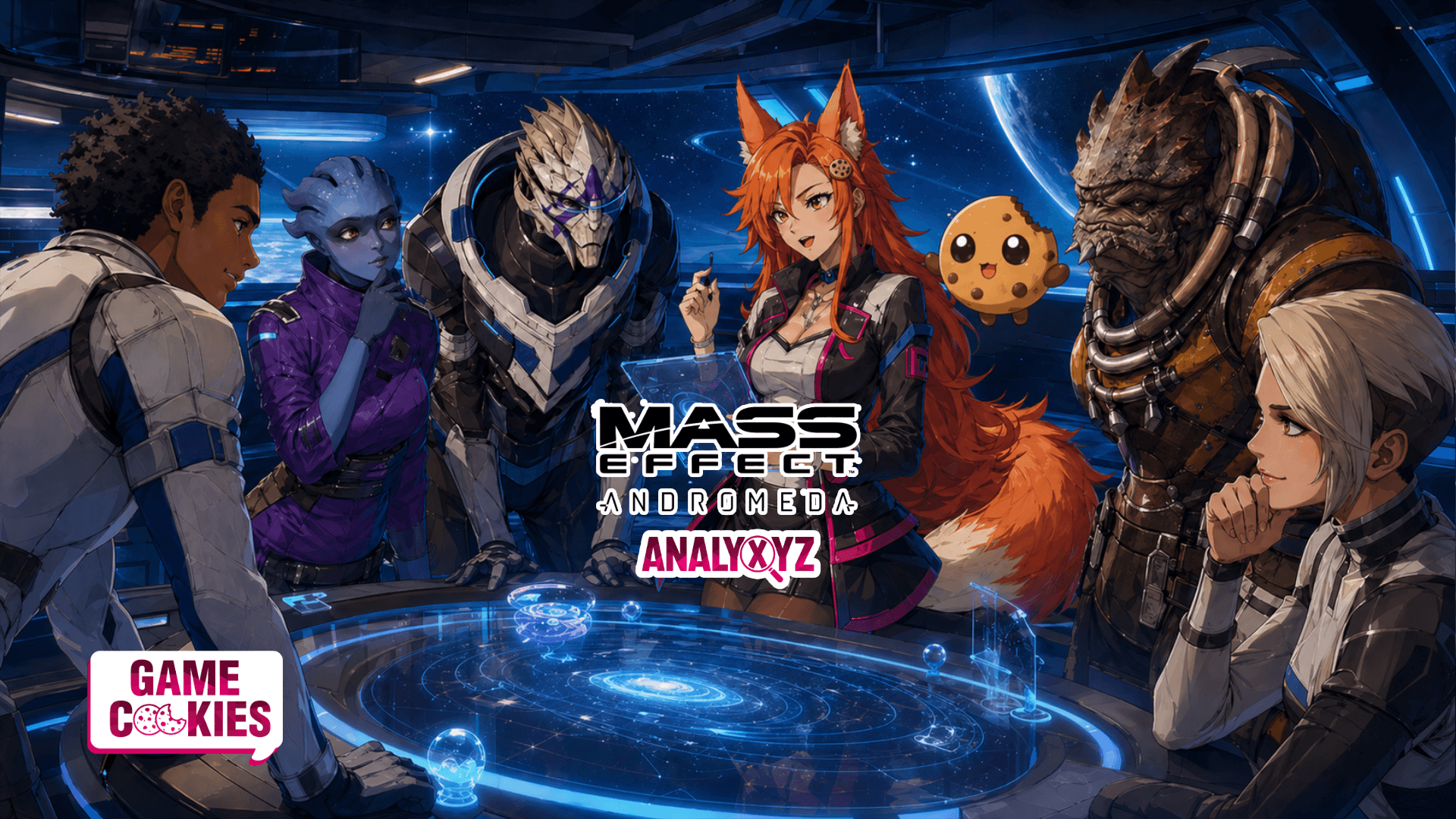
Hello there, pathfinders and exhausted RPG fans. Today we are going back to Mass Effect: Andromeda, the game that tried to send BioWare into a new galaxy and ended up becoming one of the cleanest case studies in modern AAA pressure.
The funny part, in the painful way, is that Andromeda was never some tiny side experiment. It had the Mass Effect name, the BioWare logo, a new galaxy, a new crew, a fresh protagonist, and the impossible job of following one of the most beloved RPG trilogies in gaming. That alone would have been heavy. Then came the engine problems, the studio instability, the production scramble, the memes, the hate, and the internet’s favorite little sport: choosing one game, one actor, one dev team, one moment, and beating it into paste for engagement.
Andromeda was carrying a legacy almost no new team could carry cleanly
Mass Effect: Andromeda was handled by BioWare Montreal, while the original trilogy had been spearheaded by BioWare Edmonton. The game also had a troubled production cycle with leadership departures, creative changes, and a shift from the old Unreal Engine 3 pipeline into Frostbite 3, forcing BioWare to build systems, tools, and assets from scratch for a style of game the engine was not naturally built around.
That matters because the original Mass Effect trilogy had years of institutional memory behind it. The first game was rough in places, sure, but Mass Effect 2 refined the formula into something sharper, cleaner, and more emotionally sticky. Andromeda was trying to start over with new leads, new tech, a new galaxy, a new tone, and a larger open-world design philosophy, all while fans were still emotionally attached to Shepard, Normandy, Garrus, Liara, Tali, Wrex, and the dramatic weight of the Reaper War.
The early dream was huge. According to reporting summarized by PC Gamer from Kotaku’s investigation, BioWare had explored a procedural planet-generation plan with hundreds of worlds, described by one developer as “No Man’s Sky with BioWare graphics and story.” That idea stayed central until late 2015, then collapsed into a much more traditional production scramble. Almost every developer cited in that report said most of Andromeda was built in the final year and a half before release.
🦊 Kiki: I remember the first time I saw Andromeda and thought, okay, this is Mass Effect trying to be looser, bigger, maybe a little more awkward on purpose. I didn’t hate that. The Ryders being less polished than Shepard actually made sense to me, because Shepard walks into a room like HR already approved the genocide paperwork, and Ryder feels like someone who got promoted during a fire drill. But bro, you can feel when a game is searching for itself while you’re playing it. That’s the part that hurts. A new galaxy needs confidence. Andromeda often felt like it was still asking permission to exist.
🍪 Chip clutches a tiny N7 helmet and slowly sinks behind the couch.
Frostbite became the tax every system had to pay
Tom Taylorson, the voice actor behind Scott Ryder, recently put words to what many fans and developers have been circling for years. In his interview with We Are Mass Effect, he said the game was “done dirty” by a publisher expecting too much from it, pushed out too early, and forced to use a corporate engine that many on the team did not know well. He also said Frostbite was not suited to the storytelling side of the game.
That last part matters more than casual players sometimes realize. Engines are never neutral. They shape what developers can build quickly, what takes months, what breaks every time someone touches it, and what becomes so expensive that the team quietly cuts it. Frostbite could render beautiful environments, and Andromeda sometimes looks genuinely gorgeous, especially in its alien landscapes. The issue was all the RPG glue around those landscapes: cinematic conversations, animation pipelines, inventories, quest structures, dialogue flow, save states, companion behavior, and all the weird connective tissue that makes a BioWare RPG feel alive.
PC Gamer’s 2017 write-up points to lacking and inconsistent tools, Frostbite problems, studio clashes, and a production cycle where polish time evaporated. One developer in the report described building something, getting it approved, moving on, and then watching it fall apart behind them. That is the kind of production quote that should make every producer in AAA break into a cold sweat.
🦊 Kiki: Engine discourse gets annoying because players hear “engine problem” and think it means a magic button made the faces weird. No. It is more cursed than that. It means the team is spending emotional damage hours building basic tools while the schedule keeps walking toward them with a knife. I’ve seen enough messy launches to know that when the UI, animation, quest flow, and cinematics all feel slightly haunted, the problem probably started way before anyone rendered the first meme face. And yeah, Frostbite made some beautiful planets. Cool. A chandelier can be pretty and still fall on your dinner table.
🍪 Chip nervously checks a broken dialogue wheel with a magnifying glass.
The launch became a meme machine before the game had room to breathe
Andromeda did have good ideas. The combat was faster and more mobile than the original trilogy. Exploration had scale. The Tempest had a different vibe from the Normandy, less military command center and more scrappy expedition ship. Ryder’s personality options allowed for a less mythic, more uncertain protagonist. There was a version of Andromeda that could have grown into something stronger with a sequel.
The problem is that launch week does not grade potential. It grades what is on the screen.
The game received mixed reviews. Critics praised the combat, atmosphere, and visuals, while criticizing the story, voice acting, and technical issues. After the game’s disappointing reception, BioWare Montreal was merged into EA’s Motive Studio, and the Mass Effect franchise was temporarily put on hold.
The facial animation controversy became its own beast. Before the game was even fully out, players were already posting clips and memes about character movement and strange expressions. One former EA employee was wrongly identified as a lead developer and abused online, which forced BioWare to release a statement defending its team and community standards.
That is where Taylorson’s reflection gets sharper. He said Andromeda was released into a “very toxic atmosphere” and quickly became the internet’s punching bag for views and clicks. He also said the hate hit other people on the project, including people he knew and did not know, and that he still felt terrible for them.
🦊 Kiki: I’m not going to pretend the memes came from nowhere. Some of those faces looked like the game had just remembered it left the oven on. Fine, laugh. I laughed too. Then the whole thing turned into that ugly internet ritual where the joke stops being about the bug and starts being about feeding a mob. At some point people stopped asking why the game shipped like that and started acting like every person near the project deserved to be humiliated. That’s where gamers get weird. Like, deeply weird. Put the pitchfork down and go drink water.
🍪 Chip holds up a tiny “patch notes, please” sign with shaking hands.
The sequel that never got its Mass Effect 2 moment
The cruel thing about Andromeda is that Mass Effect itself proves rough starts can be redeemed. The first game had stiff combat, weird inventory management, long elevator rides, and enough Mako driving to test a person’s spiritual beliefs. Then Mass Effect 2 arrived and cleaned up the formula so hard that the trilogy became a genre benchmark.
Mac Walters said in 2023 that he wished Andromeda had received a second game, because the team could have applied the same kind of polish jump the original trilogy had between ME1 and ME2. After Andromeda’s reception, though, reports pointed to BioWare Edmonton taking a break from Mass Effect to focus on Anthem, while BioWare Montreal moved to other EA projects before being merged with Motive.
Taylorson felt that loss personally. In the We Are Mass Effect interview, he said he and others thought they would spend a decade playing with Ryder and that corner of the universe. Instead, the character was effectively left behind. He also said nothing was recorded for the long-rumored Quarian Ark DLC, beyond his work on the related audiobook.
That detail is important because it changes the emotional reading of Andromeda. The game was sold as a new beginning. The reception made it feel like a dead end.
🦊 Kiki: This is the part that annoys me most, honestly. I’m old enough in gamer years to remember when a flawed first entry could get another swing. Games had room to be weird, clumsy, ambitious, even kind of busted, then the sequel arrived and the studio figured out what the thing actually was. Andromeda never got that mercy. It shipped messy, got mocked into the dirt, and then the suits looked at the smoke and went, yeah, pack it up. I don’t even think Ryder was my favorite protagonist. I just hate when a story gets abandoned at the exact moment it could have become more interesting.
🍪 Chip places a tiny flower on a toy Tempest model.
Criticism is fair. Harassment is where the rot starts showing
There is a lazy defense of troubled games that says fans were simply too mean. That argument does not work here. Andromeda had real problems. Players paid for a premium BioWare RPG and got a game with visible technical issues, uneven writing, awkward presentation, and a story that did not land with the same force as the trilogy.
Criticism was earned. The feeding frenzy around it was something else.
The gaming industry has been here before. Gamergate began in 2014 as a harassment campaign targeting Zoë Quinn, then expanded to Anita Sarkeesian, Brianna Wu, and others. Britannica notes that Quinn became the focus of an online sexual harassment campaign involving rape and death threats after false accusations spread through forums, and that Sarkeesian and Wu were also threatened online with physical harm. Wikipedia’s summary similarly identifies Gamergate as a misogynistic online harassment campaign that included doxing, rape threats, and death threats against women in the games industry.
That pattern did not end in 2015. After The Last of Us Part II, Laura Bailey, who played Abby, described waves of social media attacks, including death threats against her newborn son. She later said the experience made her more guarded online.
So when Taylorson talks about Andromeda being released into a toxic atmosphere, that should not be treated like a defensive actor whining about reviews. It fits into a longer industry pattern where disappointment mutates into targeted abuse, and targeted abuse becomes content, traffic, and identity performance for angry online communities.
🦊 Kiki: This is where I get nasty about it, because gamers love pretending harassment is just “passion.” Nah. Passion is writing a long forum post about why the Kett are boring. Passion is making a 40-minute video about quest design while your microphone sounds like it survived a washing machine. Threatening actors, doxing devs, chasing people off social media, that is loser behavior with a fandom sticker slapped on it. And the worst part is that it makes actual criticism harder to hear, because now the dev team has to sort through useful feedback while some freak is yelling at their family. Garbage ecosystem. Absolute garbage.
🍪 Chip quietly deletes a comment draft and hugs a tiny report button.
The labor side is still the part players barely see
The production story around Andromeda also belongs beside a bigger conversation about crunch and studio pressure. Crunch in game development refers to compulsory overtime, often over long periods, and it can involve 65 to 80 hour work weeks with negative health effects and lower quality work.
The industry has known this for decades. The EA Spouse controversy in 2004 described extended crunch at Electronic Arts (EA), and EA eventually settled lawsuits for $15 million. Rockstar Games also faced public criticism in 2010 after spouses of Rockstar San Diego developers wrote about deteriorating working conditions and excessive crunch. In the 2010s, scrutiny continued, with reports of Red Dead Redemption 2 concerns and Epic Games employees describing 70 to 100 hour weeks after Fortnite became a live-service monster.
This matters because players usually see the final bug, not the production chain that created it. They see the awkward face, the broken quest, the crash, the odd line delivery, the missing polish. They rarely see the planning mistake from two years earlier, the engine support ticket nobody could resolve, the tools team drowning, the cut feature that caused five other systems to wobble, or the animator trying to fix a cinematic after three other departments already moved on.
Andromeda’s story fits that pattern too neatly. A new team, a huge IP, a forced engine shift, open-world ambition, late production changes, limited polish time, and then a launch window where the internet was ready to turn every flaw into a joke grenade.
🦊 Kiki: Players don’t owe studios blind forgiveness. I need to say that before someone starts typing with Dorito dust rage on their fingers. But man, the way people talk about broken games sometimes feels like they think the devs personally chose to make their own lives miserable. Most devs want the game to be good. Of course they do. Nobody joins BioWare dreaming of being the person attached to a meme face. The ugly question is usually who set the scope, who approved the tech, who controlled the date, who decided the team could simply “make it work.” And somehow those people are always harder to meme.
🍪 Chip points at a whiteboard labeled “scope” and slowly adds three question marks.
Why Andromeda still matters now
Andromeda is useful because it refuses to fit one clean moral. It was ambitious and undercooked. It had real strengths and serious weaknesses. It was hurt by production decisions and then swallowed by online mockery. It deserved criticism, while many people who worked on it deserved basic decency. That combination is uncomfortable, which is probably why the internet keeps flattening it into either “secret masterpiece” or “total disaster.”
The better reading is messier. Andromeda shows what happens when AAA production turns a creative problem into a technical problem, then a technical problem into a schedule problem, then a schedule problem into a public relations disaster. Once the memes take over, nuance disappears. The game stops being a product of thousands of production decisions and becomes one ugly screenshot passed around forever.
That still happens now. Big games are larger, social media is meaner, live-service expectations are heavier, and players are trained to treat every delay, bug, redesign, casting choice, localization choice, and narrative risk as a personal insult. Studios also keep chasing impossible scopes while telling teams to hit dates that look better in investor calendars than in production reality.
Andromeda did not fail for one reason. That is the point. It was the collision of ambition, tech debt, leadership instability, publisher pressure, fan expectations, and an online culture that loves turning disappointment into bloodsport.
🦊 Kiki: I think about Andromeda the way I think about a lot of messy games from that era. There was a heart in there. You can see it. The crew banter, the planets, Ryder being awkward, the idea of building a home in a galaxy that absolutely did not invite you. That’s a good setup. Then the machine around it chewed too loudly. And because the internet has the emotional regulation of a caffeinated varren, the whole thing became a public execution instead of a normal bad launch conversation. I don’t need everyone to love Andromeda. I just wish people understood how many broken systems have to line up before a game breaks that loudly.
🍪 Chip pats a cracked N7 mug and refuses to let go.
Closing thoughts
Mass Effect: Andromeda should be remembered as more than the funny-face game. The meme version is easy, but the development history is more useful. It shows how engine mandates, studio transitions, inflated scope, lost polish time, and online toxicity can turn a promising restart into a franchise warning label.
The next Mass Effect will have to deal with all of that history. Not just Shepard nostalgia. Not just Andromeda’s reputation. Also the question BioWare keeps having to answer in public: can the studio still build a character-driven RPG with enough technical control, production discipline, and emotional confidence to make players trust the journey again?
That is the real Andromeda lesson. Broken launches rarely begin at launch.
⚙️ Stay skeptical, like anyone reading an impossible AAA schedule.
⚙️ Keep asking who controls the scope, because devs usually inherit the mess before players ever see it.
⚙️ And remember, a meme can explain a bug, but it cannot explain a whole broken pipeline.
🦊 Kiki · 🍪 Chip · ⭐ Byte · 🦁 Leo