

Hello there, platform loyalists and Game Pass accountants. Today we’re looking at Xbox’s new leadership moment, because Asha Sharma’s latest comments are not just about whether Halo, Forza, or Gears stay on Xbox.
They’re about whether Xbox still knows what it wants to be.
After publishing the “We Are Xbox” letter, Xbox CEO Asha Sharma and content chief Matt Booty said the company will “reevaluate” its approach to exclusivity, windowing, and AI. The letter also says Xbox wants to fortify Game Pass, return the business to durable growth, make cloud play feel native, and use M&A more deliberately. That is a lot of strategy language in one room, which usually means the company knows the old messaging stopped working.
Then Sharma told Game File, through an interview covered by Eurogamer, that Xbox is taking a data-driven and strategic approach to exclusives. When asked about timing, she said there was “nothing” Xbox was ready to commit to, adding that she wants to make the right decision, not the fastest one.
That sounds careful. It also sounds like a company trying to walk backward through a door it spent years pretending was unnecessary.
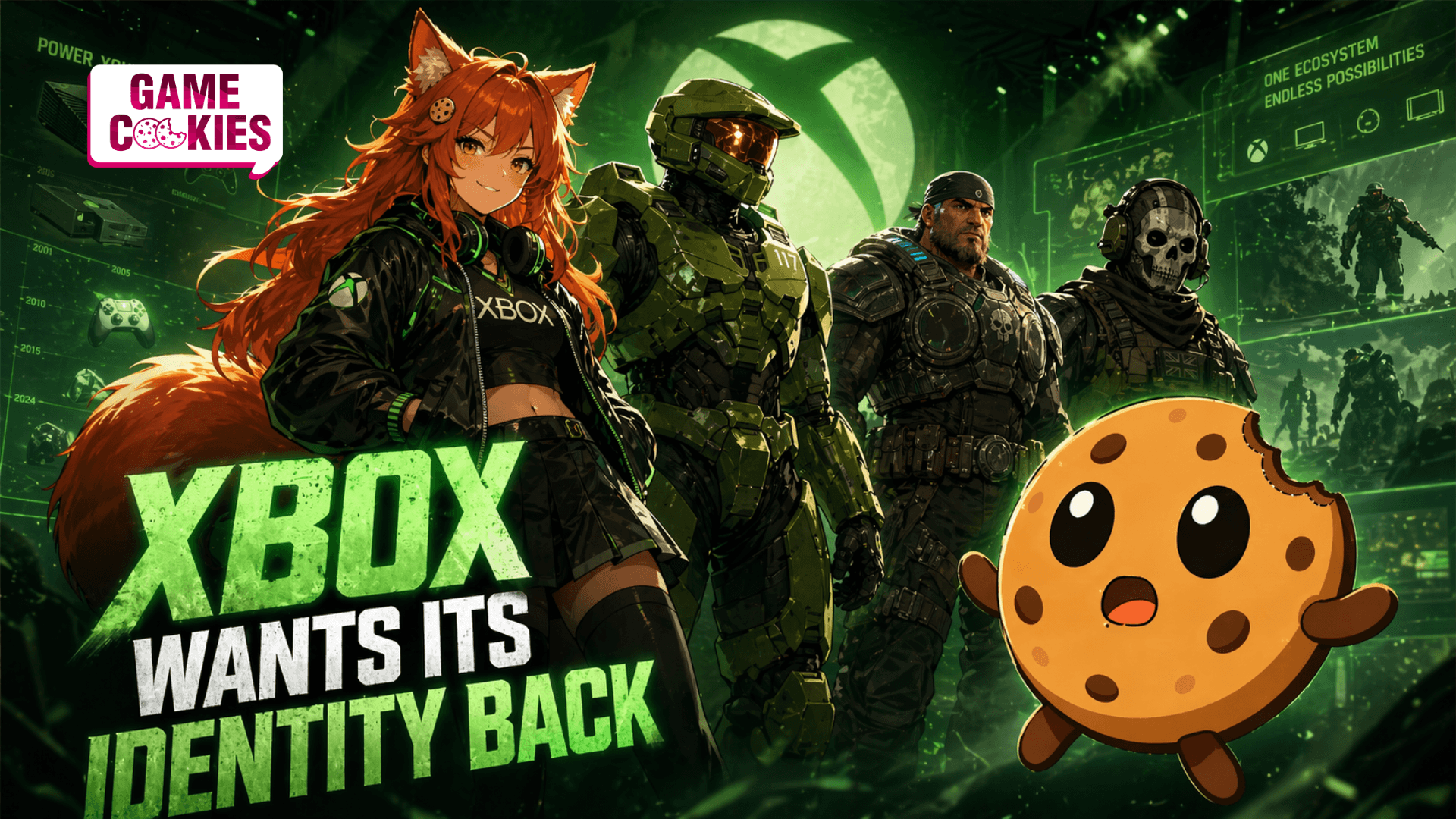
Xbox is trying to become Xbox again
The first thing that matters is the name. Xbox is moving away from the broader Microsoft Gaming identity and back toward Xbox as the central brand. In the official letter, Sharma and Booty say “Microsoft Gaming” describes the structure, but not the ambition, before declaring: “We are Xbox.”
That is not a tiny branding tweak. For years, Microsoft pushed the idea that Xbox was less a console and more an ecosystem. Your Xbox could be a console, a PC, a cloud screen, a handheld, a subscription, or whatever device happened to run the app. That made sense for reach. It also made the console itself feel optional.
The Verge reported that daily active players are now Xbox’s “north star” metric, with hardware, content, experiences, and services listed as the big priorities. That tells us Microsoft is still thinking beyond plastic boxes under TVs, but the branding shift suggests it also knows that “everything is Xbox” made the word Xbox feel weaker, not stronger.
🦊 Kiki: I remember when Xbox had a very simple pitch. You wanted Halo, you bought the Xbox. You wanted Xbox Live, you bought the Xbox. You wanted that weird green glow in your room like Master Chief was haunting your furniture, yeah, you bought the Xbox. Then somewhere along the way, Microsoft got so obsessed with being everywhere that the brand started feeling like a login screen with nostalgia attached. I get the business logic. More platforms, more revenue, more players, very spreadsheet-friendly. But players are not spreadsheets. They need a reason to care, and “you can technically play this on a toaster later” is not exactly a war cry.
🍪 Chip slowly peels an “Xbox” sticker off a cloud server and sticks it back on a console.
The exclusives debate is really about trust
The reason this story is moving so much is simple: Xbox fans have been burned by mixed signals.
Microsoft spent years sending first-party games to PlayStation and Nintendo platforms. The Verge noted that fans were shocked when Microsoft began porting Xbox titles to rival systems, and it pointed to revenue from games like Forza Horizon 5 as one reason reversing the strategy will be difficult.
Eurogamer framed the same tension clearly. Microsoft bought Activision Blizzard for $68.7 billion and ZeniMax Media for $7.5 billion, and the obvious business pressure was to put those games in front of as many players as possible. That is why a return to exclusivity would be a major philosophical shift, especially after first-party Xbox games began reaching PlayStation and Nintendo players.
The problem is that the multiplatform strategy made Xbox hardware harder to defend. Why buy the console if the games eventually show up elsewhere? Why invest emotionally in the platform if the company keeps implying the platform is just one access point among many?
That is why “windowing” matters. Xbox may not return to old-school hard exclusivity. It may decide that some games launch first on Xbox and PC, then arrive later on PlayStation or Nintendo. The Verge suggested Forza Horizon 6 could test that approach, with Xbox and PC first, PS5 later.
🦊 Kiki: This is the part where Xbox fans have every right to be annoying, and I say that with love and mild fear. Because they were told for years that exclusives were old thinking, then watched everyone else keep using exclusives to build identity, sell hardware, and make their platforms feel less like rental kiosks. And now Xbox is like, “Actually, we might reconsider.” Bro. People bought into the ecosystem while you were changing the definition of the ecosystem every six months. Of course they’re jumpy. Of course they read every sentence like it’s a ransom note. When your brand strategy has more pivots than a fighting game combo list, the audience starts flinching before the next announcement even lands.
🍪 Chip opens a tiny spreadsheet labeled “Reasons to own Xbox” and finds three cells marked “pending.”
The community reaction is split, and that is the point
The reaction is not clean. Xbox fans, PlayStation fans, PC players, and subscription defenders are all reading this through different scars.
Pure Xbox ran a poll asking readers what Xbox should do about exclusives. Out of 1,299 votes, 44 percent chose making some games exclusive again where it makes sense, 36 percent chose making all Xbox content exclusive again, and only 15 percent wanted to stick with the broad multiplatform path. That does not represent the whole market, but it does show how Xbox-focused audiences are leaning.
Comment sections show the same divide. Some Xbox fans want flagship series like Halo and Gears protected. Others argue that timed exclusivity is the realistic middle ground. Some PlayStation-oriented reactions shrug because they believe Xbox’s current first-party output is not strong enough to change buying behavior. Push Square’s coverage captured that outside-Xbox mood, with commenters saying Microsoft should “make up your mind already” or that they have not seen many Xbox studio releases worth yearning for this generation.
There is also a business-minded counterargument: full exclusivity may sound emotionally satisfying, but Microsoft already has a massive publisher business. Cutting off PlayStation and Nintendo sales means walking away from money. For a company that just spent tens of billions on major publishers, that is not a small sacrifice.
🦊 Kiki: Console-war discourse is exhausting because everyone suddenly becomes a CFO when it helps their argument. Xbox fans say exclusives build identity. They’re right. PlayStation fans say Microsoft likes money too much to stop porting games. Also right. PC players sit there eating popcorn because half the “exclusive” debate already includes PC anyway. Rude, but also accurate. The funniest part is that everyone knows the likely answer is messy. Some games stay everywhere. Some games get timed windows. Some sacred-cow franchises maybe get protected for branding. And then everyone pretends they predicted it perfectly after the fact, because gamers have never met a hindsight they couldn’t weaponize.
🍪 Chip puts on noise-canceling headphones while two tiny consoles yell at each other.
Game Pass makes exclusivity harder, not easier
Game Pass is the shadow in this whole story.
The official Xbox letter says the company wants to “fortify Game Pass with clear differentiation and sustainable economics.” That wording matters because Game Pass has always been both Xbox’s strongest consumer pitch and its hardest strategic puzzle. A subscription needs constant content. Big first-party launches help sell the subscription. But big games are expensive, and if those games are locked into a subscription-first model, Xbox has to think carefully about where else revenue comes from.
That is why total exclusivity is complicated. A platform-holder can use exclusives to sell hardware, but Microsoft also wants Game Pass growth, PC strength, cloud adoption, publisher revenue, and global reach. Those goals do not always pull in the same direction.
If a game launches only on Xbox and PC, it helps the brand feel stronger. If it launches on PlayStation too, it helps the revenue line. If it launches later on PlayStation, it gives Xbox a temporary advantage while still harvesting sales elsewhere. That is probably where this is heading, unless Sharma decides the brand damage from going fully multiplatform is worse than the revenue loss from holding back games.
🦊 Kiki: Game Pass is such a weird beast because players love the deal, but the business side always feels like someone is sweating behind the curtain. I’ve used subscription services enough to know the vibe. At first it feels like magic. Then the prices move, the tiers multiply, the wording gets softer, and suddenly every benefit has a little asterisk wearing sunglasses. So when Xbox talks about sustainable economics, yeah, I hear the translation. They need Game Pass to keep working without turning every giant first-party game into a financial headache. That makes exclusivity messy because the platform fantasy and the revenue math are fighting in the same hallway.
🍪 Chip tries to balance a Game Pass card, an Xbox console, and a PlayStation controller on his head.
The AI part should not be ignored
Most headlines focused on exclusives, because exclusives feed the console-war machine. But the Xbox letter also says the company will reevaluate its approach to AI. That part is worth watching.
Sharma came from Microsoft’s AI side, which makes some fans nervous. Online reactions have already connected her leadership to fears that Xbox could become too focused on automation, cost cutting, or AI-driven production logic. The official letter does not lay out a specific AI roadmap, but placing AI in the same sentence as exclusivity and windowing suggests it is not a side topic. It is part of the new leadership review.
The risk is obvious. If Xbox talks about creativity while also talking about AI, developers and players will watch the details closely. The industry has spent the last few years watching companies invoke AI as a magic word for efficiency, scale, support, moderation, tooling, content generation, and sometimes layoffs. Xbox will need to be very clear about whether AI is meant to support creators or replace creative labor.
🦊 Kiki: The second I saw “exclusivity, windowing, and AI” grouped together, my brain made the Windows error sound. Because those are not the same kind of decision. Exclusivity is platform strategy. Windowing is release strategy. AI is the giant glowing question mark every company keeps dragging into the room like it found religion at a shareholder meeting. I’m not saying AI has no place in development. Tools are tools. But the industry has earned zero benefit of the doubt when it starts whispering “efficiency” near creative teams. So if Xbox wants people to believe this is about better games and a stronger platform, the AI explanation cannot be corporate fog. Players will smell that instantly. Developers too.
🍪 Chip nervously covers a tiny artist tablet with a blanket.
Xbox’s real problem is not exclusives. It is consistency.
The easiest take is that Xbox needs exclusives again. The more accurate take is that Xbox needs a consistent rulebook.
Players can understand a fully exclusive strategy. They can understand a fully multiplatform publisher strategy. They can even understand timed exclusives if the schedule is clear and predictable. What makes people angry is the feeling that Xbox changes the explanation depending on the quarter, the game, the platform, or the interview.
That is why Sharma’s cautious answer is both smart and dangerous. Smart, because she should not make a rushed promise about a decade-long platform strategy. Dangerous, because Xbox fans have already spent years living inside ambiguity.
If Xbox wants the brand to feel alive again, it cannot just say “We are Xbox.” It has to prove what Xbox means in practical terms. Which games arrive first? Which games stay? Which games travel? How does Game Pass fit? Why does the console matter? What does Xbox offer that players cannot get by waiting?
Until those questions have real answers, the return of Xbox is still a promise with a logo.
🦊 Kiki: This is where I land. I don’t need Xbox to become 2007 Xbox again. That era is gone, the industry is different, budgets are obscene, and pretending otherwise is how people end up yelling at clouds while buying remasters. But Xbox does need a spine. Pick a strategy and make it understandable. If some games are timed, say that. If flagship franchises are protected, say that. If Game Pass is the center, explain what the console does better. The worst version of Xbox is the one that tries to sound open, exclusive, affordable, premium, rebellious, corporate, creator-first, subscription-first, hardware-first, and cloud-first in the same breath. Nobody can buy into a brand that keeps auditioning for every possible identity.
🍪 Chip holds up a tiny green sign that says “Please choose one quest marker.”
The takeaway
Asha Sharma is right not to rush the decision. Xbox exclusivity is no longer just a fan-service switch the company can flip. Microsoft has publisher revenue to protect, a subscription model to stabilize, hardware credibility to rebuild, and a brand that spent years telling players the device mattered less than access.
But that is exactly why this moment matters.
Xbox is trying to become Xbox again after years of stretching the name across every screen it could find. Exclusives may help rebuild identity, but they will not fix the deeper issue unless Xbox becomes easier to understand. Players do not just want access. They want a reason to care where they play.
⚙️ Stay sharp, like Xbox fans reading every word of a strategy memo twice.
⚙️ Keep questioning, like Sharma’s team deciding whether revenue or identity matters more this round.
⚙️ And remember: a platform can be everywhere, but a brand still needs somewhere to stand.
🦊 Kiki · 🍪 Chip · ⭐ Byte · 🦁 Leo