

Hello there, people who read between deal lines.
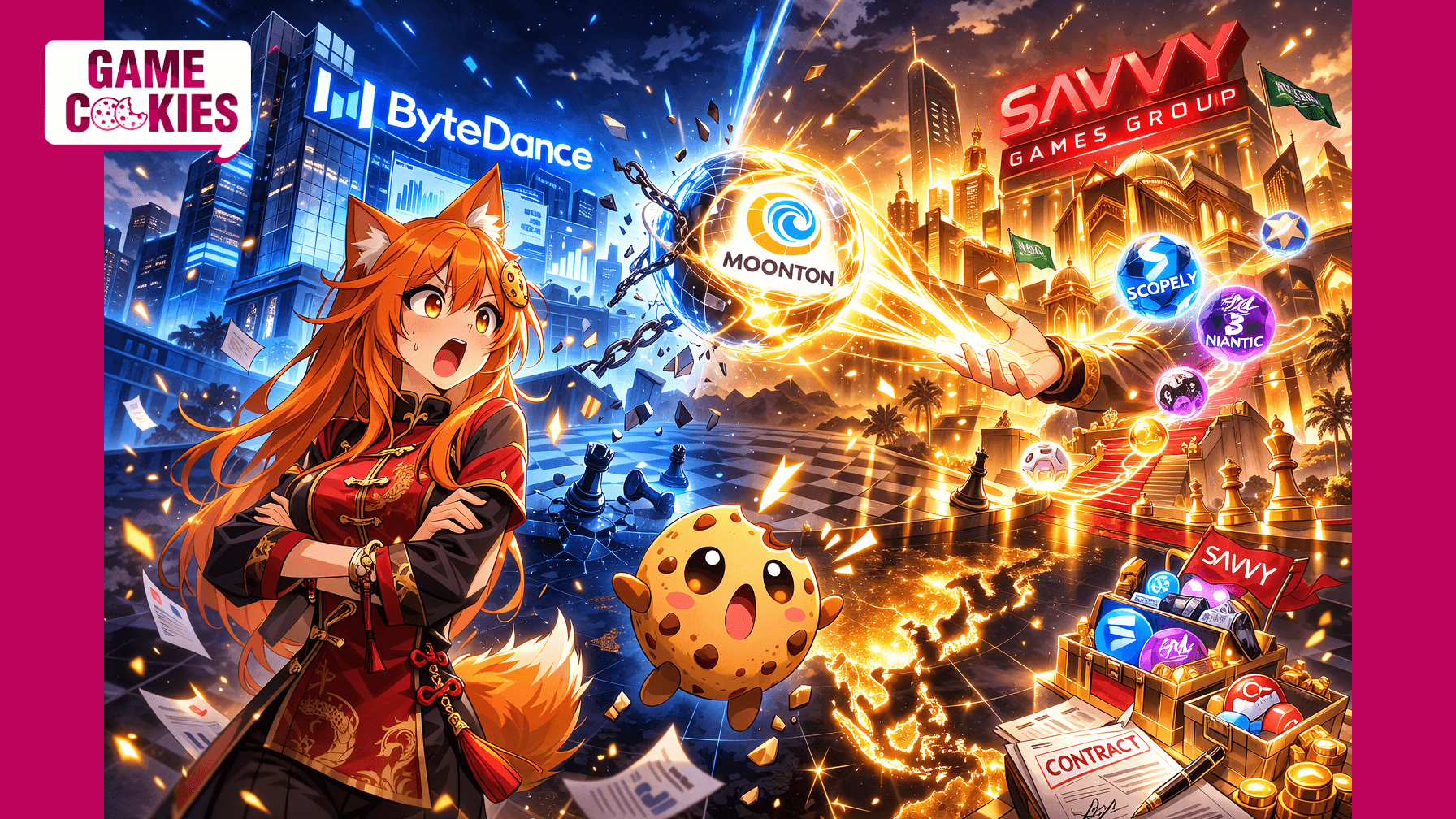
ByteDance is reportedly in advanced talks to sell MOONTON GAMES, the studio behind Mobile Legends: Bang Bang, to Savvy Games Group for somewhere between six and seven billion dollars.
On paper, it’s a divestment.
In practice, it’s a signal about where different kinds of power are concentrating.
ByteDance stepped into games and then stepped back
When ByteDance acquired Moonton in 2021 for around four billion dollars, it fit the mood of the moment. TikTok was expanding globally. The company had distribution leverage. Mobile Legends already had deep traction in Southeast Asia.
The logic was straightforward. If you control attention, you can amplify interactive products.
But running a global competitive live service is operationally heavy. It requires a different internal culture than running a short-form video machine. Different talent. Different pacing. Different risk profile.
By 2023, ByteDance had begun shrinking Nuverse Games. Projects stopped. Teams were redirected. The internal gravity moved back toward AI and core platform monetization.
Moonton remained standing, which already tells you it wasn’t a weak asset.
Now it’s being monetized.
That tells you something about internal priorities without anyone having to say it explicitly.
🦊 Kiki: ByteDance getting out of mainstream gaming doesn’t shock me. Gaming looks adjacent to social from a distance, then you get inside and it’s just a different kind of pain. Live service players are basically trained detectives, esports people want everything yesterday, and every patch turns into a courtroom drama on the timeline.
Meanwhile ByteDance has AI, commerce, and short video monetization all spinning like a slot machine that actually hits. So yeah, if I’m sitting in that room and someone asks where we want leadership attention, I’m not picking the business where every update gets you yelled at by 3 regions in 3 languages.
This isn’t some tragic fumble. It’s more like, “okay we tried it, it works, it’s valuable, now do we actually want to keep living in this?” And apparently the answer is no.
🍪 Chip opens a tiny patch notes doc, sees 900 comments, closes it immediately
Savvy’s pattern is clearer every year
Savvy Games Group is backed by Saudi Arabia’s Public Investment Fund. Over the last few years they have acquired Scopely, absorbed Niantic, Inc.’s game division through Scopely, and taken significant stakes in established publishers.
Mobile Legends brings over 1.5 billion installs and more than 110 million monthly active users. It dominates parts of Southeast Asia where mobile is the primary gaming platform and esports events fill stadiums.
From a long-horizon investment perspective, that’s durable engagement at scale.
It is a known quantity.
It produces recurring activity.
It anchors regional ecosystems.
You don’t need imagination to see how that fits inside a sovereign strategy built around diversification and global entertainment presence.
🦊 Kiki: Savvy doesn’t feel like they’re shopping. It feels like they already know what they want and they’re just filling slots. Mobile Legends is the kind of game you buy when you want something that already has people locked in, regional dominance, esports scaffolding, the whole deal.
And yeah, I know some folks will act surprised like “Saudi is getting into gaming.” Babe, they’ve been into gaming. They’re buying their way into ownership layers. Scopely wasn’t a vibe purchase. Niantic’s games weren’t a cute little side quest. This is a pattern.
Mobile esports is huge in Southeast Asia. MLBB is basically part of the furniture over there. You can make a whole strategy around that without needing to invent anything. You just show up with capital and don’t mess it up.
🍪 Chip wears a tiny esports headset and does a dramatic focused stare into the middle distance
The regulatory backdrop never left
China’s regulatory posture toward gaming has been uneven in recent years. Draft proposals targeting monetization mechanics triggered heavy market reactions. Even when softened, the underlying message stayed in the room.
Operating a globally dominant live service while navigating policy volatility adds friction. Not insurmountable friction. Just constant friction.
If you are already doubling down on AI, commerce, and social infrastructure, trimming complexity elsewhere becomes easier to justify.
No theatrics required.
🦊 Kiki: The part I keep coming back to is who ends up holding the keys.
When a tech company owns a game, it’s usually another lever. Distribution, ads, retention loops, whatever. When a sovereign fund owns it, it’s more like, “cool, we’re going to be here for a while.” Different vibe. Different incentives. Different patience level.
And it won’t feel like anything changes at first, because the game still launches events and people still queue up. But over time you start seeing where tournaments land, who gets partnered, where money flows, which regions get real love versus placeholder support.
It’s slow, then suddenly it’s not slow, and everyone pretends they didn’t see it coming.
🍪 Chip sits on a glowing MLBB logo like it’s a beanbag chair and refuses to move
Where this leaves the industry
Zoom out and the pattern gets clearer.
Tech firms are narrowing toward their strongest engines. State-backed capital is accumulating global entertainment IP. Mobile continues to function as the most scalable competitive platform worldwide.
Moonton happens to sit at the intersection of those three currents.
The sale, if completed, won’t feel dramatic in isolation.
But layered into the broader capital flow across gaming, it’s another marker that ownership structures are evolving.
And ownership quietly shapes ecosystems.
🦊 Kiki: Zoom out and this is just where we are now. Big tech trims anything that isn’t compounding hard enough, and state capital keeps collecting entertainment IP like they’re building a long-term roster.
Mobile keeps winning because it scales globally without caring about console cycles or GPU shortages or whatever else. People just have phones. They play. They spend. They watch.
So Moonton becomes this clean intersection point. ByteDance gets liquidity and fewer headaches. Savvy gets a monster title with an audience that already exists. Nobody has to pretend this is romantic.
Now the real question is what else gets labeled “strategic” next, because once that label hits, everybody starts acting weird and the valuations start doing backflips.
🍪 Chip tries to lift a giant 7B sign, fails, then kicks it once in frustration
⚙️ Stay adaptive like ByteDance ⚙️ Keep building long term like Savvy ⚙️ And remember ownership tends to outlast hype
🦊 Kiki · 🍪 Chip · ⭐ Byte · 🦁 Leo