
🍪 Epic, Unity, Sony, and Warhorse just spent the weekend showing how much meaner the games business is getting

Hello there, laid-off workers, price-shocked players, ad-tech survivors, and everyone else who can feel the industry getting colder in real time.
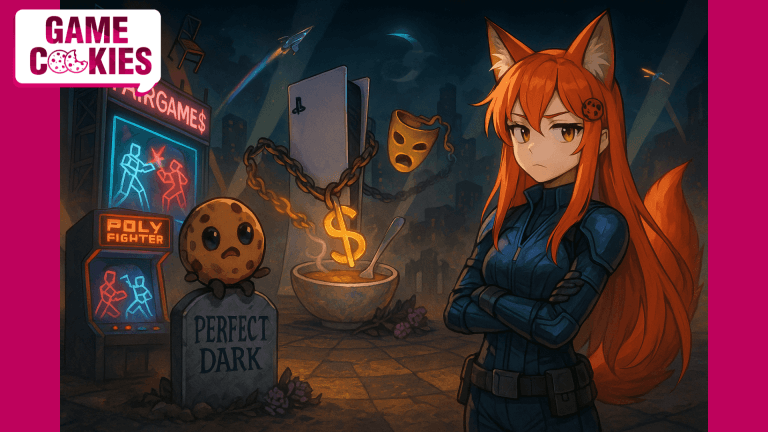
This weekend’s news did not feel random. Epic is trying to clean up a brutal human failure after cutting more than 1,000 jobs. Unity is shutting down one ad business and trying to sell another. Sony is raising PS5 prices again while memory shortages spread across the market. Warhorse now faces backlash after a translator said the studio pushed him out as it pivoted to AI.
Somebody somewhere decided the spreadsheet mattered more than the damage that followed.
Epic turned a layoff into a public moral failure
Epic’s original message was already rough. Tim Sweeney said the company was spending more than it was making as Fortnite engagement weakened. He framed the cuts as part of broader savings across contracting, marketing, and unfilled roles.
Then the story got worse.
Michael Prinke, a laid-off Epic employee, is fighting terminal brain cancer. His wife, Jenni Griffin, posted that the family did not just lose income. They also lost his life insurance. After the post spread, Sweeney said Epic was in contact with the family and would solve the insurance issue.
That response may help the family. It does not fix the underlying failure.
Epic just cut more than 1,000 jobs, and the real story is what Fortnite stopped being able to carry.
🦊 Kiki: This is the kind of story that kills trust fast. Not because layoffs are new. They are not. It hits because the human damage was obvious only after the public got angry. That tells you nobody in the process stopped to ask the most basic question: who gets crushed if we do this now? When a company needs social media outrage to notice the worst-case scenario, the process is rotten.
🍪 Chip stares at the HR flowchart like it just bit him back.

Unity is cutting loose the parts it no longer wants to defend
Unity’s preliminary Q1 2026 results came in above guidance. That is the clean investor version of the story. The messier version is what came with it.
The company confirmed it will shut down the ironSource Ads Network on April 30. It also said it is working with a financial advisor to sell Supersonic, its casual publishing business. Unity is not just refining its portfolio. It is narrowing the story to the businesses it still believes can grow.
That is a business move. It is also a retreat.
🦊 Kiki: Unity always gives off cleanup energy now. You can feel the company trying to make the room look smaller and more manageable after too many years of dragging extra weight around. People will call this focus. Fair enough. It still reads like a company deciding which old bets no longer deserve oxygen.
🍪 Chip sweeps a tiny pile of ad-tech scraps into a corner.
Hardware is getting expensive enough to change who gets to play
Sony’s latest PS5 price increase lands on April 2. The base PS5 rises to $650, while the PS5 Pro climbs to $900. Analysts now expect Microsoft and Nintendo to face the same pressure if memory and storage costs stay high.
That alone would be bad enough. But the memory crisis is spreading beyond consoles. Sony has also suspended sales of several memory cards due to supply issues. That makes the shortage feel less like a headline and more like a market condition.
This matters because console gaming depends on hardware momentum. When entry prices rise, fewer people jump in. When fewer players enter, publishers feel it later.
🦊 Kiki: I really hate this one because consoles were supposed to get cheaper with age. That was part of the deal. You bought into the ecosystem and the box became more accessible over time. Now we are watching older hardware become more expensive while people casually float the idea of $1,000 next-gen systems. That is not normal. That is a hobby drifting toward luxury pricing while everyone pretends it is just temporary turbulence.
🍪 Chip reads the price tag, goes pale, and slowly floats backward.
Warhorse just handed players a very ugly AI warning sign
The Warhorse story hit hard because it felt familiar. A translator and editor who worked on Kingdom Come: Deliverance 2 said he lost his job as the studio pivoted toward AI for translation work. He shared the story publicly and asked fans not to harass developers or review bomb the game.
That detail matters. He was not trying to start a mob. He was trying to show people what is happening behind the scenes.
Translation is one of those disciplines that management often treats as invisible until quality collapses. Then everybody suddenly remembers tone, context, and judgment matter.
🦊 Kiki: This is the part where companies always fool themselves. They think they can cut the person and keep the judgment. They think the output will stay good enough because the text still technically exists on the screen. Then the weirdness starts. Quest logs feel off. Character voices flatten out. Jokes stop landing. The language still functions, but it no longer lives. Cheap decisions leave fingerprints all over a game.
🍪 Chip clutches a tiny glossary like it is the last good patch note on Earth.
The business is not just squeezing margins anymore
That is the real thread tying these stories together.
Epic shows what happens when layoffs hit people in the most vulnerable situations. Unity shows how companies now cut away entire business lines to tighten the narrative. Sony shows the cost side is ugly enough to push console prices even higher. Warhorse shows that AI substitution is no longer abstract industry talk. It is already taking jobs.
Fortnite was never supposed to look mortal, and that is exactly why this matters.
None of that feels isolated. It feels like a market getting harsher, more expensive, and less patient.
And once that mood sets in, every new “efficiency” pitch starts sounding a lot less clever.
- Stay skeptical
- Keep watching
- And remember, when the industry says it is optimizing, somebody downstream usually eats the damage.
🦊 Kiki · 🍪 Chip · ⭐ Byte · 🦁 Leo