
🍪 XDS 2026: External Dev Is Core, Friction Is Rising

Hello there… co-dev leads, outsourcing managers, vendor wranglers, and localization survivors.
The new XDS 2026 Insights Report does not paint a collapse. It shows something more uncomfortable. External development is still deeply embedded in how games get made, but the cost of misalignment keeps climbing. Buyers still rely on partners. Providers still believe in the business. What changed is the tolerance for friction. Budgets feel tighter, onboarding drags, communication breaks down more often, and AI has moved out of the hype bucket and into contracts, permissions, and risk management.
XDS frames the year around three themes: confidence under tighter constraints, communication as the fastest-rising source of friction, and AI becoming a governance issue instead of a pure capability story. That read feels right. The market still wants external development. It just wants it to behave more predictably now.
External development is not overflow anymore
One of the clearest points in the report sits in the utilization data. XDS says most developers and publishers now send between 30% and 60% of their projects to external development studios, and several disciplines regularly go beyond that. Art, localization, QA, audio, and specialized production often clear the 50% mark. XDS sums it up plainly: external development is now structural, not cyclical.
That matters because it kills an old excuse. Studios can no longer talk about outsourcing like it is a temporary relief valve they open only when internal teams get overloaded. In a lot of disciplines, partner dependency is already built into the operating model. The work does not just spill outside. The machine expects it to.
Localization stands out even more than most categories. XDS says localization remains the single most relied-upon external service, ahead of player experience and insights, audio, and engineering. The report also says those high-utilization categories often come with talent access challenges, which makes trusted partners and flexible resourcing more valuable, not less.
The Future of AI in Game Localization Is Getting Real
🦊 Kiki: I’m always a little amazed that people still talk about external development like it’s some optional side lane. No. If half your pipeline already depends on external teams, then partner management is production management. That’s the part a lot of people still want to avoid saying out loud. Once localization, QA, audio, and art are that deeply wired into delivery, every vague brief and every sloppy handoff stops being “vendor stuff” and starts becoming studio risk.
🍪 Chip hugs a tiny stack of localization files and looks deeply stressed.
The work starts under pressure, and the process is heavy
The report says most external engagements begin in production, and 60% start in pre-production. That means a lot of partner relationships are not forming during calm planning windows. They get activated in the noisy middle, when the project already carries momentum, deadlines, and budget pressure.
At the same time, both buyers and providers now show a clear preference for retainer agreements, with milestone-based deals and time-and-materials still close behind. The intent is continuity. Teams want predictable capacity, not one-off chaos.
The problem shows up when the operating reality kicks in. XDS says the most common onboarding window is one to three months for both sides, yet only 61% of developers and publishers say onboarding finishes within three months. The rest push beyond that, and 13% say onboarding can last six to nine months. The report also says subcontracting is common, which adds another layer of coordination, oversight, and quality risk.
That combination matters more than it may look on paper. Teams want stable partner relationships, but they often bring those partners in late, run them through long onboarding cycles, and then add hidden complexity through multi-hop delivery models. Even when the relationship works, it carries weight.
Communication replaced delivery as the headline problem
This is the strongest section in the report, and probably the real story.
XDS says communication is now the top friction point for developers and publishers. It rose 15% year over year and overtook delivery and security issues as the biggest source of strain. Quality concerns stayed stuck at 42%, while security risks dropped sharply, which suggests that buyers feel less panic around infrastructure than they did before. They feel more pain around alignment.
Service providers report the same direction. Quality and delivery misalignment dropped by 29%, which suggests better scoping and expectation management in some areas. That sounds positive. But communication breakdowns still rose 15 points, and legal and contracting delays went up too. XDS describes the shift clearly: friction is moving from delivery to coordination.
That is not a minor wording change. A delivery problem is painful, but easier to isolate. A coordination problem spreads everywhere. It touches scope, approvals, revisions, timelines, ownership, escalation, and trust. It makes ordinary production slower, messier, and more political than it should be.
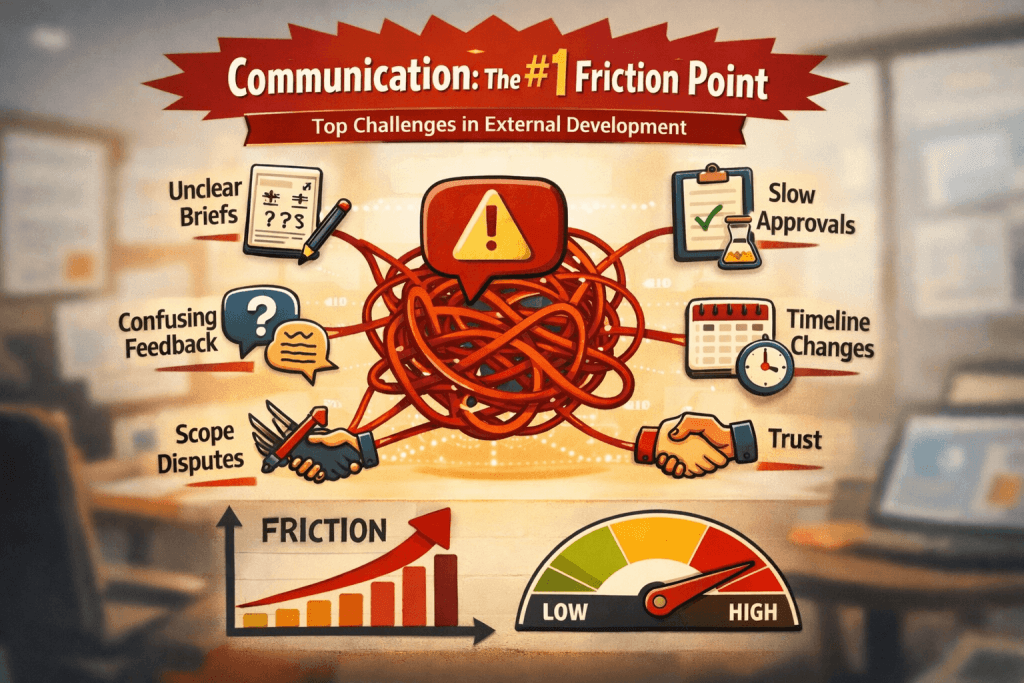
🦊 Kiki: Yeah, this one felt real immediately. People love to hide behind polite words like alignment, but a lot of the time it means the brief was fuzzy, approvals took forever, nobody wanted to make a hard call, and the partner had to guess which version of the truth mattered that week. That used to limp along more often. Now it breaks faster. Everyone’s thinner. Everyone’s budget is uglier. Patience is not the buffer it used to be.
🍪 Chip tries to connect speech bubbles with red string and somehow gets tangled in all of them.
Trust got harder to earn, and easier to lose
XDS says the top barrier to working with a service provider is no longer geography or logistics. It is trust and risk tolerance. Bad previous experience or negative sentiment now ranks as the number one reason buyers avoid a provider, at 55%. Quality concerns show up at 45%. Security and compliance risks land at 34%, and lack of internal buy-in lands at 28%.
That should worry anyone who thinks a decent portfolio still sells itself. Reputation still matters, but it now sits inside a tighter operating environment. One bad project does not just hurt the current relationship. It can poison the next bid before the vendor even gets through the door.
The switching data reinforces that. XDS says the biggest reasons developers and publishers expect to switch providers in 2026 are budget constraints at 51% and a need for better fit on new projects at 38%. Capacity issues also rose. Meanwhile, the share of buyers saying they will not switch partners dropped sharply. Incumbency looks weaker than it did before.
That tells you something uncomfortable about the mood. Buyers are not shopping because they feel adventurous. A lot of them are shopping because economics, fit, and patience all got worse at the same time.
AI is being negotiated, not freely deployed
The AI section is useful because it strips away a lot of lazy industry talk.
XDS says AI adoption is moving faster on the service provider side, while developers and publishers remain more cautious. The report also says disclosure of when and how AI is used is the top contract priority for both sides. Restrictions on training models with client data, human review requirements, ownership terms, liability, and security clauses all show up as active concerns.
The real constraint is permission. XDS says 54% of service providers report that only 0% to 9% of their clients currently allow AI use in services. That is the number that matters. Having tools is one thing. Deploying them on client work is another. XDS says that gap is increasingly shaped by external agreements.
That changes the conversation. AI in external development is not just a pipeline upgrade. It is a governance issue now. The market has stopped treating it like a toy and started treating it like controlled infrastructure.
Crimson Desert sold the fantasy, then launched a debate about what was actually finished.
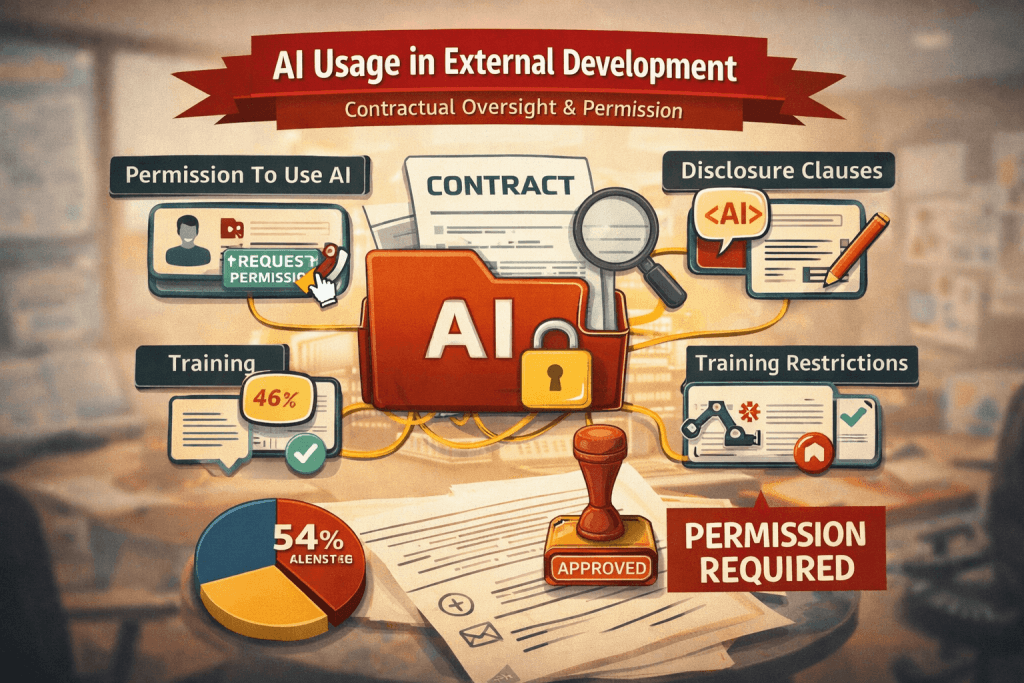
🦊 Kiki: This one was always going to land here. Of course providers want to move faster with AI than clients want them to. The provider sees margin and speed. The client sees legal review, data anxiety, brand risk, and one more thing they’ll have to explain later if the output goes weird. That doesn’t mean AI is fake. It means the fantasy phase is over. Now it has forms, clauses, approvals, and somebody in legal asking annoying but very reasonable questions.
🍪 Chip sits inside a giant contract folder wearing a tiny headset and blinking in despair.
Localization stays central while buyers stay selective
The pricing section adds another layer. XDS says service provider rates from 2025 to 2026 largely stabilized, after years of declining pricing pressure. Most disciplines show no major movement, but localization, audio, QA, and engineering show selective increases. Rate decreases are now limited, which suggests the market found a floor.
At the same time, developers and publishers still take a selective approach to spend. XDS says they will accept premium pricing for specialist, high-impact services, but they continue to manage scalable production disciplines tightly. That puts categories like localization in a familiar bind. Studios rely on them heavily, but they still watch the bill closely and rethink partner choices faster when budgets tighten.
That is where a lot of studios get themselves into trouble. They know localization is core. They say quality matters. Then they still buy like it is a commodity until the cost shows up somewhere messier, usually in rework, player frustration, internal overhead, or brand damage.
What the report actually says about 2026
The easy read is that external development remains healthy. That part is true. Confidence is still high, and the category remains embedded across game production.
The more useful read is harsher. External development is now too central to treat casually, too governed to run on goodwill, and too operationally heavy to survive sloppy coordination. Studios still need partners. Providers still need clients. Nobody gets to pretend communication is admin work anymore.
If external development is now structural, then relationship management, clearer briefs, faster onboarding, AI disclosure, and honest scope conversations all become part of production discipline. That is the actual takeaway here. Not hype. Not doom. Just a more mature, more demanding market.
- Stay operational
- Keep aligning
- And remember: once external development becomes core infrastructure, bad coordination turns into production debt.
🦊 Kiki · 🍪 Chip · ⭐ Byte · 🦁 Leo