

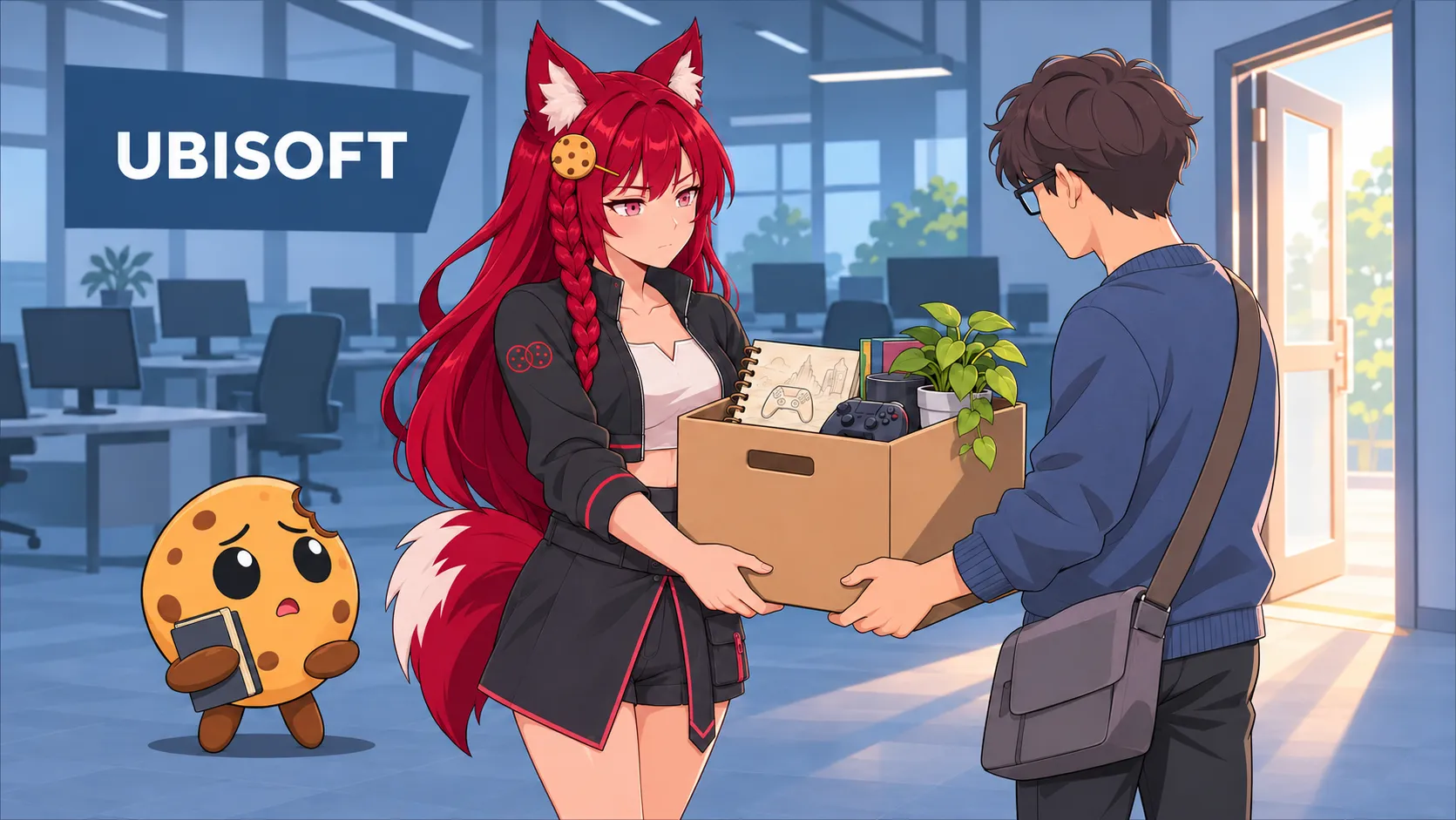
Hello there, players, exhausted developers, and everyone who has heard “a stronger future” announced alongside another round of layoffs.
Ubisoft is cutting 166 positions across Montréal and Québec City. The company confirmed the reductions on November 19, saying its staffing needs have changed with its game portfolio. Affected employees will receive severance, extended healthcare benefits and career-transition support. Ubisoft’s statement to VGC
On the same day, Ubisoft presented its latest financial results and described a new organization designed to give creative teams more influence over decisions. Ubisoft’s earnings release
That promise deserves a closer look. What changes for the people making the games when the company keeps changing around them?
Another 166 jobs disappear
Ubisoft has not provided a breakdown of the cuts between the two cities. VGC reports that they are mostly connected to projects that were canceled or changed in scope. That explanation comes from VGC’s reporting; Ubisoft’s statement refers more broadly to production priorities.
The reductions follow earlier cuts this year, including the closure of the Winnipeg and Belgrade studios and restructuring in Barcelona, which VGC reported could affect as many as 380 jobs combined. VGC’s reporting
A project can become unviable. Continuing to fund every game indefinitely would be a terrible way to run a studio. But the people assigned to a canceled project did not necessarily choose its budget, release window or strategic purpose. Management makes those decisions, too.
We would like more attention on how those decisions are evaluated. When a company repeatedly changes direction, employees should not be the only people whose performance receives a consequential review.
🦊 Kiki: “I want to see the meeting before the redundancy meeting. Who approved the project? Who kept moving its target? Who decided it needed another feature six months before launch?
“If a developer misses a deadline, we apparently have no trouble finding someone responsible. When an entire strategy collapses, suddenly the culprit is ‘changing market conditions,’ a mysterious executive who never appears on the payroll.”
🍪 Chip: Chip floats beside the organizational chart and places a tiny question mark above the top box.
Black Flag’s success has not fixed the wider business
Ubisoft’s first-half net bookings were €644.7 million, down 16.5% year over year. Its attributable net loss was €254.5 million.
There was good news: second-quarter bookings exceeded guidance, with Assassin’s Creed Black Flag Resynced leading the outperformance. Ubisoft also reported a headcount reduction of close to 1,100 over the six-month period. That historical reduction is separate from today’s announcement. Ubisoft’s results, pages 1–6
The financial pressure is real. A successful release can help without repairing every weakness across a large publisher.
Our concern is what the company preserves while it makes those repairs. Familiar franchises give Ubisoft an audience to work with. The people who understand those games, their tools and their players are part of that advantage. Losing experienced colleagues can leave the remaining team with work that a headcount figure does not describe: redistributing responsibilities, rebuilding knowledge and learning whom to ask when something breaks.
🦊 Kiki: “Of course a company losing money has to make decisions. I would just like the discussion to survive beyond ‘fewer salaries equals better company.’
“Who is doing the work next month? What have you stopped asking them to deliver? Because if the answer is ‘the same people, minus several people, with the same deadline,’ please stop calling that an efficiency breakthrough. You have handed someone a larger workload.”
🍪 Chip: Chip removes two tiny chairs from a desk, then looks at the untouched mountain of assignments.
Creative teams need authority that survives a difficult quarter
Ubisoft says its Creative Houses structure is now in place and intends to bring creative talent closer to decision-making. It points to Rainbow Six Siege’s renewed focus on core gameplay, anti-cheat and player feedback as evidence of progress. Ubisoft’s explanation, pages 2–5
That is a direction worth supporting. Teams should be able to concentrate on the audience their game serves instead of chasing every fashionable market at once.
The practical test comes when the team disagrees with leadership. Can developers reject an unsuitable feature? Can they get time to fix a broken system before another content deadline arrives? Can they tell management that the proposed scope exceeds the people available?
Those choices would make creative authority visible. Players could judge the results through clearer priorities and better games, while developers would have a reason to believe the new arrangement changes their working lives.
🦊 Kiki: “If you want the people making the game to have a voice, you need to hear the sentences you dislike.
“‘This feature does not belong here.’ ‘We need more time.’ ‘Our players hate this.’ Anyone can invite a team to agree with a presentation. The interesting part is whether they can disagree without becoming the problem.”
🍪 Chip: Chip slides a small “NO” button onto the conference table.
A new technology still needs a good production plan
The results also introduce Motherbrain as a dedicated subsidiary. Its work includes AI-driven characters with memory and game-master systems for large, systemic worlds. Ubisoft connects it to the playable generative-AI experiment Teammates. Ubisoft’s announcement, page 4
We are interested in what those ideas could produce. Game Cookies uses AI, and we want creators to have room to experiment. Nothing in these announcements establishes that Motherbrain caused the job cuts.
Our standard for the experiment is straightforward: show us a game that benefits from it. Give its team enough time to test the interactions, handle the failures and decide what belongs in the finished experience.
The larger Ubisoft recovery needs the same discipline. A smaller organization, a new structure and an ambitious technology project all leave the most important work ahead: making games people want, with teams equipped to make them.
🦊 Kiki: “Show me the clever NPC. I will happily try to confuse it.
“But when it breaks, somebody still has to understand the problem and fix it. I want that person in the plan, with time to do the job. The future of games sounds much more convincing when the people building it have a future there, too.”
🍪 Chip: Chip adds a developer’s chair beside the futuristic demo screen.
🚀 Stay curious about the people behind the games.
🍪 Keep asking what changes after the restructuring announcement.
🧠 Remember: the next great game still needs a team capable of finishing it.
🦊 Kiki · 🍪 Chip · ⭐ Byte · 🦁 Leo
What would convince you that Ubisoft’s latest reset is working? Tell us here!
Game Cookies | Gaming Trends, One Bite at a Time.