

J.L. Miralrío
Hello there, parry perfectionists, puzzle listeners, and players who pay attention to what happens after the fight.
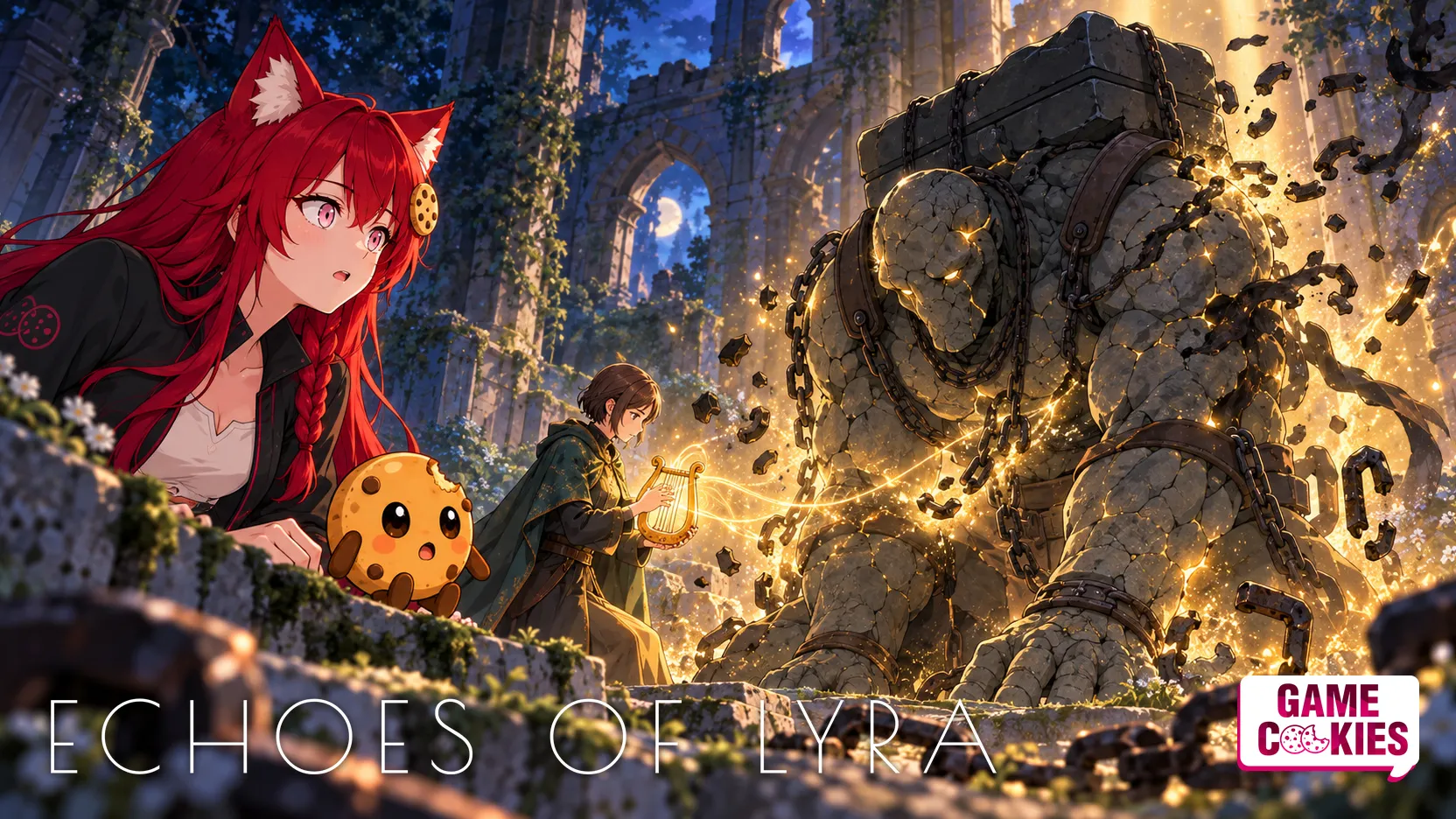
In Echoes of Lyra, the important moment arrives after a creature’s protection breaks. A prompt appears: Set Free. Lyra opens her arms, her lyre sends out a beam of light, and the creature’s dissonance resolves into a tuned note.
There is combat here. Velaria Studio’s third-person narrative adventure includes dodges, parries, companion orders and encounters that can send you back to a checkpoint. Its central rule, Josh Muñoz explains in a written interview with Game Cookies, is that creatures are liberated rather than killed. Lyra never harms them.
That rule reaches beyond the finishing animation. It shapes the resource you manage, the role of Lyra’s companion Caelum, and the distinction between winning an encounter and making progress through a difficult emotional journey. Muñoz’s answers describe a game whose music, combat and character animation have to tell the same story.
The instrument acts before Lyra can
The project began with a dream about a girl moving between two worlds and a melody whose survival mattered to music in the real world. As Muñoz developed the story, its focus became a girl who stopped speaking to protect herself.
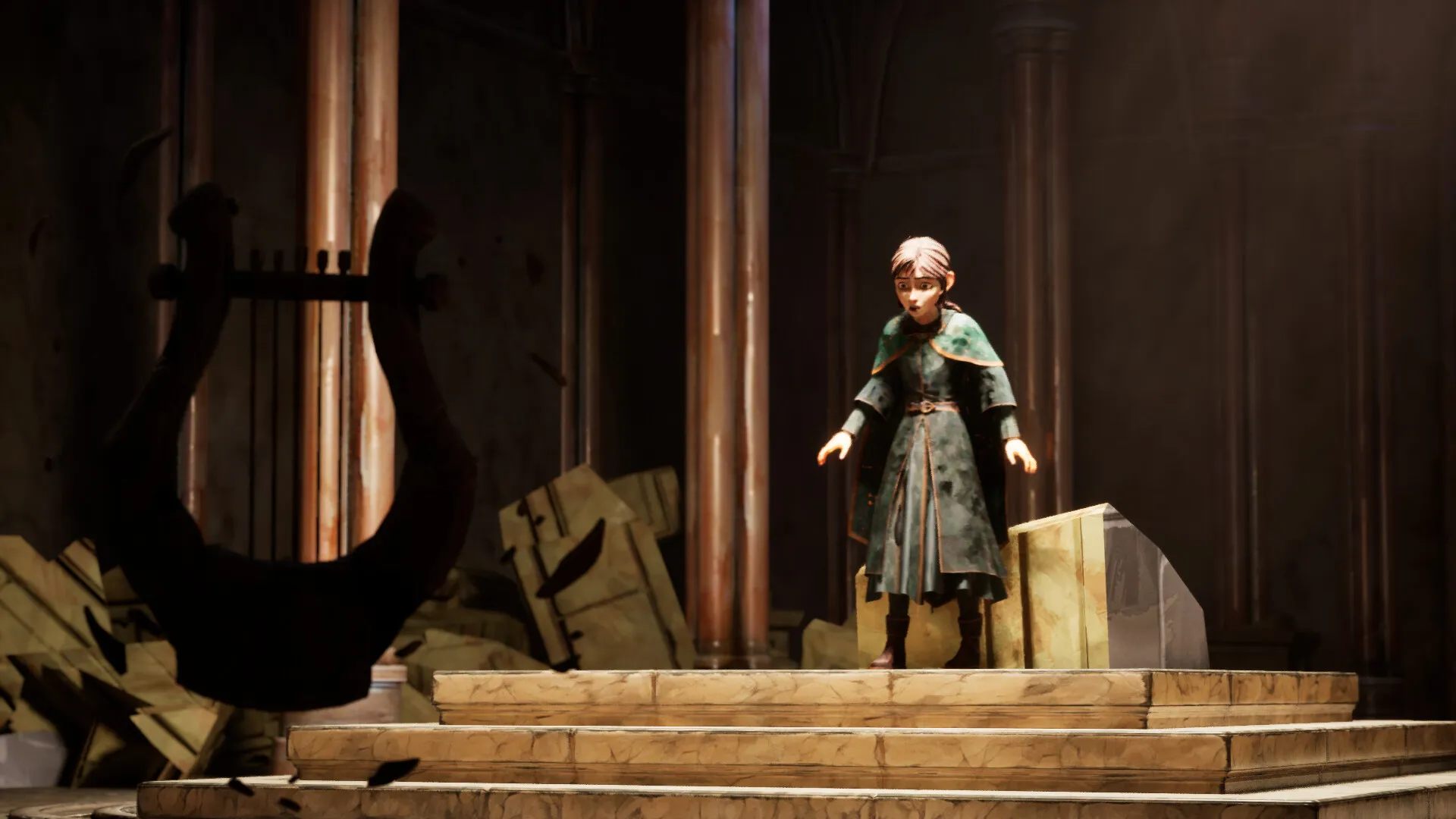
One early animation decision survived that evolution: Lyra never touches her instrument. In Velaria, her old music box becomes a lyre with a will of its own. When she shields herself from an attack, the instrument moves to block it. A small gesture from her can send it into action.
“The early decision players can still recognise is this one: Lyra never touches her instrument.”
That means each ability needs two animations running together, one for Lyra and one for the lyre. Combat effects originate from the instrument. Muñoz describes this as part of the character arc: the lyre initially does things for Lyra that she cannot yet do for herself.
It gives the team a concrete way to express vulnerability during active play. A player can time a defensive move while the character’s body language still reflects fear.
🦊 Kiki: Every ability needs two performances: the action the player triggers and the reaction Lyra is ready to have. That sounds like an expensive little rule to keep through animation production. Good. I want a character premise to cause trouble for the production schedule occasionally. Otherwise it risks spending the whole game safely confined to the store description.
🍪 Chip adds a second column to the animation spreadsheet and quietly removes the word “simple.”
Combat asks you to understand what protects a creature
Muñoz uses two creatures from the demo to explain the system. The Whisperer has a Chorus of voices; the Bearer has a layered Carapace. Lyra’s sound waves can push, slow and interrupt them, but cannot break those protections or cause harm. Enemies have no health bar.
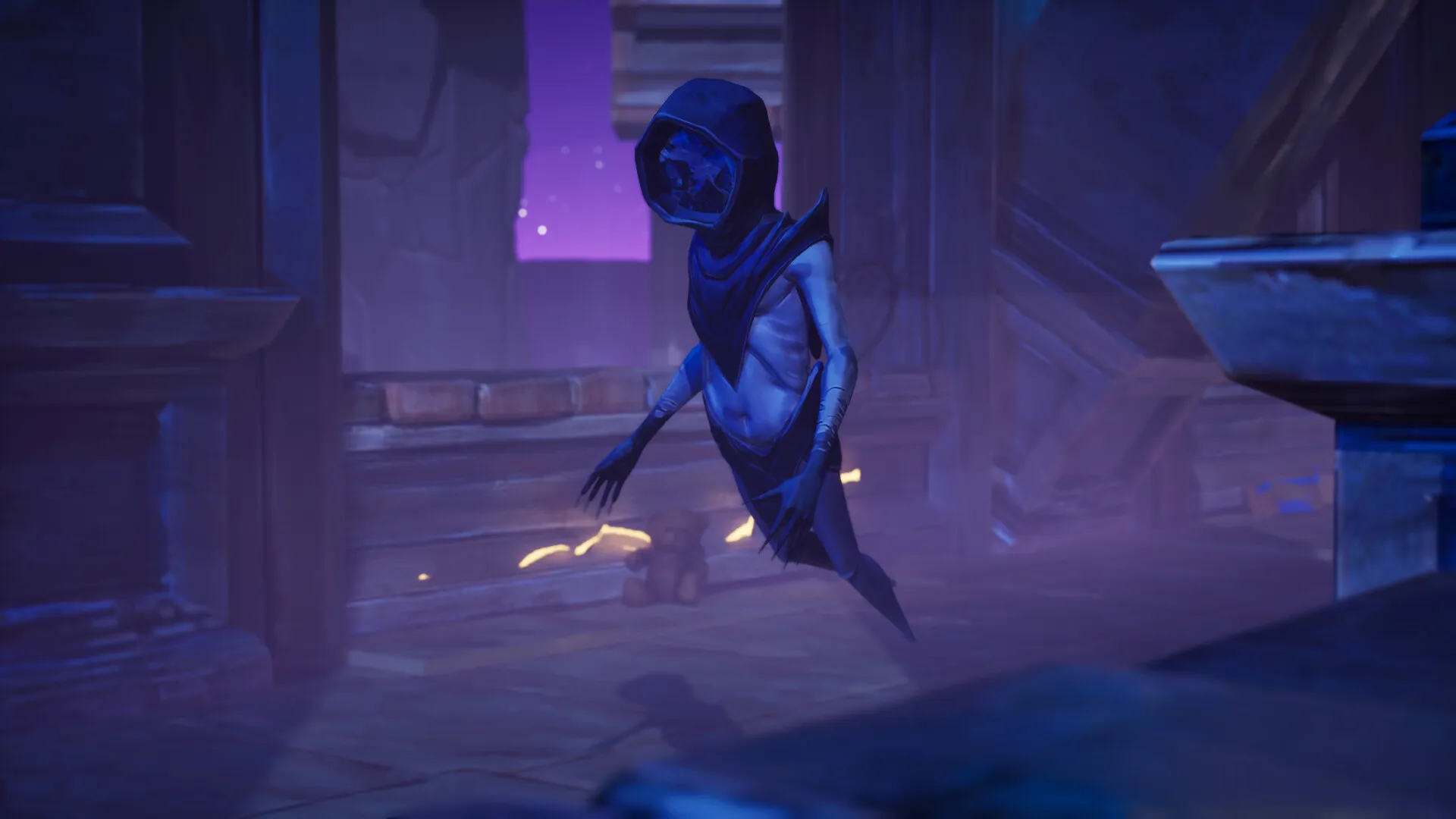
The player can lock on, use the lyre’s three-note combo, dodge, raise a shield and attempt a parry with a short timing window. Breaking a creature’s protection requires an order to Caelum.
Holding the left trigger slows the world while the player chooses Silence Arc or Protector’s Fracture. One breaks the Chorus and the other the Carapace. The interface identifies the buttons, but learning which order fits which creature comes through observation, Caelum’s guidance and mistakes.
A wrong order still makes Caelum strike. His spear flashes red, the protection remains, and the shared Bond resource has been spent. Correctly reading the encounter matters because orders consume Bond, while successful parries, landed hits and freed creatures replenish it.
“The HUD tells you which button does what, but never which order fits which creature.”
Different attacks add pressure. The Whisperer’s scream must be dodged sideways rather than parried. The Bearer charges at Lyra, so sheltering behind Caelum will not solve the encounter.
When the protection is gone, Lyra has a brief opportunity to perform Set Free. She must hold the action without being hit. The Shadow then loses its noise, releases a tuned note and dissolves into rising light.
“Every Shadow sounds out of tune while it lives. Set free, it sounds in tune. That is the whole philosophy in one second of audio.”
Failure remains possible. Lyra has five strings to lose; reaching zero returns the player to the last checkpoint. Caelum can fall to one knee and need help while the fight continues.
Caelum needs the player too
“The rule we wrote on the wall is: Lyra endures, Caelum breaks, Lyra sets free.”
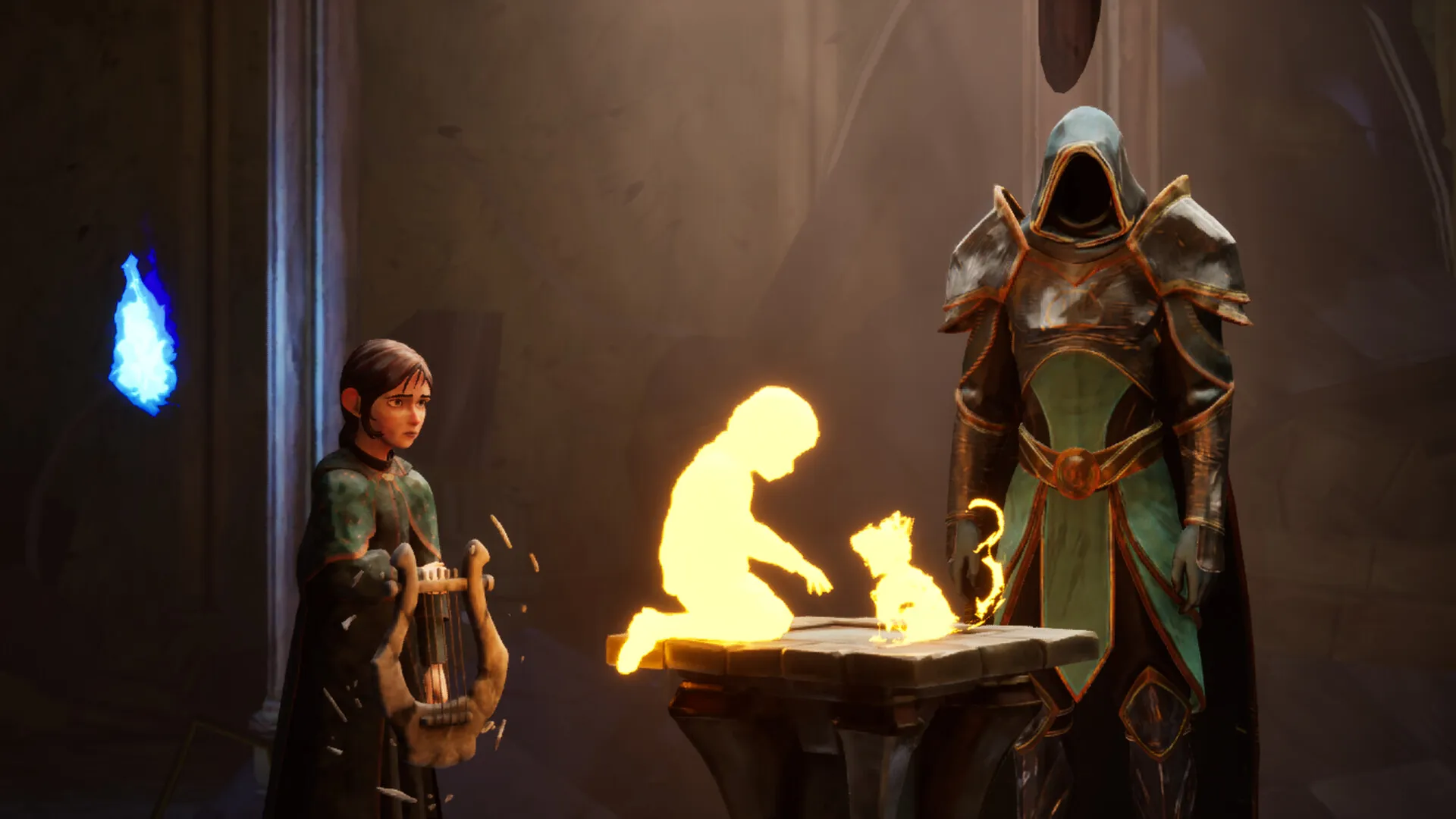
Caelum fights automatically, drawing attention and protecting Lyra, but those automatic attacks never break a creature’s condition. The decisive action requires Lyra’s order, and the final liberation belongs to her.
That division keeps the companion useful without letting him finish the encounter alone. It also makes his condition something the player must watch. Muñoz says that hiding and issuing orders can leave Caelum overwhelmed, forcing Lyra to reach him and help him back up.
Outside combat, the relationship is expressed through smaller actions. Caelum walks ahead when he knows the route, waits when Lyra stops, and turns to look at her if she remains still.
His approach to physical contact follows a rule developed with the studio’s clinical consultant: he offers a hand and waits for Lyra to close the distance. The support is present, but the next step remains hers.
🦊 Kiki: A companion can deliver twelve speeches about trust while the player treats him like a mobile shield. Making you leave cover to help him gives that relationship some actual weight. That’s what I want to see working in play: support that asks something of you. Apparently friendship gets more convincing when it interrupts your excellent hiding strategy.
🍪 Chip quietly crosses “let Caelum handle everything” off his entire strategy guide.
A musical puzzle still has to teach the player
In the demo’s lamp puzzle, a short melody moves between lamps. The player must reproduce the sequence by touching them in order. Correct notes light lamps; mistakes introduce dissonance, extinguish progress and can bring a Whisperer out of the darkness.
The basic idea survived several revisions. An early straight-line arrangement made the answer too easy to follow, while replaying the melody after every failure encouraged players simply to wait and copy. The team changed the layout to a zigzag, gave the melody a rising and falling shape, and adjusted how often it repeats.
The first lamp now calls the player with its note, placing the lesson inside the puzzle.
Show-floor testing then revealed a different problem: most people solved it, but many needed longer and more attempts than the team wanted for a short demo. Muñoz says the next iteration brings hints earlier and makes the puzzle more forgiving.
Music also carries information beyond puzzles. The lyre turns towards important things, glows near points of interest and sounds a sour note near places holding something to discover. As echoes are found in the opening dark zone, the music builds. In the mirror cave, it drains away as the player goes deeper.
Sound has to be readable without hearing it
“We have one rule for this, and it is written into the design document rather than the accessibility one: everything the game communicates with sound also has a way of being seen.”
Muñoz separates features already in the build from work still being explored. Lamp notes also produce visible pulses, allowing players to follow which lamp is active without distinguishing pitches. The lyre’s turn and glow repeat the information carried by its sour note.
Combat warnings use a closing ring whose shape and colour indicate whether an attack can be parried. Subtitles identify speakers and can be resized. Sound categories have separate volume controls, and controller rumble provides another channel for the lyre and incoming hits.
Other features remain exploratory: captions for informative sounds, directional sound indicators, a visual channel for the music itself, and full control remapping. The demo does not yet include full remapping.
Muñoz identifies the three-star level of the AEVI and Fundación ONCE guidelines, evaluated through Ga11y, as a target. He explicitly says the game has not reached it.
That distinction is important for players deciding whether they will be able to use the game. A development goal should stay clearly separated from an available feature.
🦊 Kiki: I appreciate a developer who tells us what is missing before we have to discover it with a controller in hand. Full remapping is still unfinished, and the accessibility target is still a target. Keep those distinctions visible. A player deciding whether a game works for them deserves more useful information than a promising adjective and a roadmap.
🍪 Chip moves the “COMING SOON” sticker off the “AVAILABLE NOW” shelf.
Being precise about Lyra’s silence
According to Muñoz, clinical psychologist Ángeles Esteban has reviewed the project since the first version of its story. Her work includes scripts, scenes and, more recently, short public-facing texts.
One correction changed how the studio described Lyra’s silence. Muñoz says the team had written about it as a diagnosis, and Esteban corrected that framing.
“She corrected us: it is a recognised clinical response, not a formal diagnostic category.”
Muñoz describes the resulting change in the team’s language:
“That changed the wording everywhere, and one habit in particular: we no longer say that Lyra “chose” silence. She stopped speaking to protect herself. The game never puts a label on her.”
This is the studio’s account of how it represents this particular character. The distinction also affects Caelum. Muñoz says Esteban’s feedback led the team to make him keep his distance initially and allow closeness to grow as Lyra takes each step.
The consultation therefore appears in staging and interaction as well as dialogue. Who approaches, who waits and who initiates contact become part of the portrayal.
Winning a fight does not finish the journey
Freeing a creature produces a satisfying result: Lyra recovers a string, the music resolves and light rises. Muñoz wants that moment to feel good, while keeping its meaning local.
The wider world remains difficult. Other Shadows still exist. Locked places remain locked. Words spoken by mirrors do not disappear because the player wins an encounter.
“One decision that shows the line we try to hold: in the mirror cave, each mirror says something cruel to her. We talked about putting a fight after each one and rejected it, because beating an enemy right after a sentence reads as “I beat the message”, and that would be a lie at that point of the story.”
The fight was placed later, separate from those words. Muñoz also says Lyra never speaks aloud in the first volume. What players hear from her is thought, so a spoken line is not being used as the immediate reward for combat progress.
For the player, that creates two different measures of movement: the encounter can be resolved while Lyra’s longer journey remains unfinished.
What the demo still needs to teach
Reflecting on SAGA Barcelona Game Fest, Muñoz says players understood and responded to the liberation mechanics once they reached that understanding. The next task is improving how the demo gets them there.
His account of the feedback is specific: players wanted to learn one idea at a time, through the story. The short demo introduces its systems more quickly than the full game will, so the team is revisiting the order and pace of instruction.
Those observations also put the earlier lamp-puzzle changes in context. The mechanic can express the intended idea and still need a clearer introduction.
Echoes of Lyra’s most interesting design question is how consistently that relationship holds across the game. The rules described here give players practical responsibilities: read the creature, conserve Bond, protect the opportunity to set it free, and help the companion who has been helping you. How those responsibilities are taught will matter as much as the premise behind them.
You can follow Echoes of Lyra and add it to your wishlist on Steam:
https://store.steampowered.com/app/4996500/Echoes_of_Lyra/
Official trailer:
https://youtu.be/ol0aP9VuTHk
Pre-alpha gameplay:
https://youtu.be/yAFT0wroKWg
This article is based on Josh Muñoz’s written answers to Game Cookies. Gameplay and in-development features are described by the developer, rather than assessed through a hands-on review.
🍪 Missed part of the gaming week?
The Sunday Cookie Box delivers five handpicked Game Cookies stories in one free Sunday email.
🔎 Stay curious about the choices behind the controller.
🎧 Keep listening to the people making the games.
🧭 Remember: there is more to a journey than winning the next fight.
🦊 Kiki · 🍪 Chip · ⭐ Byte · 🦁 Leo
Tips, discoveries and games worth listening to: contact us here!