

Hello there, cookie munchers, kart racers, bargain hunters, and everyone who has ever opened a new console store only to buy an old favorite.
Two Mario Karts are sharing Nintendo’s newest track. Mario Kart World is the 2025 Switch 2 flagship at a $79.99 suggested retail price. Mario Kart 8 Deluxe is a 2017 release that still sells for $59.99 and runs on Switch 2 through backward compatibility.
Nintendo’s official totals show Mario Kart World moving from 14.70 million units at March 31 to 15.39 million at June 30, 2026. During the same three months, Mario Kart 8 Deluxe rose from 71.08 million to 71.53 million. That works out to 690,000 additional World units and 450,000 additional Deluxe units.
The new game led the quarter by 240,000 units. The nine-year-old game still sold about 65 copies for every 100 copies of the sequel, close to two old copies for every three new ones. Different hardware populations and earlier World bundles prevent a clean head-to-head comparison. They do not erase the consumer choice sitting on the same machine: familiar Mario Kart for $60 or the new Mario Kart for $80.
🦊 Kiki:
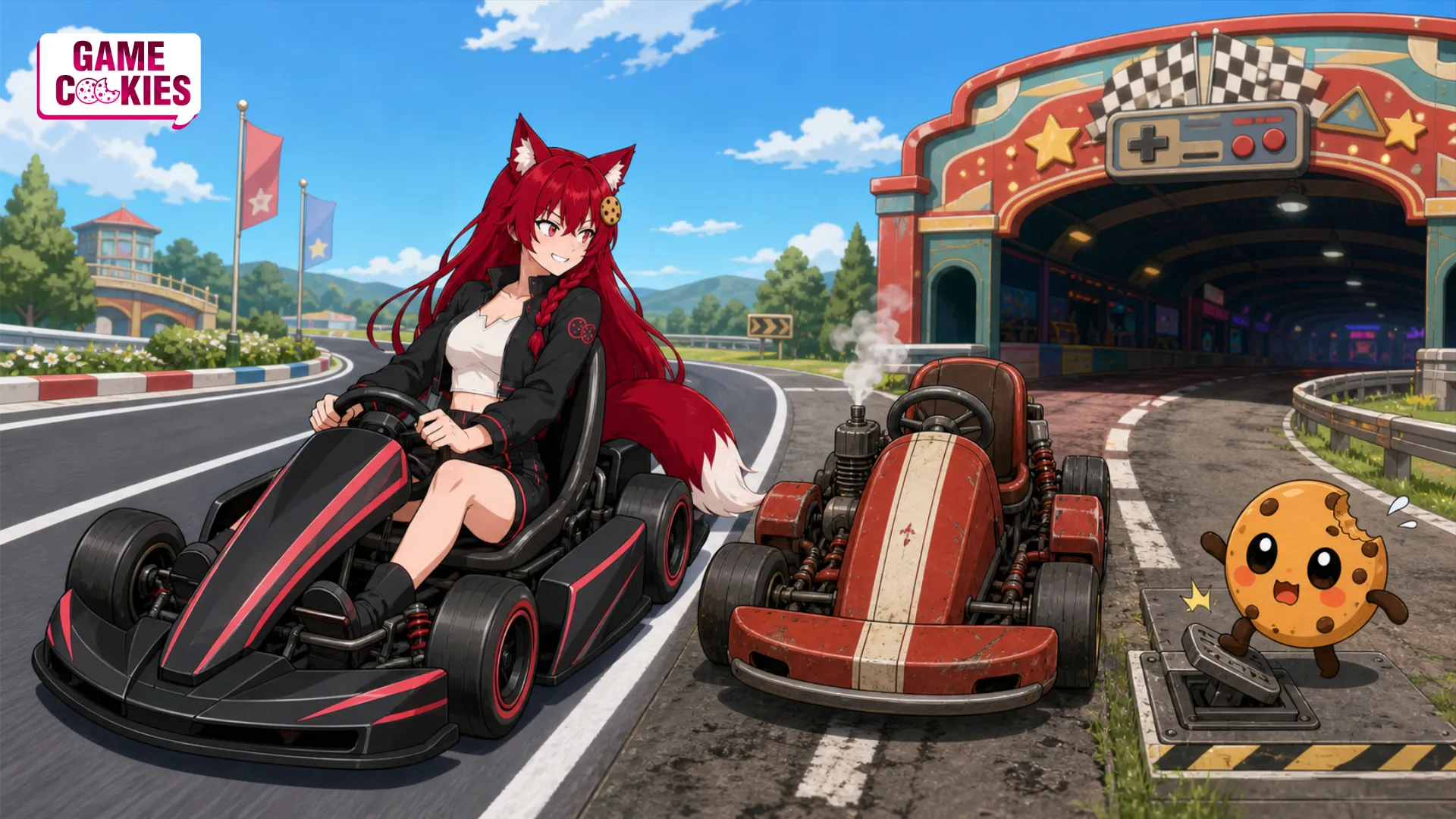
Imagine spending eighty dollars to launch the future and hearing the nine-year-old game revving in the next lane. Nintendo built an evergreen champion, gave it the garage code to Switch 2, and scheduled it as the sequel’s opening boss.
The old game even knows where the snacks are. Of course it refuses to leave.
🍪 Chip waves the green flag for both karts, then realizes he has created the problem.
The old game sold nearly two copies for every three new ones
The quarterly comparison was raised by Game File on August 12, using Nintendo’s cumulative totals. The arithmetic is simple: World added 690,000 units and Deluxe added 450,000. Deluxe therefore reached 65.2 percent of World’s quarterly unit increase.
World remained the stronger seller during the period. A 690,000-unit quarter also looks different for a console launched in June 2025 than a game supported by the enormous original Switch population. Deluxe has spent nine years accumulating owners, recommendations, discounts, DLC awareness, and family familiarity. World began its life attached to a smaller platform with a higher entry price.
Those caveats explain why the comparison cannot function as a verdict on quality or demand. They also reveal Nintendo’s unusual problem. Backward compatibility lets the old product keep converting recognition into current revenue while the new product tries to justify a premium.
⭐ Byte:
Confirmed figures: Nintendo reported 15.39 million cumulative units for Mario Kart World and 71.53 million for Mario Kart 8 Deluxe as of June 30, 2026. The March 31 totals were 14.70 million and 71.08 million. Nintendo says its software totals include bundled units and downloadable versions.
Derived arithmetic: 15.39 minus 14.70 equals 0.69 million. 71.53 minus 71.08 equals 0.45 million. Dividing 0.45 by 0.69 gives 65.2 percent, which supports the shorthand of nearly two Deluxe copies for every three World copies during the quarter. Nintendo did not publish that ratio.
Limit: unit totals do not show buyer motivation, net revenue, discounting, regional mix, platform-specific sell-through, or how many World units came from earlier hardware bundles. They establish the sales pattern, not its single cause.
Backward compatibility turned the old catalog into today’s shelf
Nintendo lists Mario Kart 8 Deluxe as supported on Switch 2 with behavior consistent with Switch. The company’s 2026 annual report also credits Switch 2 compatibility with helping older Switch games maintain stable sales.
That policy is good for players. A new console becomes easier to buy when an existing library carries forward, and a family can keep a trusted multiplayer game without paying again. The same policy keeps the predecessor commercially alive at the exact moment its successor needs attention.
Price makes the overlap visible. Mario Kart World asks $79.99. Mario Kart 8 Deluxe asks $59.99. The $20 gap makes the old title 25 percent cheaper than the new one. A shopper does not need to reject World’s new open roads, 24-racer events, or Knockout Tour to pause at that comparison. Deluxe already offers the familiar kart experience, runs on the new hardware, and carries years of word-of-mouth.
🦊 Kiki:
Backward compatibility is wonderfully consumer-friendly. It also means the accounting department has to watch a beloved $60 game follow the $80 sequel into the same store like a golden retriever that learned how automatic doors work.
You can keep saying ‘premium launch window.’ The dog is already inside.
🍪 Chip sets out two price cards and watches every imaginary parent reach for the cheaper one.
The bundle hid part of the price test
Mario Kart World launched alongside a Switch 2 hardware bundle, and Nintendo’s cumulative software figures include bundled copies. In the company’s May 2026 earnings Q&A, an investor asked about the title’s pace after bundle shipments concluded in December. President Shuntaro Furukawa declined to evaluate one title in isolation and said Nintendo planned to keep World selling throughout the Switch 2 lifecycle.
The bundle gave World distribution at the moment people were buying new hardware. A bundled unit still represents a real copy in Nintendo’s totals, but it cannot tell us whether that buyer would have selected the game at $79.99 on its own. The latest quarter places more weight on standalone demand, even though Nintendo has not published a clean standalone-versus-bundle breakdown.
Deluxe faces the opposite situation. Its current sales arrive without launch novelty and after more than 70 million cumulative units. Continued movement at that scale suggests the old game’s addressable audience did not disappear when World launched. Switch 2 compatibility gave that audience a direct route to keep buying it.
🦊 Kiki:
A copy riding inside a console box still counts as a copy. It just cannot testify about the $80 price tag without its lawyer.
Once the bundle leaves, the sticker price has to start answering questions by itself.
🍪 Chip calls the bundle to the witness stand and receives one unopened cardboard box.
Nintendo is competing with its own best decision
Mario Kart 8 Deluxe became an evergreen success because Nintendo kept it available, expanded it, sold it with a simple promise, and preserved its usefulness across hardware. Every one of those strengths raises the bar for Mario Kart World. The sequel has to offer enough novelty to overcome both the old game’s familiarity and a $20 premium.
This is the productive tension inside backward compatibility. Publishers preserve trust and long-tail revenue by protecting purchases. They also remove the forced upgrade that once cleared the shelf for a sequel. The new product wins by being more desirable, not merely by being the only version that runs.
Nintendo can afford patience better than most publishers. Furukawa described World as a title the company intends to sell over the Switch 2 lifecycle, and Mario Kart games commonly accumulate over long periods. A softer quarter therefore says little about the final ceiling. It says plenty about the first value comparison shoppers are making today.
🦊 Kiki:
Nintendo’s fiercest kart rival currently has a Nintendo logo and a 2017 release date. Corporate synergy has evolved into local multiplayer.
Player two brought the same controller, the same characters, and twenty dollars for pizza. Awkward.
🍪 Chip writes NINTENDO beside both racers on the scoreboard and declares a tie.
What publishers can learn from the price race
– Compatibility preserves trust and creates internal competition. A playable predecessor remains a live product, not a museum exhibit. Sequel planning has to account for the old game’s current price, content, reputation, and convenience.
– Premium pricing needs visible separation. A higher price invites a direct question: what can the new game do that the cheaper one cannot? Familiarity wins when the answer feels optional.
– Bundles and standalone demand tell different stories. A launch bundle expands reach and complicates price analysis. Publishers should disclose the split when they want the market to understand standalone appetite.
– Evergreen success requires a succession plan. A long-selling catalog title sets the reference price and feature baseline for everything that follows. The sequel inherits that success as both an asset and a competitor.
– Quarterly ratios need context. World sold more units during the period, while Deluxe served a much larger installed base. The 65.2 percent ratio identifies an active value contest; it does not explain every purchase.
In the end…
Mario Kart World is still early in the long race Nintendo has planned for it. Its 15.39 million units already make it a major release, and a single quarter cannot determine the lifetime result.
Mario Kart 8 Deluxe keeps exposing the pressure underneath the launch. Nintendo protected players’ libraries, maintained an evergreen catalog, and left the old game available at a lower price. Those choices created consumer goodwill and a remarkably durable business. They also gave the sequel a fully fueled rival on its own hardware.
The next test belongs to World: turn its new design into a reason to spend the extra $20, then keep earning that premium after the launch bundle, hardware excitement, and novelty have faded. Deluxe has already proven it can drive for nine years. It has no reason to pull into the pits politely.
⚙️ Stay curious about the old games still setting the value of every new release.
⚙️ Keep compatibility in the consumer-win column and its sales pressure in the business analysis.
⚙️ And remember: if the old kart still has fuel, a new price tag cannot make it leave the track.
🦊 Kiki · 🍪 Chip · ⭐ Byte · 🦁 Leo
Seen an old favorite outrun its sequel? Contact us here!