

Hello there, cookie munchers, solo developers, budget keepers, and everyone trying to launch a game into a storefront that already feels full.
Game Cookies often covers the games that break through: viral hits, surprise successes, major releases, and projects with enough momentum to become industry stories. Most games never receive that kind of attention. They still carry real teams, real money, real risk, and years of work into a market where visibility is never guaranteed.
Astro Burn belongs to that larger, quieter side of the industry. We had the opportunity to speak with Hasraf ‘HaZ’ Dulull, founder and director of Beyond The Pixels, about self-financing a game, listening when players rejected its original identity, and rebuilding its promise without the budget for a clean restart.
The finished Astro Burn left Early Access and reached version 1.0 on July 30, 2026. It is described by its creators as a retro-style cute-em-up built around Astro, her robot companion AL, and a parade of animal-powered chaos. You can also watch the official release trailer.
HaZ’s journey offers other developers both inspiration and preparation: a candid glimpse of creative compromise, player feedback, discovery problems, and the strange survival skills demanded by an overcrowded indie market. The production record is the story.
🦊 Kiki:
Players came for a jetpack cat. The build handed them a sensible spaceship and expected gratitude.
When the poster is making a clearer creative decision than the game, the audience is not confused. Your marketing department has accidentally become lead designer.
🍪 Chip folds the spaceship brochure into a tiny jetpack and points at the cat.
Why build a shmup in 2026?
For HaZ, choosing a shoot ’em up in 2026 was a return to the 16-bit ritual that formed him, not an attempt to follow a commercial trend. After years directing large cinematic work, including Dune: Awakening, he wanted the opposite of a technology race: a game someone could pick up, understand quickly, and replay for the pleasure of one more attempt.
The direction began with the first prototype he made while learning to code. A sprite moved across the screen and fired a projectile. That tiny interaction led him back to R-Type, UN Squadron, and Axelay before there was a finished character, world, or launch plan around it.
He also saw room to make the genre less intimidating. Traditional shmups can seem built for specialists who already understand their language. The absurdity of Parodius and Pop’n TwinBee suggested a way to welcome casual players and streamers while keeping the pattern learning and arcade precision that genre fans expect.
HaZ was not trying to build a 60-hour commitment or imitate AAA scale. His target was immediate, joyful, replayable, and personal. The commercial gamble was obvious, but so was the creative reason for making it.
🦊 Kiki:
The genre was supposedly too old, the storefront too crowded, and the sensible career move was probably another cinematic contract.
Naturally, HaZ learned to code by making a sprite shoot things. Creative recovery rarely respects LinkedIn.
🍪 Chip closes the 60-hour backlog and finds the Start button.
The poster made a promise the build had not kept
Astro began with an ordinary interruption. HaZ was drinking coffee and looking through his SNES cartridge collection when his cat Mia tapped his arm for food. He looked from her to the science-fiction games and wondered what would happen if the pilot were a space cat.
The first Astro Burn still drew from R-Type, UN Squadron, and Axelay. Astro existed from the start, but she was a character skin over a conventional ship. The mechanics carried the project. The cat decorated it.
Playtests exposed the gap. HaZ says people were drawn to the cat on the poster and disappointed by the serious shooter they found. His Discord community reduced the problem to four words: “more cat, less spaceship.”
Revisiting Parodius and Pop’n TwinBee gave him a way forward. Those games did not need alien mechanics to feel distinctive. They committed to playfulness. HaZ tested a panda piloting a giant battle mech, then replaced the player’s spaceship with Astro wearing a jetpack. He remembers the reaction changing immediately.
That decision reorganized the whole project. Astro and AL became the emotional center. Flying ducks, surfing dogs, rainbows, fireworks, and Catnip attacks could now belong to the same world instead of reading as decorations attached to a sober shooter.
The pivot also made a production problem visible. Every layer of personality increased the risk that bullets, enemies, and scenery would compete for attention. Lead artist Q Yoneda darkened and desaturated background and mid-ground elements so the interactive layer stayed readable. HaZ used short stages, narrative breathers, and a loose rhythm of new behaviors or surprises to keep the screen energetic without flattening every moment into noise.
Cute chaos still had to play clean
Once the game committed to animal bosses, bright effects, meme-like jokes, and a jetpack cat, HaZ set one hard boundary: the screen could feel chaotic without becoming confusing. Players still had to know what could hurt them, where they could move, and what they should target.
Q Yoneda’s darker, desaturated background layers kept enemies and bullets in the foreground. HaZ kept the interface minimal and used distinct visual and audio cues for important actions. He describes readability as continuing design work rather than a filter applied during final polish.
The difficulty settings serve different kinds of players. Kitten Mode is forgiving and less predictable, while Feline Fury leans into precise, learnable patterns. Short narrative interludes give hands and attention a breather, and HaZ aimed for a loose 30-second rhythm in which a behavior, image, or gameplay surprise refreshes the action.
Catnip attacks were designed as a pressure valve. A randomized special such as the Meow-doken can clear a crowded screen, restore control, and turn relief into spectacle. The later slow-motion experiment showed how fragile that balance remained: a cinematic effect could erase trust if players read it as poor performance.
Player hesitation kept overruling the design document
HaZ describes in-person playtesting as a search for moments of hesitation. A repeated pause, wrong button press, or mistaken interpretation reveals the distance between designer intent and player experience before a survey can make the problem polite.
Players repeatedly pressed A to fire while shooting was mapped to X. HaZ changed the mapping. Players wanted to read dialogue faster instead of losing it, so a skip became fast-forward. A slow-motion Catnip ability was meant to feel tactical, but players thought the game was lagging. The cinematic effect communicated technical trouble.
Longer stages created another collision between intention and experience. HaZ had extended them because he worried the game felt too short. The extra length weakened the pacing and allowed bullets and collision checks to accumulate into performance problems. Shorter stages suited both the hardware and the arcade inspiration better.
Accessibility feedback also led to a Mono High Contrast mode. HaZ says the work involved adjusting individual layers, contrast ranges, monochromatic palettes, and non-essential background detail rather than applying a single filter over the image.
His rule for sorting feedback is consensus. One complaint may reflect taste. A recurring pattern earns priority. Severity matters too. He does not hand design authority to every comment, but he listens for the feeling underneath it: “Players are not always right about the solution, but they are rarely wrong about how something makes them feel.”
🦊 Kiki:
Intentions are wonderful. They are also invisible.
If ten people press A, the controller is not sabotaging your art. The design document is losing an argument in public. And when cinematic slow motion looks like lag, the feature has already submitted its resignation.
🍪 Chip presses A, waits, then places a tiny “OPEN HERE” sticker over the button.
A self-financed pivot could not become a bonfire
The follow-up question that unlocked Astro Burn’s most useful lesson was simple: what happened to the serious shooter after the cute-em-up took over?
“Since I was self-financing the game, I couldn’t afford to throw things away,” HaZ told Game Cookies. He says all of the original art survived as backgrounds or other elements throughout the finished game. The spaceship no longer serves as the player character, but the opening establishes that Astro and AL were aboard it before the crash. A discarded centerpiece became story setup.
The music followed the same process. Roman Rappak, working as Venice Bleach, moved the score away from its more cinematic starting point as the game’s cute tone became clearer. The work remained useful because its function changed alongside the project.
HaZ describes the core team as himself on primary development, design, and levels; Q Yoneda as lead artist; co-developer Andrea Tedeschi building the core systems; and Venice Bleach on music. That compact group could not solve a creative pivot with a second full production. It had to reinterpret the production already underway.
The resulting method is more practical than the usual advice to kill your darlings. A self-financed creator may need those darlings to earn a different job. Old spaceship art can establish the crash. Cinematic music can evolve toward comedy. Backgrounds can recede so the new foreground speaks clearly. The money already spent becomes a boundary for the redesign instead of a reason to defend the old identity.
🦊 Kiki:
Self-funding turns creative reinvention into an archaeological dig. Every asset is suddenly a load-bearing artifact.
Congratulations to the expensive spaceship on its exciting new role as backstory.
🍪 Chip labels a folder OLD_ASSETS_DO_NOT_DELETE and immediately finds the final opening scene inside it.
Early Access still needed somewhere for players to come from
Changing the game did not solve discovery. HaZ says Steam Next Fest taught him that positive press could arrive without enough visibility to sustain a feedback loop. Early Access gave the team a place to iterate, but the storefront could not guarantee a crowd.
One response was Astro Burn: Tiny Paws Edition, a single-level browser version released on CrazyGames. It acted as a smaller doorway for people who might never browse the Steam page and pointed them toward the fuller experience. HaZ also used live events, Discord, and external playtesting support to turn discovery into observation and observation into prioritized changes.
The operational side began with spreadsheets, Google Docs, and keys distributed by hand. HaZ says partnering with FirstLook made onboarding, key distribution, and feedback collection more orderly. Its Discord integration also helped some playtesters become part of the community instead of disappearing after one session.
Every report was centralized and ranked by severity. That process gave the consensus rule somewhere practical to live. A self-funded developer still had to interpret the evidence, but recurring friction no longer depended on memory or the loudest message in a channel.
That distinction deserves attention. Early Access can collect feedback from the people who arrive. It has no built-in answer for finding them. A self-funded studio still has to build routes into the feedback loop while development continues, then decide whether the people on each route represent the audience it wants to serve.
🦊 Kiki:
Early Access without discovery is a suggestion box in an empty restaurant.
The chef may be wonderfully open to feedback. First, somebody has to find the door.
🍪 Chip places one feedback card in the box, then realizes he also runs marketing.
The convention floor showed what analytics could not
At IGN Live and SoCal Gaming Expo, Astro Burn did not have to win a scrolling contest before anyone could understand it. People could pick up the controller and meet its personality through movement, sound, and chaos. HaZ remembers serious-looking hardcore players approaching cautiously and smiling once the game became strange.
Parents also played beside children as young as seven. For HaZ, that reaction connected the modern game to the arcade experiences that shaped him. It suggested that the cute-em-up direction could lower the social barrier around an old genre without removing its depth.
The booth remained a test environment. Repeated button mistakes, pauses, and glances showed where instinct collided with the design. HaZ says the A-button remap happened the same night after player after player reached for it. Online comments explained what people thought. The convention floor showed what their hands did before they had words for it.
The launch supplied a modest signal
HaZ says the first days after the full release showed that the Early Access work had paid off. He pointed to the response under IGN’s launch trailer and described it as a positive contrast with the mixed reaction he remembered around an earlier trailer.
The visible replies under the IGN launch trailer were supportive or neutral when Game Cookies checked them. They included enthusiasm for the cat, the cute-em-up genre, and requests for more platforms. Current comment pages cannot preserve a perfect historical snapshot, so the claimed before-and-after contrast remains HaZ’s recollection rather than a measured comparison.
No sales figures were provided. A friendly comment section cannot establish profitability, reach, or long-term success. It can show that strangers are reading the game’s promise more clearly. After a production built around correcting that promise, clarity is a meaningful launch signal even when it is a modest one.
🦊 Kiki:
Comments do not pay contractor invoices. They can still show whether strangers finally understand the pitch.
Indie development rarely mails trophies. Sometimes it leaves a nice YouTube comment and quietly backs out of the room.
🍪 Chip screenshots the compliment, files it under MORAL SUPPORT, and returns to the budget.
What HaZ would change if he started again
His first change would be to embrace Astro Burn’s identity from the first prototype, Steam page, and trailer. Half of a strict 12-month schedule went into the safer, serious version before players made the mismatch unavoidable.
Discovery outside Steam would also begin sooner. Tiny Paws Edition proved that a browser release could reach people who would never browse the store page. HaZ would start community building and external playtesting earlier so the feedback loop had both participants and structure before launch pressure arrived.
On the design side, he would trust the short, punchy structure of classic arcade games. Extending stages to answer anxiety about playtime weakened the rhythm and created technical trouble. He would also abandon the slow-motion Catnip experiment earlier and spend that time on the energetic attacks players understood immediately.
The small assumptions count too. A instead of X. Fast-forward instead of skip. A special effect that reads as power instead of lag. None demanded a grand redesign on its own. Together they changed whether players trusted the game.
Film taught HaZ how to frame a world. Games taught him to surrender control
HaZ’s film and television background gave him a strong hand in visual direction, world-building, and pacing. He conceived Astro Burn as a Wizard of Oz-style journey in which each world reflects part of Astro’s subconscious. New ideas arrive regularly, while small story interludes interrupt the intensity before hands and attention become exhausted.
The same background encouraged him to think in characters rather than mechanics alone. Astro’s attitude and her banter with AL could carry emotion across a short arcade game and, potentially, into animation or collectibles.
Player agency was the blind spot. A film audience receives the sequence a director delivers. Players test the sequence, misunderstand it, ignore it, and press the button they believe should work. HaZ had to move from delivering a fixed vision to setting creative boundaries around a game that other people would continually challenge.
Indie distribution supplied another education. Knowing how to make and distribute linear work did not prepare him for the fight to attract attention on a crowded storefront. Development, discovery, community, and trust became one production problem rather than four separate jobs.
Why physical ownership belongs in this story
The physical ambition comes from the same 16-bit memory as the genre choice. HaZ remembers buying a game as a ritual: opening the box, studying the artwork, reading the manual, and taking the cartridge to a friend’s house. Digital stores make discovery possible for a small studio, but they do not reproduce that sense of an object being held, preserved, and shared.
In his written answers, HaZ described a collector-focused plan built around a DRM-free copy on a cartridge-style USB, with a manual, trading cards, an art book, and a cassette soundtrack. Those details represent the creator’s intended package, not confirmation that every item is currently shipping.
The current 33 Games listing presents Astro Burn as a collector programme and deluxe vinyl project in development across 2026 and 2027. Its store currently lists a limited deluxe gatefold vinyl featuring Venice Bleach’s soundtrack. Manufacturing, supply chains, and global fulfilment bring risks that game code does not, which is why HaZ brought in a specialist partner rather than treating the box as another solo task.
For a self-financed studio, collector editions can deepen a relationship with a small audience and extend a game’s life. They can also absorb money and attention quickly. Astro Burn’s physical plans reveal another part of the indie journey: the desire to make something lasting has to survive production realities all over again.
🦊 Kiki:
A digital library is wonderfully convenient right up until the collector asks where the manual, soundtrack, cards, and sense of ownership went.
HaZ answered by trying to fit the whole childhood ritual back into one box. Then supply chains entered the chat carrying a clipboard and a knife.
🍪 Chip reads the manual before launching the game and feels impossibly powerful.
A game first, then a wider world
HaZ insists that Astro Burn has to work as a game first. Beyond The Pixels nevertheless describes its wider mission in terms of original worlds that can move across games, animation, and physical media. Astro and AL gave this project characters capable of carrying that ambition beyond a score screen. The studio’s official Astro Burn page already presents the pair as the center of the world.
HaZ says short vertical animations built around their everyday lives have been used to expand the lore and test how the pair works outside the game. He also imagines collectible cards revealing concept art and hidden story details rather than functioning only as merchandise.
The character response gave him permission to think at that scale. It does not prove that Astro Burn will become a durable franchise, and the game still carries the burden of earning an audience. It shows how an indie pivot can change more than a control scheme: the element players connected with became the part of the project that could travel.
What other indies can take from Astro Burn
Watch hesitation. Behavior often exposes friction before players can name it. The wrong button, the unread bullet, and the “laggy” special move each supplied a clearer problem than a general opinion would have.
Diagnose the feeling before accepting the solution. Recurring feedback deserves attention, but the proposed fix can still be wrong. HaZ kept creative boundaries while treating repeated confusion as evidence.
Change the asset hierarchy before rebuilding the asset library. The original work survived because backgrounds, ships, and music were assigned new narrative or visual roles. Reuse became part of the redesign rather than a residue of the discarded version.
Build discovery alongside the feedback loop. A store page can host Early Access. It cannot promise that the right players will appear. Browser editions, events, communities, and outside testing created additional doors into Astro Burn.
Let the promise constrain the build. If the character, trailer, poster, or store page attracts people for one experience, the game has to deliver that experience or change the promise. Repeated disappointment is a design signal, even when every individual mechanic works as intended.
Protect the game’s natural scale. More minutes did not produce more value when longer stages weakened Astro Burn’s pacing and performance. Scope anxiety can make a focused game feel less confident.
In the end…
Astro Burn offers no guarantee that a late pivot will find a large audience. Its commercial outcome remains unwritten in the evidence available to us. HaZ’s account provides something more immediately useful for another indie developer: a concrete way to work when the audience has identified the stronger game and the budget cannot fund a clean restart.
He changed the promise, watched where players hesitated, ranked patterns instead of obeying every comment, and made the old production serve the new identity. The director accustomed to delivering a fixed cinematic vision had to set boundaries while allowing players to expose what the experience actually communicated.
The breakthrough did not arrive as a new engine, a larger budget, or a viral campaign. It arrived as a cat stepping out of the spaceship and putting on a jetpack, while the spaceship kept working in the opening scene because somebody had already paid for it.
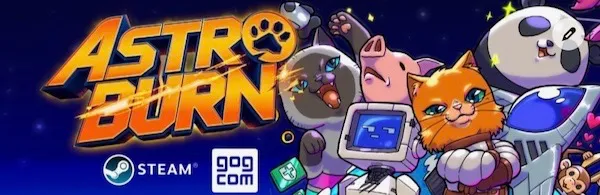
Astro Burn is available now on Steam and GOG.
HaZ also says Android and iOS versions are planned. No mobile release date was confirmed in the material provided. The physical collector programme is being developed with 33 Games.
⚙️ Stay curious about the moment your audience understands the promise faster than your build does.
⚙️ Keep watching what players do before defending what the design document says they should do.
⚙️ And remember: when the cat on the poster is doing all the work, give the cat the jetpack.
🦊 Kiki · 🍪 Chip · ⭐ Byte · 🦁 Leo
Survived a self-financed pivot? Contact us here!