🍪 GameStop Wants eBay, Steam Blocks an Indie, and Gaming’s Gatekeepers Had a Weird Day

Hello there, marketplace survivors and digital storefront prisoners. Today we’re looking at a strange cluster of stories that all circle the same uncomfortable question: who actually controls the game industry when the money, platforms, algorithms, and storefront rules start moving?
GameStop wants eBay. Reggie Fils-Aime says Amazon once pushed Nintendo toward something he considered illegal. Sony is settling a PlayStation Store class action. Valve corporation Steam allegedly blocked an indie developer’s own assets. Capcom is treating the DLSS 5 Grace Ashcroft backlash as accidental proof that the original art direction worked.
Different stories, same headache. Gaming keeps pretending it’s about players and creators, but the pipes, shelves, stores, filters, and payment systems are where a lot of the power really lives.
GameStop just made the wildest retail boss move of 2026
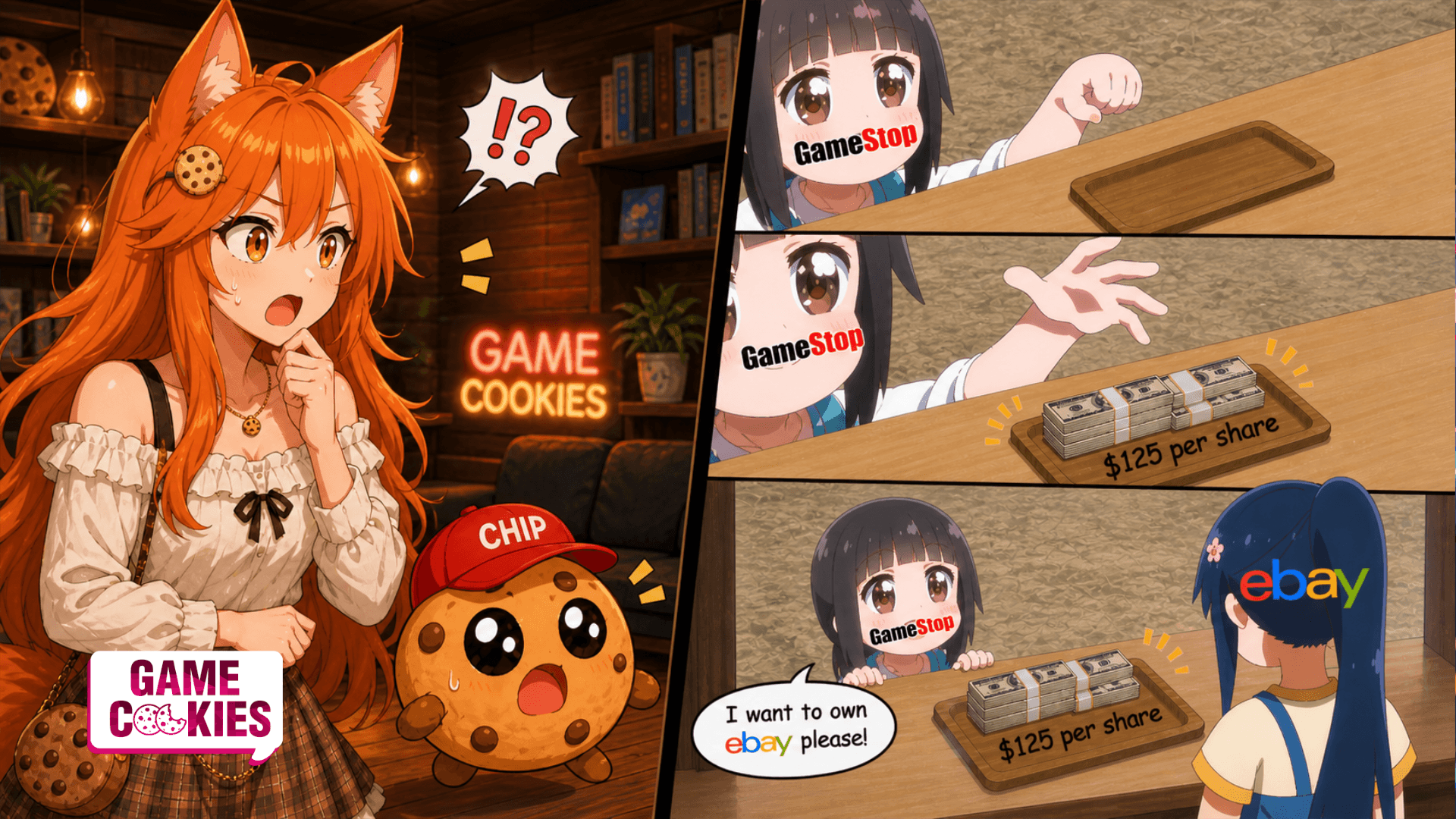
GameStop has submitted a non-binding proposal to acquire eBay for $125 per share in cash and stock, valuing the offer at about $55.5 billion. GameStop says it has already built a 5% economic stake in eBay and plans to fund the cash portion through about $9.4 billion in cash and liquid investments, plus up to $20 billion in third-party acquisition financing from TD Securities.
eBay confirmed it received the unsolicited proposal and said there had been no discussions or outreach from GameStop before the offer arrived. Its board will review the bid, including the value of GameStop stock in the deal and whether GameStop can deliver a binding, actionable proposal. For now, eBay told shareholders to take no action.
Ryan Cohen’s pitch is blunt: cut costs, use GameStop’s remaining retail footprint as eBay infrastructure, and build something that can fight harder in e-commerce. GameStop says Cohen would become CEO of the combined company and receive no salary, cash bonuses, or golden parachute, with compensation tied only to performance.
Reuters reports that investors and analysts are already skeptical, partly because GameStop is a much smaller company trying to acquire eBay with a half-cash, half-stock structure and significant financing questions attached.
🦊 Kiki: Wait, wasn’t GameStop supposed to be the zombie retailer everyone had already buried under digital downloads, Steam libraries, PlayStation Store carts, and “who even buys discs anymore” takes? Like, I remember the whole narrative. GameStop was the mall store from a different era, the place people joked about because it gave you three dollars and emotional damage for your used games.
And now that same company is trying to buy eBay. eBay. The giant online garage sale where half the gaming internet already hunts for retro consoles, rare cartridges, trading cards, broken handhelds, weird accessories, and cursed collector stuff nobody admits they want until 2 a.m.
The idea is not completely stupid, which is the annoying part. GameStop and eBay overlap in the collector economy, resale culture, retro games, hardware, and trading cards. But going from “digital gaming almost killed us” to “let’s acquire one of the biggest resale marketplaces on the planet” is such a ridiculous comeback swing that I need to check if someone left New Game Plus enabled in the corporate settings. The debt part still smells dangerous, though. You can’t meme your way out of financing gravity forever.
🍪 Chip clutches a tiny calculator and slowly backs away from the debt pile.
Reggie says Amazon wanted pricing help Nintendo would not give
Former Nintendo of America president Reggie Fils-Aimé reportedly told an NYU audience that Amazon once pushed Nintendo for heavy financial support so Amazon could offer the lowest prices in the market, even below Walmart. Reggie says he told the Amazon executive, “You know that’s illegal, right?” and that Nintendo stopped selling directly to Amazon after that moment.
This is an allegation from Reggie’s account, not a court finding. Still, it adds context to years of awkward Nintendo-Amazon friction, including missing pre-orders and inconsistent availability around major Nintendo products.
🦊 Kiki: This is one of those stories where the most believable part is how boring the pressure sounds. Nobody has to enter the room wearing villain armor. Sometimes it’s just a giant retailer asking for “support” in a way that makes everyone pretend the word support does not mean what it obviously means. And I get why Nintendo is annoying with prices. I have complained about the Nintendo tax like everyone else. But there’s a difference between “Nintendo refuses to discount games like a normal company” and “a retailer allegedly wants a partner to help it crush other retailers on price.” That second thing gets ugly fast. Gamers see a cheaper checkout screen and think they won. Then years later the shelf is gone, the options are gone, and everyone is asking why one platform controls the aisle.
🍪 Chip lowers a tiny “sale” sticker and looks spiritually conflicted.
Sony’s PSN settlement is not generosity
A proposed PlayStation Store class action settlement could pay eligible users who bought certain digital games through PSN between April 1, 2019 and December 31, 2023, specifically games that had previously been available through game-specific vouchers. The case concerns prices paid for digital games sold through the Sony PlayStation Store.
The reported settlement amount is $7.85 million, with eligible users expected to receive credits or payments through the settlement process. The important legal point: a settlement does not mean the court decided Sony did anything wrong. It means Sony is resolving the dispute under settlement terms.
🦊 Kiki: Digital storefront lawsuits always make me laugh in the bad way because players have been screaming about closed ecosystems for years, and then suddenly the legal language catches up wearing a suit. PlayStation users know the feeling already. You buy inside the walled garden, you wait for the platform sale, you accept the platform rules, and if the pricing feels weird, well, enjoy your vibes. The settlement money is not the juicy part for me. The juicy part is that every one of these cases keeps poking the same bruise: when a platform controls access, pricing, payment, visibility, and sometimes even refund behavior, the “market” gets very curated. Sony can say it did nothing wrong, and legally that matters. For players, the broader frustration still sits there like an unopened PSN notification.
🍪 Chip taps “accept terms” with visible regret.
Steam allegedly blocked an indie developer for using their own IP
Japanese indie developer Daikichi says Steam blocked the demo for Wired Tokyo 2007 because environmental assets appeared to include third-party IP. According to Daikichi, the assets were references to Dinostone, a dinosaur-themed card game Daikichi released in 2023.
The reported issue is almost painfully absurd: Steam asked for reasonable assurance that the developer had rights to use the assets, while the developer says the rights belong to the same creator. VGC reports Daikichi was left trying to prove ownership of work made under the same developer identity, including assets from a previous project.
🦊 Kiki: This is the exact indie nightmare that makes people want to scream into a devlog. You spend years building weird little worlds, you put a reference to your own older work inside your new game, and suddenly the machine treats you like a suspicious stranger wearing your own face. Beautiful. Incredible. Very normal industry. I understand why Steam has IP checks. The store is flooded with asset flips, stolen material, fake listings, and whatever garbage shows up when someone discovers export buttons. But the burden always hits different when you’re small. A big publisher has legal templates, counsel, rights databases, and someone named Meredith who handles documents before lunch. A solo dev has a folder, a receipt, a pseudonym, and stress.
🍪 Chip signs a permission slip addressed from Chip to Chip.
Capcom learned the right lesson from the DLSS 5 Grace backlash
Resident Evil Requiem producer Masato Kumazawa addressed the backlash around Nvidia’s DLSS 5 showcase, where fans criticized an AI-altered version of Grace Ashcroft. Kumazawa did not directly comment on Capcom’s involvement in the showcase, but said the strong reaction showed players liked Grace’s original design and did not want it changed.
That is probably the safest possible answer. Capcom avoids torching a major tech partner, fans get reassurance that the original Grace design landed, and Nvidia’s AI showcase remains a warning sign for every studio with a recognizable art direction.
🦊 Kiki: This one hit a nerve because people are tired of being told every AI layer is automatically an upgrade. Grace already had a face, a vibe, a mood. Players reacted because they recognized when the tech made her feel off. Not broken in a funny bug way. Off in that “why does this person look like a beauty filter ate the art direction” way. And honestly, Capcom’s answer is pretty slick. They didn’t need to throw Nvidia into the sewer. They just said players cared because Grace worked. That’s a polite corporate dodge with a little knife hidden in the sleeve, and I respect the craft. The bigger issue is control. If AI rendering tools touch character identity, lighting mood, facial nuance, or the little imperfections artists chose on purpose, studios need to treat that like creative surgery, not a graphics toggle.
🍪 Chip puts a tiny paper bag over a “DLSS On” screenshot.
In the end…
Today’s stories look scattered at first. A takeover bid. A retailer pricing allegation. A PlayStation settlement. A Steam moderation mess. A Capcom AI controversy.
But they all point back to control.
Marketplaces decide what gets sold. Storefronts decide what gets approved. Platform holders decide how games are priced and distributed. Tech partners increasingly want to decide how games are rendered. Even when the companies involved have reasonable explanations, the direction of travel is obvious: the game industry is getting more dependent on gatekeepers that players and developers can barely negotiate with.
GameStop trying to buy eBay sounds funny because it is funny. Steam asking a developer to prove they own their own assets sounds absurd because it is absurd. Sony settling a PSN case sounds small until you remember how much digital ownership depends on one store’s rules. Capcom’s DLSS 5 response sounds diplomatic because it has to.
Gaming keeps becoming more digital, more centralized, and more automated. That can make things faster and cheaper. It can also make the people making games feel like they are arguing with a locked door that replies once every five business days.
⚙️ Stay skeptical, inspired by eBay’s board reading the fine print.
⚙️ Keep receipts, inspired by Daikichi proving Daikichi can use Daikichi’s own work.
⚙️ And remember, when the storefront controls the shelf, the shelf starts making decisions for everyone.
🦊 Kiki · 🍪 Chip · ⭐ Byte · 🦁 Leo